Tag Archive for: risk management

In my previous article Developing A Successful Forex Mindset Pt. 1, I discussed how your trading mindset is essentially a product of three things;

1) Your Neuro-Physiological Wiring

2) Your Mindset of Level of Mindfulness

3) Your Psychological Conditioning

I focused specifically on how your Neuro-Physiological Wiring, specifically how your mind and brain are integrated and help in your development as a forex trader.

developing a successful trading mindset pt 2 2ndskiestrading.com

I also talked about the three main fundamental functions of your brain (regulation, learning, selection) and how these mental functions are critical for building a successful forex trader mindset.

Today I’ll focus on number two from above – how your level of mindfulness helps to build your trading mindset – gearing it towards success or failure.


Your Level Of Mindfulness
As a general definition of mindfulness in trading, your mindfulness equates to the degree of awareness and attention to both your inner and outer worlds.  Although this is particularly critical during the trading process (including just before and after), it is also connected to your mental activity and thoughts separate from trading.

Why?

This is because there is no compartmentalized section of your brain just for forex trading.  We didn’t evolve to be forex traders sitting in front of a computer for our survival, so we are using skills and neurons from all portions of your brain.  Because the brain is an interconnected whole, our experiences in life around wealth, mindset of abundance, family, memory, fear, greed, confidence, and more, all effect our trading mindset, and thus – how we make trading decisions in the moment.

mindfulness in trading 2ndskiestrading.com

Particularly true for trading (but also in life), your brain learns primarily from what you attend to in the moment.  In an ode to Star Wars fans, Qui-Gon Jinn once stated, ‘your focus determines your reality‘. Thus, since your mind essentially learns from what you focus on in the moment, your level of mindfulness is the gateway to taking in helpful information (and avoiding non-useful info).  How you perceive information (internally and externally) via your level of mindfulness, is what facilitates your learning process and thus trading mindset.


30-80x a Second
I’m going to be sharing a few ways you can build your level of mindfulness to sharpen your mental faculties, but wanted to briefly mention the potency of mindfulness practice.

In a study in 2004 by Lutz et al., he examined various Tibetan meditators as they went deep into their meditation and he found something highly impressive.  Lutz noticed these meditators produced an uncommonly level of powerful and pervasive brainwaves, whereby unusually large regions of neural connections were pulsing in a ballet like synchrony.  These large regions of neural connections pulsed at 30-80x a second allowing them to unify large territories of the mind.

brain neural mindfulness techniques 2ndskiestrading.com

Part of Einstein’s incredible mental faculties were his ability to involve large regions of his brains to work together via the cerebral cortex.  His level of activity and connection (or higher) has also been found in those meditators who have build up their level of mindfulness via a sitting meditation practice.  So a genius level IQ or mental abilities, along with highly perceptive qualities are not reserved for people born with these gifts.

Like all things in the mind, they can be learned and developed, particularly through mindfulness practices.


Mindfulness & Wisdom in Trading
As a whole, trading wisdom and mindfulness is not your ability to spot price action patterns in the charts, or understand proper risk management.  Trading wisdom and mindfulness comes from a few steps;

1) Understanding what hurts and helps your trading process

2) Based on this understanding and experience, letting go of those habits which hurt your trading process

3) And strengthening those that help move your trading forward

As a whole, mindfulness and wisdom in trading are supported by the three basic functions I mentioned in the last article (regulation, learning and selection).  Your brain learns through forming new circuits, strengthening new ones and weakening others.  It selects through experience what is valuable and what is not.

Mindfulness in turn leads to new (and accelerated) learning, since your attention shapes what neural circuits are built.  Regulation is done through a combination of excitatory and inhibitory activity.  Thus, by learning to improve these three processes, you will improve your neural functions, and thus improve your trading mindset.


Two Methods For Building Mindfulness
Although there are dozens of methods to help you build mindfulness which will flood into your trading, I will talk about the two that I have practiced for over 12 years now; Yoga & Meditation

yoga and meditation chris capre 2ndskiestrading.com

Over a few thousand years old, Yoga has hundreds and hundreds of scientifically proven benefits, such as reducing fat, increasing muscle tone, improving digestion, enhancing your sex life, glandular function, and relaxing your central nervous system (or CNS).

Your CNS regulates an enormous amount of activity from motor to mental activity to breathing.  Are you mouth breathing rapidly?  If so, you are likely to be more excited, emotional and less relaxed/focused during trading.  Yoga is a great practice to help build both a relaxed CNS, but also to build awareness, both physical and mental.

To really do yoga well, you have to maintain awareness of your entire body, and control your internal energy.  Any inability to do this will manifest in your yoga practice.  Don’t believe me, try and do a balancing pose (like tree pose) and see how long you can hold it?  I’m willing to bet almost any experienced yoga instructor can hold it for much longer than you.  How so?  Through a greater ability to relax their body, mind while maintaining awareness.

Thus, Yoga is a fantastic option for building mindfulness as that is the root of all yoga practice.

Meditation is another alternative, particularly silent sitting, sometimes known as vipassana, shi-ne, zazen or many other names.  More than likely there is a center around you that offers a silent sitting practice, but those who engage this practice fully not only notice mindfulness benefits, but greater clarity, happiness and without a doubt – better neural functioning.

The general goal of any silent sitting practice is to build your mindfulness and awareness in the moment.

Many people wonder how I became a successful trader being self-taught. I am unlikely smarter than many of those I teach.  Nor did I take a single economics or business class in college.  But one edge I had for sure, was my yoga and meditation practice over the last 12 years.

successful trader chris capre 2ndskiestrading.com

This helped accelerate my learning curve as I figured out much quicker what to focus on, what price action setups were high probability, how to build my trading skills and trading mindset to be successful.  If there was one key edge between me and others, it would be this, and the benefits continue ad infinitum – probably the best investment and ROI I could have ever come across in my life.

Regardless, these are a few options for building a successful trading mindset and your mindfulness in trading.


In Closing
Your mindset, brain and mental activity is what forms your trading mindset, and thus – determines your level of success.  Mindfulness in trading equates to the degree of awareness and attention to both your inner and outer worlds.  This would mean your emotions, your level of relaxation or excitation, your ability to focus in the moment and detect the order flow in the market, along with how your mental activity is helping or hurting your trading decisions.

Mindfulness increases your learning process by focusing on what is beneficial and profitable for your trading process, while avoiding what sets you backward.

Two practices you can engage in to build your mindfulness are yoga and meditation, which will sharpen your focus and mental activity so you get more out of your brain and mind when trading.

This is part two of the three part series on Developing A Successful Trading Mindset, so stay tuned for the last edition soon.  But I hope this gives you some ideas of looking beyond the strategy to what may be keeping profits and success in trading just out of reach.

Kind Regards,
Chris Capre

Now that 2012 is wrapping up for traders, I’m guessing many of you (like myself) are dying to get into the new year of trading.  During this time, it is a fantastic opportunity to reflect upon what successes you had last year, but also what you need to work on.
A common practice and tradition for people before the new year is to set goals or what some refer to as ‘resolutions‘.  Did you know that over 80% of all New Years resolutions around losing weight or getting into shape fail?  Similarly for traders, virtually the same amount of profitable accounts last year (avg. 28%) is virtually identical to the year before (avg. 26%).
Yet I’m willing to bet most of you made trading resolutions last year that were all designed to help you become successful.  Being that around the same amount are, it’s safe to say these ‘resolutions’ failed, so why do you think that is?
The key is around setting proper goals, for if they are done incorrectly, you will move forward without a real plan of action, just attacking the charts hunting for profits and intraday price action setups, but no real progress towards your trading.
This article is designed to share with you an easy 5 step strategy for setting proper trading goals in 2013. This is so you can make the significant changes to your trading you feel is possible.

setting trading goals for 2013 chris capre 2ndskiestrading.com

 
Step 1 – Make Your Goals Specific
If a goal is not specific, there is no way to focus on it, or take specific actions to achieve it.  Your efforts become dis-coordinated towards achieving your goal, and your energy never drives home any specific change.  Stating to yourself;
I will stick with my trading method is too general and not specific enough.
Sure, your method may be to trade price action, or the ichimoku cloud, but that is too vague.  Does this mean one system or many?  Does this address risk parameters?  No.  Does it address the specific rules of your system?  No.
You have to be specific with your goals, otherwise your efforts will be scattered and ineffective.
Although the most common goals will be numbers oriented, try to avoid these typical ones below;
I want to make a 100% gain on my account
I want to make 10% profit a month
I want to make 500 pips per month
Why?
Because you cannot know what the market will bring.  You may have a goal of 20 pips per day, but what if the market is offering you 100 pips on your price action setup?  Why would you not take what is offered?
Consequently, the market may have low liquidity and be in a super small 15 pip range, perhaps waiting for a big announcement.  So why try and force more out of the market then what it is offering?
Focusing on performance means you may sacrifice technique to get there, and this leads to bad habits in trading which will cause greater losses down the line.
Instead, set some clear ‘process‘ oriented goals which focus on technique instead of result.  If you do the technique correct, and trade following your rule based system, then you trade the system as is, and build positive habits towards trading successfully.  I always suggest – focus on doing the technique correctly, and the money will come.
Some examples are;

-I will execute proper risk management targeting minimally 2x my risk on every trade
-I will stay in a winning position until my system gives me an exit signal
-I will spend 30 minutes each day preparing for my trading day, and 30 minutes reviewing my trading day
Not only are these ‘process‘ oriented goals which build positive behaviors to improve your trading, but they are specific.  Instead of saying, ‘I will use ‘better‘ risk management techniques‘, they state specifically what they are.  ‘Better‘ is ambiguous and hard to define, so how do you know if you achieved the goal?
Specific goals (both small and big) are critical because you direct your efforts in a specific direction where the goal is clear.  Each smaller goal is simply a step on the path to a larger goal and gets you that much closer.

setting specific trading goals chris capre 2ndskiestrading.com

 
Step 2 – Goals Need to Be Measurable
Along the lines of goals being specific, they also need to be measurable.  For example, maybe for the last year, across all your trades, you achieved a 1.5:1 reward-risk ratio for all your winners.  Well, with the goal of having a 2x reward-risk ratio, this is something you can measure.
You can also challenge yourself by adding a time value beyond ‘for the year 2013‘.  An example would be;

By March 1st, I will targeting nothing smaller than 2x my risk

or
By March 1st, over half of my trades winners will be 2x my risk, and the other half no less than 1.5x my risk
You may accomplish these goals earlier, but by having a goal be ‘measurable‘, it becomes a measurable indicator directly related to your goal, which will provide you with clear results and a feedback loop which communicates how you are doing, and what specifically you need to work on.  You can even get specific by making smaller measurable goals which are just one step on the way up towards your bigger goals.

small steps towards larger trading goals chris capre 2ndskiestrading.com

 
Step 3 –  Make Your Goal Attainable
Ask yourself, ‘is your goal attainable?‘  Saying you want to achieve 70% accuracy with all your trades may be difficult if you’ve never had a year (or even month) above 50%.
The questions you have to ask yourself ‘Am I prepared, capable and have all the tools needed to achieve my goals?
Maybe you do not even have a rule based price action system with an edge to begin with.  So how can you say you want to achieve 70% accuracy when you a) do not even have a system and b) have not tested your system on demo or live to see how it performs?
Perhaps one of your goals is to write in your trading journal every day.  Well, ask yourself – do you even have a trading journal?
First figure out what you need to achieve your goals, then determine whether you have everything you need or not.  A goal must be attainable, but only if you have the right tools in place.
 
Step 4 – Make Your Goal Realistic
It is easy to make a goal, just like it is easy to make a new years resolution.  But setting a realistic goal is a completely different thing.  Just like a goal needs to be attainable, having a realistic goal keeps you honest about where you are and what is workable to you without putting undue stress on yourself.
setting realistic goals chris capre 2ndskiestrading.com
For example, using the goal, ‘I will spend 30 minutes every day preparing for my trading day‘, what if you work 9 to 5, and your trading day starts at 5:30?  Maybe it takes you 15 minutes just to get home, so spending 30 minutes preparing for your trading day may not be realistic if you need to be trading at 5:30 when your price action setups form.
This is the failure of many exercise or weight goals.  Saying you want to lose 50lbs in 3 months is one thing, but maybe it would be unhealthy for you to lose that much weight so quickly.
The same is for trading – make your goal realistic.  If you are going to make your goal a performance number, like 1000 pips per month, yet you’ve never made over 200 pips, you may be setting yourself up for failure and disappointment which will have a negative psychological impact on your trading.
Thus, find a goal that is achievable, but will force you to work and stretch your current abilities.
 
Step 5 – Make Your Goal Timely
Obviously you will start working on these new goals beginning the new year, but what is your deadline or finish line?  Would you ever join a race if you had no idea how far you had to run?  Of course not.  Thus, not having a finish line for achieving your goals can cause your motivation to wane, or discipline to slip by taking breaks from working on your goals consistently.
Remember, the finish line is not just an ending you are moving towards passing.  It is a guide on how to manage and use your time and effort.  Most traders fail to manage their time effectively, both in front of the screen (trading, analyzing the market for setups), and away from their screen (reviewing trade journal, analyzing performance/stats).
It is common to think next week, or next month I will use proper risk management, or write in my trade journal.  How many times have you said this to yourself, and how many times have you not hit your goals on time?
The difference between successful people and those who are not, is successful people know how to manage their time well, set small goals that lead to the larger goal, and constantly make progress towards them.  By knocking down the smaller goals, it makes the larger goal seem much more possible.
setting trading goals 2013 2ndskiestrading.com
Each step you take should have a finish line for achieving your goals, so you know how to effectively manage your time and build towards your new heights.
 
In Summary
Creating resolutions and goals at first seem simple and straightforward, especially if they are just done in your head.  But you’ve committed to becoming a successful trader.
You’ve spent money, time, and made many sacrifices to complete the journey.  Why waste that time and effort to fall short and not get the financial freedom you want?  Why spend so many hours and dollars to not get a return on your investment which is the the best kind of all – independence for both money and time?
Thus, make sure you know what you need to achieve your goals, that they are specific, measurable, attainable, realistic and timely.
I always suggest starting off asking, ‘What Do I Need To Trade Successfully‘.  This is a critical step towards achieving any goal.  But once you’ve asked these questions, then you know what you need to do and where to go.  Now you just need a map and to set your goals for getting there.
Maybe you want to achieve your goals in a few months, a year, or maybe a few years.  Regardless, you need a map, and clear goals/steps to get there, so make sure to make your plans and goals workable by following the five steps above.  Doing so is the fastest way to reaching your goals and crossing the finish line.
trading goals crossing the finish line chris capre 2ndskiestrading.com
Thus in 2013 accept the challenge to become a successful trader by working with a trading mentor, study a rule based system, do the work, and enjoy the rewards as they are more than worth it.
I’d like to end with a quote that was inspiring for me in my early years of trading from Hannah Moore:
“Obstacles are those frightful things when you take your eyes off your goals”
Kind Regards,
Chris Capre
Make sure to out my latest trading articles:
My Top Trading Mistakes for 2012
Developing a Successful Forex Trading Mindset Pt. 1
The Ideal Trader

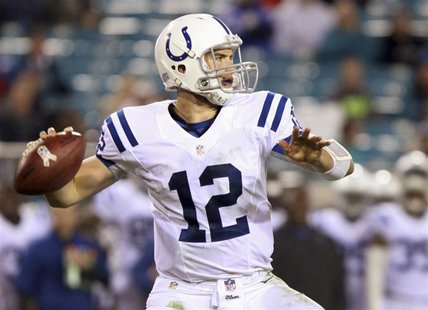
Last year the Colts were the first team in NFL history to go 0-13 following 9 straight playoff appearances. They had the single biggest lost of 2011, the worst AFC record in 3 years and finished with a 2-14 record which was the worst in the league that year.  Because of this, they got the first overall pick in the 2012 draft. They chose Andrew Luck who is the subject of today’s lesson.

andrew luck trading with amnesia chris capre 2ndskiestrading.com
Being the first overall pick in the draft is a special honor, and burden due to the high expectations.  Once he was selected first, former first round draft picks were interviewed and asked to give advice to Luck on his first season.  Prior to yesterday’s game, Luck was also interviewed about the Colts amazing turnaround, being 7-4 and in 2nd place in the AFC South division.  They talked about his reactions to the advice given by former first round drafts.
The one that really stood out for him was one of the quarterbacks suggesting he develop amnesia.  What he meant was, you are going to make mistakes, and although you want to learn from them, you want to forget about them so that you can focus completely on the next pass, the next play and the task at hand.
By developing amnesia, you are willing to risk again, regardless of the last loss.  You are willing to forgive yourself for over-leveraging, for not following your system, for pulling the trigger too late.  Developing amnesia in some sense can be a great skill because each trade is its own, where there is no past mistakes haunting you.   No fear of repeating the last major loss, no thoughts about losing more money.
If you are constantly brewing over the last mistake, trading in fear, it will take you out of the present moment.  It will reduce your intelligence, awareness and cognitive skills needed to trade successfully.  But if you have forgotten about the last mistake which cost you a lot of money, you can treat the newest trade as a fresh start, as another chance to do it right.
trading with amnesia 2ndskiestrading.com
Quarterbacks need this skill because they can throw the ball 20, 30 or 40 times in a single game.  Imagine what it takes to make a major mistake on live television, being watched by millions of people, and then having the throw the ball again.
In last Sunday’s game, Luck did not have a perfect game by any means.   In fact for 90% of the game, his team was behind and he had made some major mistakes.  He threw for three interceptions in the game, some of which were rookie errors.  He threw a total of 54x and only completed 24 of his passes for 44% accuracy, which is incredibly low for such a talented quarterback.
In the last four minutes of the game, his team was down by 12 points and they had the ball, but had to go 85 yards.  He had already thrown three interceptions, and time was running out.  Yet, in 1 minute and 23 seconds, he completed 5 of the next 8 passes and scored a touchdown.
Luck got the ball again with 1 minute and 7 seconds left in the game and had to go 75 yards.  With less than 4 seconds to play, he threw for a touchdown pass and won the game.
These last two amazing drives would have been challenging for the best ever to play the game.  Yet a rookie quarterback did the amazing, and won the game.
None of this would have ever been possible if he hadn’t forgotten about those three interceptions.  If he kept dwelling on them, he would have not been focused enough to make the crucial plays, to be totally aware and pass where he needed to, run when he needed to, decide when he needed to.  He would have been stuck in the past which is a dead place you can never go back to ever.  And that is where his intelligence would have been, stuck in a dead zone and imprisoned by his mind.
imprisoned by your thoughts trading with amnesia
This often happens to traders, especially developing ones who haven’t built up a consistent track record. Ask yourself if you have ever been paralyzed to make a trade.  Perhaps over-analyzing because you fear another loss.  Perhaps not pulling the trigger because you are afraid to lose more money.  Ask yourself what limits you from trading profitably?  Are you afraid to make a mistake and what that means about you. Worried you might make a bad choice, or risk too much, or be completely wrong.
Has this ever happened to you?  Does this sound familiar?
I’ve been there, and almost every successful trader has at one point or another.
In what may seem like a paradox, you need a good memory, and amnesia at the same time.  Pattern recognition becomes easier with a good memory, especially if you’ve seen the patterns hundreds of times before.  You know what follows, and you know what to do, so you just do it and execute your forex trading strategy.
But at the same time, you also need to trade with amnesia, you need to forget your mistakes, stop punishing yourself, stop getting back your losses in trading, stop being critical of yourself, stop being afraid, and treat the current trade like a fresh start, like its completely new and disconnected from your past mistakes.
This is skill that can be learned, and a strong memory can be developed as well.  The mind is neuroplastic and has the ability to rebuild neural connections, the ability to build a mindset of success, for trading and life.  Brain gyms are a great way to build up your memory and pattern recognition, while ERT training (Emotional Repolarization Technique) is exceptional for re-building neural connections, re-programming bad habits into good ones, fears into strengths, confusion into understanding and awareness.
Yes, you do need to remember your mistakes and learn from them.  Reviewing your journal weekly is helpful for this, so you are aware what you need to work on and what are your strengths.  But dwelling on your weaknesses and mistakes is not helpful, and will likely harm you psychologically from trading successfully.
In conclusion, there are three things needed to trade successfully;
1) A Strategy With An Edge
2) Proper Risk Management
3) Successful Trading Psychology
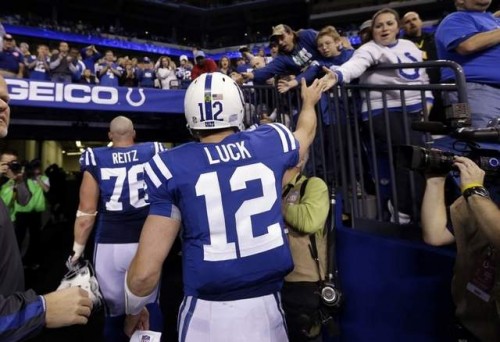
Andrew Luck did not have a fantastic first game of the year and made tons of mistakes.  In many cases he did some embarrassing things when the whole world was watching.  But he was never paralyzed by a bad pass, an interception or a critical mistake.  He understood he’s going to make hundreds of passes, and one pass cannot define him or his career.  He remembers his mistakes, and yet has amnesia about them so he can be totally present in the moment.
andrew luck winning trading with amnesia 2ndskiestrading.com
You will make hundreds of trades in a year, perhaps even a few months.  No one trade will define you, and never will, whether its a big winner or a horrible loser that cost you a lot of money.  How you move on and treat the current trade will determine how you perform.  Do you hesitate to pull the trigger in fear you’ll make another mistake, or do you treat it as just another pass attempt and an opportunity to move forward.  If you struggle with this, there are ways to get past this, but there will always be another chance to make a good trade and move closer to the endzone of success.
I hope you enjoyed this article and look forward to hearing your comments.
Kind Regards,
Chris Capre

Just a few days ago, I was talking to someone named Marshall.  His dad is the head of a major investment firm which manages over $1Billion.  We are in talks with his fathers firm about investing with our fund and Marshall was the first person we were talking to.  We got into a really good conversation about the psychology of risk and some great things came out of the conversation. But first, we are going to start with a question;
Have you ever heard of a hedge fund having a few years of impressive performance, maybe even a +60% year, but then they have a year where they lose 50%?  
It has happened many times and what happens next is quite predictable.  They close up shop…only to do what?  Start a new fund about a year later.
Why do they close up shop, start up a new fund and what does this have to do with the Psychology of Risk?
Well, lets do the math.  Perhaps they are managing $100 million and take a 50% loss.  That brings them to $50 million.  Being they make money on performance, what do they have to do now?  Have a 100% return on the $50 million just to get back to break-even. So what do they do? They say to themselves, ‘Well, even if I have a stellar year and do 100%, i’m still working for free for an entire year…f-this, i’m closing up shop‘.  This is why many hedge funds close up shop in such a situation.
Now the real question should be, ‘why did they take a 50% loss’?  The answer has to do with risk.  If they were controlling risk, they would never had gotten that far down.  If one is managing risk properly, it will take an immense series of consecutive losses, or massive over-leveraging to get to that place.  But hedge funds are different from you – they are not trading their capital – it is their clients money so if they lose it, it’s not the end of the world.
You on the other hand are trading your own capital, and you cannot just close up shop and start over.  If you lose all your capital, that’s it.  This is why you have to control risk.  Capital is your ammo, and once you are out of ammo, you are out of the war.  Now lets get into risk and psychology.
chris capre and the psychology of risk
The Psychology of Risk
As we wrote just recently, everyone has an equity threshold – a level of money whereby it affects you psychologically.  Because you are working with a larger amount of money then usual, it affects your emotions and thoughts which can cause you to make bad trading decisions. This is your equity threshold.
In terms of losses, you also have one as well.  An equity loss threshold.  After you have lost a certain amount of equity, you become psychologically affected and emotional about the losses.  For everyone, it is different, but you have it nonetheless. Once you cross this level, the psychological pressures mount and they can manifest in many ways.
Perhaps this sounds familiar;
-You start to think negatively about your trading ability
-You lose confidence
-You start to increase the leverage to ‘make up your losses’
-You start to doubt whether you can get back to break-even
-You are thinking about those losses, even while you are not trading

Has this happened to anyone?  Especially after some big losses?  Understandably so, especially to the developing trader.
This is why it is more critical than ever to manage risk – so you never get into this position where you add psychological pressure. Trading is already hard enough, why add any additional pressures?
Now that we have established how critical it is to control risk psychologically, let’s talk about some methods to do so.
A Fixed Percentage of Risk
When trading your system, whether it be price action or ichimoku trading, you will want to risk a fixed percentage of equity per trade.  By doing this, you are guaranteeing no matter what size the stop is, the risk is the same.  This makes it easier to;
a) psychologically accept the risk
and
b) keep consistency in your trading.  
Once you become a successful trader with a long track record using a system, you will have a more finite understanding of how to gauge the risk per trade. Then you will have;
1) more confidence to deal with losses and trust your abilities
2) more information and experience to know how your system performs
3) a greater understanding of how your psychology works in regards to risk
chris capre trust
But if you are a beginning or developing trader, you will not have this extra trust in your abilities and confidence to deal with large losses.  You will not have a lot of information about your trading system.  You will not have a significant understanding of how you psychologically work with risk.
Thus, we suggest keeping the risk small.  This will minimize any additional psychological pressures affecting your trading. If you are using 1%, it would take a large amount of losses to get into some really negative territory.
It would also stand to reason once you get better at your trading, you start taking on larger risk per trade correct?  Ironically, the best fund managers and traders in the world all keep their risk low, around 1-2% per trade.  Why?  Because they know how important it is to control risk, but also, how the psychology of risk affects one’s trading.
Reducing Risk as Your Losses Increase
Everyone enters a losing streak.  It could be where you are psychologically off, or your system does not rhyme well with the market. This happens to all the best traders.  So when it happens to you, do what they do – they lower the risk on their system.
If losses are mounting, lower your risk per trade. Cut it in half.  This helps you to protect your downside and bottom line. Forget about making up the losses.  Just focus on getting back in rhythm.  When you do, the wins will increase and so will your equity. This will build confidence in your trading which will help lead to more wins. It becomes a self-reinforcing loop to making better trades.
Get a Trading System
If you do not have one already, get a trading system. You will want one which is rule-based that has clear rules for entries, exits, stops, limits, taking profits, everything! Why?
Money-management is a game of numbers. It is pure mathematics. If you have a discretionary trading system, how can you test your system to see if it’s working, or what parts are and what parts are not? You cannot, so get a rule-based system.
Why do you think algorithmic trading is on the rise? Do you think they have rules to enter and exit trades? Do you think the best traders with long successful track records have rule-based systems? What are patterns based on? Rules.  What are systems based on? Patterns. What are you trading? Patterns. So get a trading system which is rule-based.
price action trading system chris capre
It is said that an expert can simplify complex things. This is what a good mentor should do. If they are trading, they are likely doing so through patterns. And if so, then you know you have a good mentor when he can simplify the patterns into simple rules which are clear and well-defined. If they cannot, then they are not a good mentor nor an authority or expert.
Having a rule-based system will also take a lot of the confusion and emotions out of trading.  One of the most challenging things for developing traders is having to make decisions about making a trade. Is the market going up or not? Where do I put my stop and limit? Is this a good trade or not? All of these questions affect your psychology, and without rules, all the pressure is on you.
Consequently, having rules makes it easier to manage risk because if you are trading a rule-based system, you can see the 3rd dimension of money management – accuracy.  Without knowing your systems accuracy over time, money management is meaningless. You could have an R:R (reward to risk) of 3:1 and lose money. You can have and R:R of 1:1 and make money. What is it that separates the two? Accuracy. And the only way to know this is to have a rule based system. This is 3-dimensional risk.
In Conclusion
In dealing with the psychology of risk, it is important to understand how psychological pressures can affect your trading. It is thus imperative to have proper money management.  Trading is already hard enough so no need to add undue pressures.  How can you manage this?
1) Have a fixed equity % at risk per trade.  This allows you to psychologically deal with losses better along with keeping yourself out of bad situations where you feel you have to make up the losses instead of working to make good trades.
2) Reduce Risk after a Series of Losses.  This helps you to protect your capital and downside. There is wisdom in the cliche ‘win more when you win and lose less when you lose’.  This also makes it easier to make up your losses should you get out of sync.
3) Get a Trading System. By having a system which is rule-based, you can understand how the mathematics are working for you (or against you). This will allow you to make changes in your system to give you that edge.  Proper money-management is all about mathematics and when you put them in your favor, you dramatically increase the chances to make money. Having a rule based system also reduces emotions and psychological pressures to you can make better trading decisions.
Please remember to leave your comments below while tweeting it on twitter and liking it on facebook. 
Make sure to check out our latest video on Advanced Price Action Forex Trading.