
In 99% of the cases, when hearing about ‘protecting your capital’, what’s being discussed is your financial capital, or money in the account. But when do you hear about protecting your mental capital?
Unfortunately there is very little discussion about protecting your mental capital. And yet, it can often be more important than protecting your actual capital (i.e. money).

What is Mental Capital?
Your mental capital is very much like an account balance reflecting the strength (or weakness) in your self-image and trading mindset. A good example is confidence, or lack thereof. Some other ingredients which affect/are part of your mental capital are;
Doubts
Fears
Beliefs (positive, limiting or negative)
Impatience
Self-esteem
Laziness
Discipline
Focus
Awareness (both self, and in the moment)
Beating oneself up
Negative or Positive Language
Mental Toughness
Your mental capital is something (just like your risk capital) that has to be protected and built up brick by brick. However, there are no mathematical formulas to help you with this. The two things that affect your mental capital the most are 1) You and 2) Your environment.

Ways to Protect Your Mental Capital
There are many ways to protect your mental capital, of which, I’ll share a few simple techniques here;
1) When in a trading slump, go for smaller, more achievable goals
We’ve all gone through losing periods, but the longer they go, the more potential they have to affect our mindset. Sometimes you just need to get a few winners to build your confidence back. If getting 2R on a trade just seems out of reach, try going for 1.5R, or 1R. Just nailing a few wins can do magic for your confidence and beliefs. Its an external confirmation to your mindset you can make good trades. When this belief comes back, you start to find yourself making better trades.
2) Avoid beating yourself up
This takes awareness in the moment, so anytime you catch yourself doing this, you have to stop the negative self-talk. Instead, think about things you do really well. Think about something which you’ve overcome in your life. By recognizing your strengths, you start to engage them more, while replacing the negative self-talk. It’s a more constructive thought process to engage in and helps to strengthen your trading mindset.
3) Take on less
Maybe you are trading 3-4 systems across several time frames and instruments. If you cannot perform consistently at this level, reduce what you take on. Trade less systems, instruments and time frames. Try doing a few things, or even just one system really well. When you start to perform well with that one system, winning more trades and making money, you start to create a positive belief you can do this. This leads to a confidence which you can then use taking on just a bit more, very much like lifting weights.
In Conclusion
These are just three simple ways to protect your mental capital, and there are many more developed methods, techniques and ways to do this. One example is ERT training, which helps to re-wire your brain and remove those limiting beliefs.

Not protecting your mental capital will only lead to negative emotions, beliefs and habits. But protecting your mental capital will help you build constructive and positive trading habits that ultimately lead to better trades. There is nothing more powerful than someone who believes in themselves. All great performers have this. Your goal should be to become that person.
Tag Archive for: mental capital
I recently had a really good Q&A session with a student in my price action course, who had asked a really important question. He was having a hard time discerning when to follow the rules to develop consistency in their forex trading, while having flexibility to ‘adjust‘ the rules in the right circumstances.
This is an absolutely fantastic question, and an important one for sure. Thus, I decided to write a two-part article on this subject, discussing the differences, advantages and disadvantages of rule based systems vs. discretionary systems.
In today’s article, I will introduce the student’s question, then share my response, what I see and why, along with a few added comments. In the companion article, I will talk about which of the two systems above I prefer, why I teach them, what are the advantages, and how you can develop them for your trading.
Steve’s Question (my student):
“I see a conflict between striving to gain the consistency to follow the rules but then having the flexibility to know when to break the rules. If we are talking about consistency and always following rules then I am all for that but my, admittedly limited (2 year), experience tells me that the markets are unforgiving of mechanical systems, as what works during this 6 month period might not work in the next 6 month period. Or swap out 6 months and replace with an/other time period.“
My Response Below:
“This is a really good question, and I’m glad you asked so will share several thoughts on this.
In the beginning – follow the rules. Learn them inside and out and follow them to the tee.
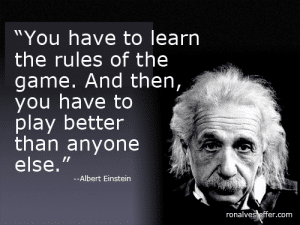
Why? Because this discipline forms the base of your training and mindset, which in turn allows you to build neural pathways that are critical to trading. If you do not follow the rules, or any set of rules in the beginning, then the neural pathways which form your base for trading knowledge you draw on, will be haphazard, and lead to inconsistent trading.
The other benefit of following the rules/building this discipline (in the beginning) is that it builds certain qualities (psychological) which will be highly useful for trading throughout your entire career. One example is patience – there will be many times you want to break the rules and trade a setup because something looks interesting to you in the charts.
Guess what? This will always be the case. There will always be other setups outside your rules. But deviating off course to try something on your live account isn’t the best place to find out. That should be done in demo or during simulation practice – not live trading.
During live trading, you should already have a clear set of rules in place which you follow inside and out. If there are no setups according to your rule based trading system, then that is part of the deal – but don’t let your impatience take you away from your discipline.
When Do You Break the Rules?

As to when to break the rules, this is only done after;
a) You can execute the system according to the rules without any thinking (i.e. automatically) – or on a sub-conscious level without thinking.
and
b) You are trading profitably already. This way if you adjust the rules and start losing money, you have a base to go back to where can resume making money while also trading consistently.
As to point a, we first have to get to the place where we are trading on a sub-conscious level which is only done through repetition. Very much like the archer who will do thousands of shots to make sure their mechanics are the same, we also have to build these neural pathways so we can execute our trades automatically, without thinking or hesitation.
When you get to this stage of trading sub-consciously, you’ve built the foundation of discipline, and have probably done enough trades (min. 100+ per system) to start seeing subtleties in the price action to ‘adjust‘ some of the entry rules a bit.
As to point b, the reason why we wait till we are already trading profitably, is this provides a SL on losing money. What do I mean by this? It is a psychological buffer, so that you always have something you can go back to (which will make money). This protects your mental capital, because you know you have something that already works.
Thus, if you are going to adjust/break the rules, this should be done practicing on demo or sim using your adjusted entries. Just make sure when you ‘adjust‘ your entries, you are still coming up with rules for those adjustments, so you can test the validity of those rules individually. The key is to know the difference between which rules can be adjusted, and which are the core of the system.
After working with thousands of trader, along with my 13+ year trading career, I have seen the dozens of pitfalls and traps developing or struggling traders continually fall into, that I myself have fallen into early on, and that separate oneself from trading profitably and consistently.
In this article, I am going to share 5 things all forex traders must avoid, but will wait to hear your responses as to what would be the solution to these traps which most traders fall into.
#1 Focusing on Obstacles
Do you come up with reasons why you cannot be successful? Blame the broker, or number of screens you don’t have, your background, your account balance? Do you come up with justifications why you cannot fill out your trading journal, follow your trading plan, or simply put – be successful at trading?
One thing you must avoid when learning to trade successfully is focusing on obstacles – particularly what is stopping you from trading successfully. Ask yourself how/if you do this in with trading now, and see if you can discover why it may be holding you back.

#2 Focusing Only on Your Sub-Conscious Ability
What is your favorite subject or type of article to read? I’m willing to bet its more often about trading and a particular strategy – perhaps about a price action system, or an ichimoku strategy. How much time do you spend looking at charts, studying systems, looking for systems, setups, and trading methods? Then ask yourself how much time you spend on risk management and your trading mindset?
Focusing on the former is only focusing on your sub-conscious mind, and by itself, no matter how developed it is, or how many hours of screen time you have, cannot lead you to profitability or consistency (by itself).
Ask yourself how much time you dedicate to this in relation to the other aspects of trading.
#3 Focusing on Problems
After a big loss, what do you spend your time thinking about? For the mistakes you make over and over again, where does your thoughts, mind and energy go to? Ask yourself how much time you spend focusing on the problem when it comes to your trading. Ask yourself how much time you spend focusing on what happened (in the past that you cannot change).
#4 Focusing on Outcome
I know, it’s hard not to focus on the results, the profits (or losses), your account balance, your accuracy and overall performance. But ask yourself how much time you spend focusing on the outcome, and what you think that does to your self-image and mindset about trading. How much time do you focus on the result of your trading for the day, on your lack of profits, success, or consistency?
#5 Not Protecting Your Capital – Your Mental Capital
There has been tens of thousands of words written by keyboard and ink about preserving your capital, but what about protecting your mental capital? How much effort and time do you spend protecting your mental capital, your self-image, and your trading mindset? What kind of effect failing to do this has on your mind, your confidence and performance?
In Closing
Take some time to really meditate on these things, how you may be doing some (or all) of them currently, and how they may be affecting your trading. Please do not hesitate to share your experiences around these as well as the info can be valuable for all.
Later this week, I will write a follow up article as to why it’s important to avoid these mistakes, how they impair your performance and growth, and then discuss solutions to avoid making these mistakes in the future.
Looking forward to your comments and thoughts about this.
Kind Regards,
Chris Capre