
Have you ever said this to yourself in trading? Most of us have, present trader included back in the day.
You don’t know it, but this statement is a trap. Unconsciously you believe you are a victim of cause and effect.
What you have to see is that you can ‘cause an effect’, particularly the ones you want.
A better question to ask yourself would be;
“How can I change my thinking, feelings and actions to produce the effect and results I am wanting?”
Doing this keeps you focused on the process first. This is how you accelerate your learning curve in forex trading.
This is employing a successful trading mindset.
Tag Archive for: successful trading mindset
Last week in a free private webinar for my course members, I asked a key question about what builds confidence in trading.
Trading is without a doubt, an endeavor you need confidence in. Having a confidence that you can do this will be a fuel when you need it, clear obstacles when you face them, and provide a focus on what is essential. Confidence will accelerate your learning curve.
On the flip side, lacking confidence can be one of the most destructive traits for a traders mindset. When losses come, how will you re-bound and focus? What happens if you start your day with two, three, or four losses? Will you doubt your system, trading plan or skill set?
All eyes can see, lacking confidence is destructive, while having confidence gives us a greater chance for success. Although we know this conceptually, or intellectually, often times our actions tell a different story.
So how do we build confidence in trading? What can we do create an unshakable belief in our abilities? If we engage specific things, will they help us form a foundation to profit consistently?
The answer is yes, you can, without a doubt build confidence in yourself and your abilities. In this article, I am going to share a method to help you build confidence. Will it be enough? I don’t know, but it’s a great place to start.
Successful Endeavors
I am very proactive in protecting my mental capital and self-image. Having a strong self-image and a healthy reserve of mental capital will lead to increased performance.
With that being said, what do you think it does to remember your past successful endeavors? Do you think it builds up your confidence, or brings it down? The question is rhetorical, but I want you to begin thinking about this more deeply.

I’ve worked with thousands of traders over the years, and one common trait among most of them, is they are all good at something. Chess, poker, math, sports, finance – you name it, they are likely good at something.
In our courses, we have well over 50 doctors, many of them surgeons. We have poker pro’s and tournament champions who are wanting to transition into trading. I have a few traders on the NYSE or for some large prop desk while others are high profile trial lawyers. Engineers, programmers, IT specialists….we have them all and the list goes on.
As a whole, most students who want to learn forex trading are intelligent, probably successful in their current field, and likely good at some skill. So how do we leverage this to build confidence?
A Method
One simple method you can use is to think about what you are already good at. Think about what you went through to get there, the obstacles you overcame, the doubts you faced, the hurdles you passed, how many times you weren’t sure you could be good at it. Yet in spite of all that, you became highly skilled at it.
Notice the confidence you feel to perform that skill or endeavor. Did you always feel that same way as you did now, particularly in the beginning? Unlikely. But you got there, and now have a competent level of skill in it, whether it be a skill, sport, job, martial art, musical instrument, work or endeavor. This current experience and skill can (and should) be used for our trading process.
Hence, take some time to think about deeply what skills or traits you can do well. Think about it till it brings up a feeling of confidence to engage that activity and do it well. Remember this feeling and apply this towards trading.
Climbing Mountains
It is important to remember, all of you at some point in your lives have broken through obstacles, difficulties, and gone past your doubts. Maybe these were small, or maybe they were mountains, but every one of them we’ve climbed reminds us of how far we’ve come, and what we’ve overcome along the way.
As I said, before, ‘Overcoming is the Currency of Success.‘

Remembering this, and having contact with our past successful experiences will help you build confidence in yourself. This is another method for protecting your mental capital and keeping a strong self-image.
Hence, take some time to remember all the obstacles you’ve overcome along the way. This should give you a feeling that you can overcome your inner obstacles to trading successfully.
In Summary
Having confidence and a strong self-image are two of the most essential weapons for a successful trading mindset. Most, if not all of you, have had to overcome something in your life. And equally most are already good at some skill, sport or work.
Think about your developed skill set in any particular field, and what you can do with those skills. Think about what obstacles you had to overcome throughout your life. Notice how it makes you feel about yourself when you think of what you can do, and what you’ve grown past along the way.
Sometimes, we need to just remember our strengths, inner resources, and wisdom we’ve acquired along the way. Sometimes just noticing those things will remind us of our capacity, and our potential. This is just one method you can use to build up confidence in trading.
It should be noted, there are other crucial methods you can be engaging daily to build an unbreakable bedrock of confidence. Take some time to ask yourself what builds confidence in trading for you.
Please make sure to share your ideas on this, how it helps, and any comments you have regarding this article.
By now many of you are in full swing with the new year, and at least 6 days removed from creating your new year resolutions. Below are some interesting statistics about new years resolutions, some of which I think will not shock you.
1) About 8% of people are successful in achieving their new years resolutions (not far off from trading)
2) 25% of those who make them don’t even make it past the first week
3) 34% of those resolutions are related to money
Source: Betterment.com
Do these numbers above surprise you? My guess is if I surveyed 1000 people, the majority would not be surprised.
We’ve all made resolutions and failed to keep them (including yours truly).
Have you ever asked yourself why is that? I certainly did.

Why do so many people consistently make new years resolutions, yet fail to really nail them? Made a resolution to always fill out your trading journal each day without fail, only to a few weeks/months later finding yourself not filling it out? Why?
The reason you did not fill out your journal, or consistently risk a fixed % of equity per trade, or whatever resolution you made is the same underpinning reason all resolutions fail.
In this article, I will briefly share a far better method for making consistent change, then ask the critical question as to why most fail.

A Far Better Model For Consistent Change
One of my yoga students Mark Gonzales eventually went on to become a great yoga teacher himself. In 2012 he was given the Yoga Journal’s Talent Search Winner Award, and has one of the most influential power yoga channels on youtube. He still humors me in letting me know my classes were some of his hardest ever. I appreciate that sentiment as I wanted him to push his body and mind to become more than what he thought he could do.
One brilliant insight Mark recently shared captures a far better model to consistent change. Here is what he said below;
“New Years Resolutions are for those who didn’t work hard enough or look after themselves the year before. Self improvement can start now, all year round, from this moment forward.”
Indeed, for those who are constantly working on themselves all year round, there is no need for a new year resolution. It is far easier to work on yourself month-in-month-out then to rev up the change engine once a year. If you have not been working on removing your limiting beliefs throughout the year, then a new year’s resolution is most likely to fail.
It is like not running all year, then all of sudden taking yourself out for a long run when your lungs and legs are not ready for the task. You are most likely to fail, and then imprint negatively on your self-image ‘it is not like me to make the changes I need/want to‘.
This only hinders your confidence and decreases your likelihood of making lasting change in the future. Every negative imprint from failing to keep a commitment or resolution only adds on to the difficulty of changing your trading mindset in the future.
Daily affirmations by themselves will not make lasting change, especially since most are done improperly. Their is an underlying flaw in daily affirmations most fail to see. Also making those trading resolutions at the beginning of the year creates the idea you can only change once a year. This is also a fateful idea.
It is far easier to work on smaller goals throughout the year, that eventually build up your self-image and confidence to make the big changes. When you have seen yourself do the work earlier, it becomes more ‘like you‘ to do the work later. This is a far superior model for consistent improvement and hitting your target.

Why Do Most Resolutions Fail?
Understanding this one thing would help unlock many of the critical reasons why you make the same trading mistakes, why you have a streak of winners and lose them all in one trade. It is the same reason why you follow your trading plan for a few weeks/months, but then go off the reservation.
The reason why a trader fails to make consistent change and build a successful trading mindset is the same reason why most resolutions fail.
With that being said, before I share the answer – why do you think most traders make the same mistakes over and over again? Why do you think you fail to keep your risk management? Why do you think you succumb to the same emotions you know are toxic to your trading?
Many of you are smart people and can certainly figure out most of what you are doing isn’t helpful. Yet you still do it anyways. Why do you think you continue to do things which you know will only hurt your trading performance?
Please make sure to share and comment below. Your answers will be incredibly revealing as to where you are in your trading process, how much you understand about the trading mindset, and what you have to build mentally to become a successful trader.
Being a huge football fan, on Sunday my monitors are littered with NFL action. Since I don’t have a TV, I watch all the games online. Before or in between games, I’m glued to the NFL network which is both highly educational + entertaining.
Yesterday I heard a great example of a player who went to a team building exercise on a non-practice day. They went bowling. With 4 on each bowling team, plenty of down time before tosses. What was this defensive lineman doing in between tosses? On their iPad reviewing plays. That is someone who recognizes the value of reviewing their work.
In the NFL & Trading
Reviewing your work is critical because it helps you to see where you are trading well, what you need to improve on, and how to direct your energies going forward. All great professionals review their work, both in the NFL, and especially in trading.
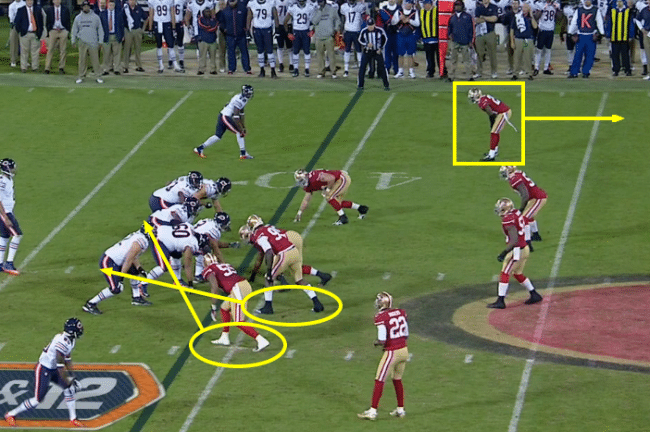
Those traders who do not review their work (+ prepare mentally each day) are what I term ‘Trader Philanthropists‘. I call them that, because they are donating the money to the market. Traders who make money come prepared, are passionate, work hard and are well trained. You have to do the same.
Below I will share 2 crucial tips for reviewing your trades.
Review Tip #1 Catalog Each Trade via Screenshot or Video Recording
For the traders in my private members forum, I teach them to minimally take a screenshot of each trade showing the actual entry and exit points on the chart.
Why?
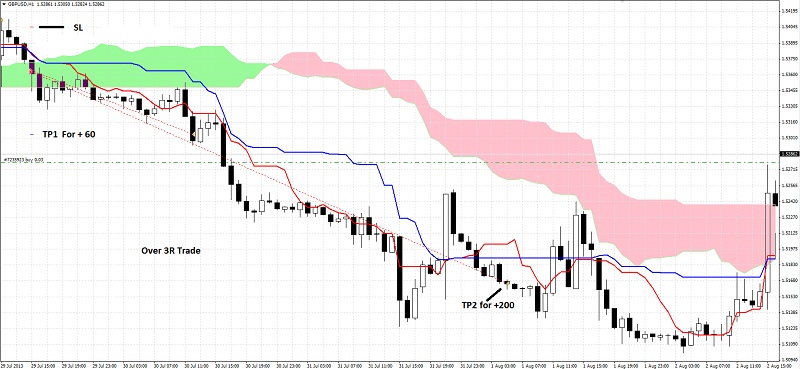
Trading is a highly visual process, and having the actual charts of the trade we took gives us a lot of data to work with. Seeing those trades with the green arrows (winning trades) time and time again builds confidence while increasing pattern recognition. Below is a typical screenshot saved for a trading journal.
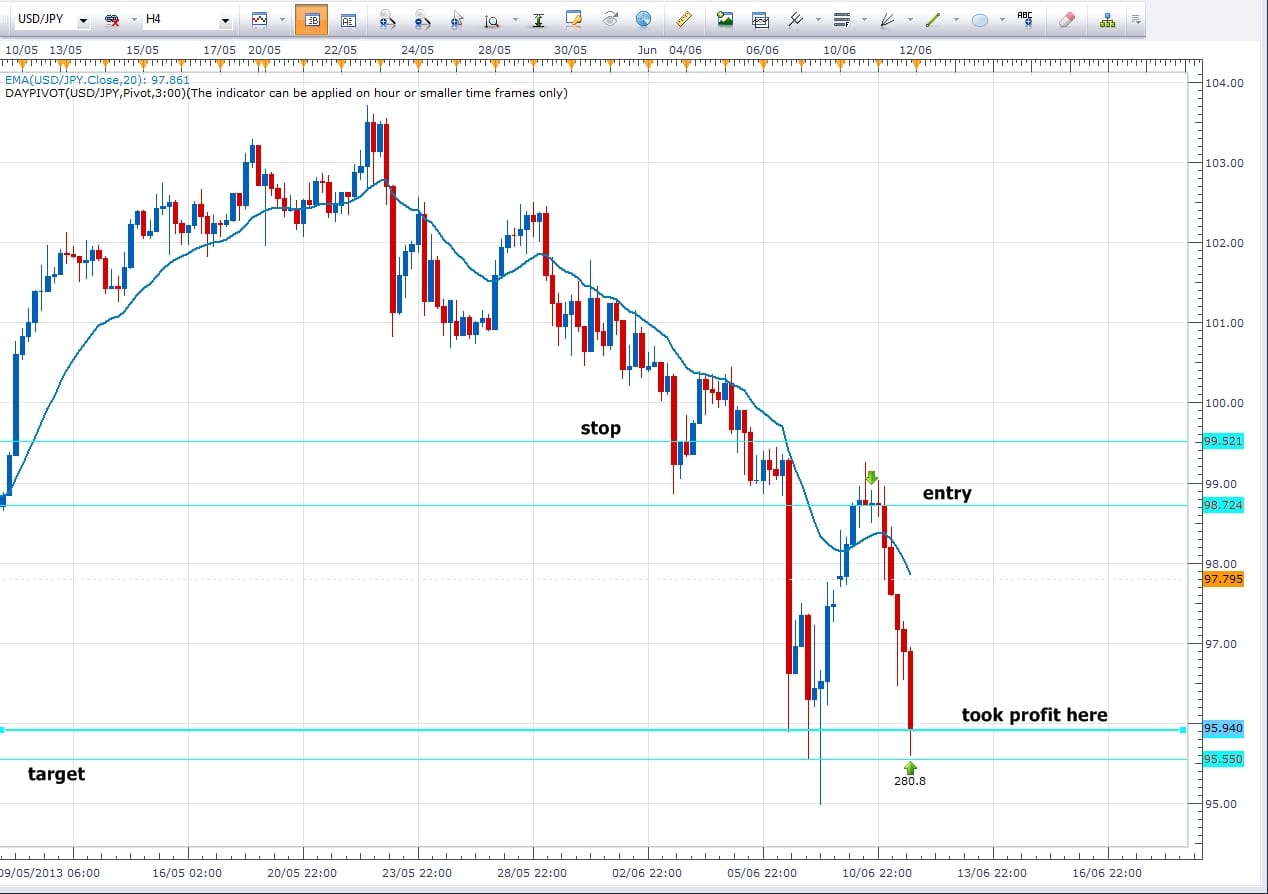
Yes we get experience from making actual trades, but reviewing them is like doing an additional trade. This is because the mind doesn’t differentiate much (from a learning perspective) between real trading, and reviewing your trades. Every time you review a trade, its like doing another lap around the track. Each lap builds those trading muscles in your trading brain.
My two suggestions for doing this are via screecast (screenshots) and camtasia (video recordings).
*NOTE: Here’s a cool trick in MT4 for getting screenshots of your trades; 1) go into your trade history, and find the actual trade, then 2) drag the trade onto the pair and chart. You’ll then see two arrows with a line showing your entry and exit, SL & TP (example below).
Review Tip #2 Journal Each Trade At a Set Time
I know journaling trades may not seem like fun. That is because you haven’t tasted the value in it yet. 13 years ago I started practicing yoga. Within the first year, I was practicing it daily, along with meditation. Why?
Because I had a taste of the benefits. I felt stronger, more flexible, relaxed, creative, energized, and healthy. When things got challenging and I wanted to slow down, I just remembered the benefits outweighed my temporary discomfort.
Journaling & reviewing trades is the same.
I recommend journaling at the same time each day. By building habits and these mind programs around trading, you build the neural networks to become disciplined.
Being disciplined builds confidence and communicates something important to your self-image.
It builds confidence because when you stick with it during tough times, you get through them faster in the future knowing you’ll keep moving forward.
It communicates something important to your self-image by strengthening the feeling that ‘I will do what it takes to be successful at trading‘. That belief becomes empowering to your successful trading mindset.
I fill in my journal at the New York Close being a natural impasse in my trading day. For you, try to find a low activity moment, or at the end of your trading day. Try not to do it when you are exhausted, or you’ll likely imprint the idea of ‘exhaustion‘ with ‘journaling‘.
Just like my dentist suggested brushing my teeth while doing something fun – by association, you are more likely to do it.
In Summary
If making more money trading, increasing your consistency, and getting better at something that can last you your life is not inspiration to review your trades, then I’m not sure what will be.
We all know plenty of people who played an instrument for a while, but eventually gave up even though they showed promise. Don’t be that person. Be the one who plays guitar at gatherings and wow’s an audience.
Life wants us to be skillful, to be good at things, to be professionals at life. Be that football player who in between turns at bowling, is reviewing their work to see how they can improve. The learning process of a trader never ends, and requires some ‘sweat capital‘. The rewards are far worth the effort, especially in trading.
Now it should be noted these tips are ‘mechanical’ in terms of process, meaning they are sharing with you the ‘what to do’. In the following article, I will share with you the ‘how to’ in filling out your journal to enhance your trading mindset.
*Please make sure to share your comments, whether you agree or disagree. And if you do disagree, please make sure to share why as I value different points of view on this.
I recently had a great opportunity to see a host of famous actors speak along with meeting several of them. They shared a lot of stories about their experiences throughout their career, including several of the roles they are famous for. One story in particular made me think of trading.
What most of us see when we witness actors is the success, fame and money they have made over the years. But many actually have a story to tell that is unique to them. This story, if you listen carefully, often highlights a wisdom which can be useful for our lives (even trading).
Although I cannot say he is my most followed actor, after hearing some of his personal stories, I was impressed and appreciate his ‘wisdom qualities‘.

William Shatner is most famous for his role as Captain Kirk in the popular Star Trek franchise. If you were to interview 10,000 people and say his name, probably the first words from 95+% of them would be ‘Captain Kirk‘ or ‘Star Trek’.
What most do not realize is he originally trained as a classical Shakespearean actor with his first minor roles in the early 50’s. Slowly working his way up to small TV/Broadway/film roles, it wasn’t until 1966 that his most famous role as Captain Kirk.
The original show ran from 66′-69′, but was then canceled after receiving moderate reviews. The year it ended was also the same year he went through a divorce. This is where it starts to get really interesting.
After being typecast as ‘Kirk’, he had a hard time finding roles. Never mind the fact he went through a divorce (difficult in itself), he had three kids to feed and lost his home. He lived out of a truck bed camper for a quite a while, where he had days without food in the fridge. He took whatever small roles he could to support his kids.
During the 1970’s, he got small roles which eventually led back him landing a film role in the first Star Trek film again as Captain Kirk. Six more Star Trek films, along with two TV series roles led to a new level of fame that would last him a lifetime.
To Recap
He worked for 15+ years before landing the Kirk role, to which he played for 3 years and then lost his job. He lived in a camper with no food for days on end, and did whatever it took to make it work. He never stopped working towards his goal, no matter how hard it got, even after two+ decades with no/little money for his hard work. Yet after 27+ years of this, he finally landed an opportunity which lasted him a lifetime.
He has demonstrated the mindset of success, a determination and willingness to keep going after his goal after incredible hardships and failures. Ironically, these are the same things required to be successful in forex trading.
One last note I’d like to share about Mr. Shatner before discussing another subject.
Through some really savvy business deals, he has become a deca-millionaire several times over. He is now 82 years of age, yet still works incredibly hard – traveling to conferences, TV projects, one man shows, competing in horseback riding and more – all at 82!
He doesn’t need the money at this point (hasn’t for decades) – yet works tenaciously hard. Why? Because he is passionate about what he does. He likes to create, produce and continually challenge himself.
Underneath the unique history of his failures, work ethic, and successful mindset is another critical point. That is – most people think of success as a straight line, but in actuality it is nothing from it. It is beset with years of hard work, preparation, and overcoming challenges. It is wrought with failures, mistakes, and low points.
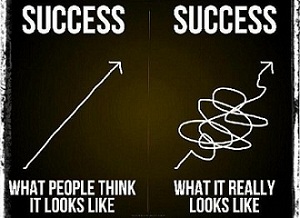
Most people go through these things, whether its acting, sports, or trading. The difference between successful and unsuccessful people is how they respond to those moments, particularly when things go wrong or become difficult. Successful mindsets keep moving forward and find solutions.
They are willing to work hard whether their fridge is empty or full – have a home or not. They are passionate about what they do, and meet each failure with more effort than before. What is required to be a success in forex trading is the same.
Your path as a trader and equity curve will in all probability not move in an upward 45 degree line. It will require you to work when you do not want to, and make decisions that feel incredibly uncomfortable (almost irrational). They will not be your preferences, nor will they be easy.
You will need to prepare day after day, and the work never ends. It will require you to maintain a high level of energy, and will demand you to get up from each failure. Your emotions will fight you at almost every step in the way – yet you need to be calm and clear.
This is what is required to be consistent and successful at forex trading. Whether you meet this challenge will be entirely up to you, your mindset and choices from this moment forward.

But I’d like to end with a hats off to Mr. Shatner for sharing some of his wisdom qualities and stories. He has earned his success, traversing difficulties where most would fold, while never stopping to move forward.
Have you ever asked yourself why you close winning trades and take profits too early, but let your losses run to the full stop? Have you ever wondered why you feel the tension, emotion and desire to close your winning trades too early before hitting your take profit level – even though the trade is already in profit and moving favorably for you?
Today I am going to tell you the answer.
There is an underlying forex trading psychology explanation for this, which actually goes beyond your emotions, trading history or experience. It is always present, yet is like your shadow – always close following you, but not something you can pin down. Every time you are in a winning trade, you seem to experience this want to close the trade early.
You may have prepared mentally for your trading day, yet you still experience this desire to close your position early. You’ve heard the saying, ‘nobody every goes broke taking profits‘, which is completely false as demonstrated here.
You’ve told yourself hundreds and hundreds of times you’d never close your winning trade again early. That you’d hold the trade till your take profit level. Yet more often than not (despite your best intentions), still close the position early.
Why?
You’ve asked yourself this question dozens of times before. You’ve created rules for your systems, written out a trading plan, put post-it notes on your monitors, yet you still do this.
Why?
There is one reason which has been present with you since your first trade, and is there right now which I’m going to tell you about.
And the answer is a biological one.
From an evolutionary perspective, we were not built to be traders. We are biologically wired in our brains NOT to be successful traders. This is one of the main reasons why so many traders fail. To have a successful trading mindset, we have to actually UNDO millions of years of wiring and evolution.
Biologically Wired to Not Trade Successfully
Our brain has gone through several evolutions which helped us to adapt to our environment. We have our older brain, which is referred to as our ‘reptilian’ (or lizard) brain. Our ‘limbic brain’ sits right on top of our reptilian brain & brain stem (where we send signals to the rest of our body).
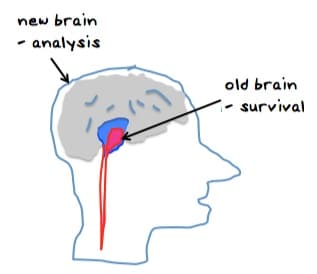
It’s actually a brilliant design, because if we need to get the F-out of dodge (i.e. are running from a Lion that wants to eat us), it helps us send a quick signal through our body to fight or run. This is known as our ‘fight or flight’ mechanism, and it’s hard wired into all of us.
Now keep in mind, this system can react in less than a second activating all kinds of hormones giving us the feeling we will be in a fight to the death, or need to run in panic mode. It can control our emotions, fears and thoughts in the blink of an eye.
Unfortunately, it causes us to make quick and rash decisions, which in 99% of all trading situations does not help.
To top it off, there is another portion of our brain which hurts our trading performance. It is a portion of our brain called the ‘amygdala’, which is biologically wired to see the negative in our environments more than the positive.
Why?
Because negative threats represent a greater danger to our survival than positive ones. It takes us about half a second to notice a threat, yet it takes several seconds for us to recognize something that is good for us.
And there you have it. This is the reason – this is why you take profits too early. Every threat and ‘negative’ piece of information on the chart tends to activate this ‘fight or flight’ response in us and a potential danger.

This leads us to register it as a ‘threat’ to our winning trade. When this happens, our brain will create a rush of hormones, thoughts and emotions which produce a tremendous impulse for us to close the trade early.
The trade may be following all your rules for entry, have a ton of positive factors supporting the trade, yet one negative candle against us – and we panic. We worry it will go negative. We fear it will turn into a loss, and we close the trade early.
This is why so many traders fail and do not make money consistently. You are constantly fighting your biology and thousands of years of evolutionary wiring to trade consistently – to hold onto winning trades. We are swimming upstream against our biology to have a trading mindset that is geared towards success.
How Can You Change This?
Luckily, there is a way to change our forex trading psychology and the internal wiring we are all born with. There is a way to rebuild your neural connections to hold onto winning trades without the fear, worry or panic. There are ways to build new neural pathways to trade successfully.
We are building this program as we speak – to help you re-wire your brain for success, to rebuild your neural pathways. Instead of closing your trades early, you hold on till your full profit target for a large winner. Instead of making emotional trading decisions, you are wired for successful trading.
We have already created one program for this via our ERT training, which many traders have already taken, and are noticing huge changes – both in their trading, and in their lives.
The second program for this will be announced shortly with the same goal – to re-wire your brains for successful trading.
Often due to low liquidity, summer forex trading can be fickle, whimsical and often times dull. Staring at charts for hours or days when the price action is slow isn’t going to make you a better trader, or make more profits. We need to be using our time to improving our edge whether we are trading or not. So what do you do when the ‘watching the corn grow‘ moments come by?
Hello Traders,
I just wanted to share a brief excerpt about the trading mindset, and some of the things I share in the course. One of the things I focus on heavily is helping traders build a successful mindset. Here is an excerpt below about one of the most common pitfalls traders fall into that I hear all the time.
From 3 Guidelines for A Successful Mindset…
“You would not believe how many times a student posts a trade, loses the trade, and the first thing they say is ‘What have I done wrong?’
First off, why does losing a trade, in your mind = doing something wrong? Did you expect the system to work perfectly every time? I don’t think any of you really expected a system to work perfectly, so the question is indicative of something else…an idea in your mind that you did something wrong if it (the trade) did not work out.
Anytime you see or hear this, you have to be clued in immediately why you think you did something wrong because you lost a trade?
The answer lies in your self-image – the part of you that has an idea of what you are like (successful, hard working, enthusiastic, lazy, stupid, optimistic, pessimistic, abundant, poor, not fit to be a trader…etc). This is how you view your self – and this question ‘what did I do wrong’ is actually coming from this place – that part of you that believes you did something wrong because you lost.
There is an idea that if you only focus on your mistakes, you will become successful. Although it’s true you need to plug the leaks – you don’t get there by focusing on what you did incorrectly.
So a tool to combat this is to build the neural pathways to making better trades, and there are many ways to do this.”

This is just a brief excerpt in our courses from our trading mindset and performance enhancing section in the course, where I teach and offer tools, techniques, and methods to build a successful trading mindset.
I hope you enjoyed this small piece here, and will use this to look into your self-image, your trading mindset, and what you can do to build the neural pathways to trade successfully.
Kind Regards,
Chris Capre
Today I’m going to share an unconventional approach to creating a successful forex trading mindset I employ every day before I hit the buy/sell button. A small confession though – it actually took me a while to realize it was a major ingredient in my success.
The funny thing is, I never read it in any trading book, video or blog. Perhaps it should be – perhaps it needs to be talked about more often, because doing this one thing has changed my mindset in trading and life.
So what is this one unconventional approach I’ve used that’s help to build a successful trading mindset?
In my previous article Developing A Successful Forex Mindset Pt. 1, I discussed how your trading mindset is essentially a product of three things;
1) Your Neuro-Physiological Wiring
2) Your Mindset of Level of Mindfulness
3) Your Psychological Conditioning
I focused specifically on how your Neuro-Physiological Wiring, specifically how your mind and brain are integrated and help in your development as a forex trader.

I also talked about the three main fundamental functions of your brain (regulation, learning, selection) and how these mental functions are critical for building a successful forex trader mindset.
Today I’ll focus on number two from above – how your level of mindfulness helps to build your trading mindset – gearing it towards success or failure.
Your Level Of Mindfulness
As a general definition of mindfulness in trading, your mindfulness equates to the degree of awareness and attention to both your inner and outer worlds. Although this is particularly critical during the trading process (including just before and after), it is also connected to your mental activity and thoughts separate from trading.
Why?
This is because there is no compartmentalized section of your brain just for forex trading. We didn’t evolve to be forex traders sitting in front of a computer for our survival, so we are using skills and neurons from all portions of your brain. Because the brain is an interconnected whole, our experiences in life around wealth, mindset of abundance, family, memory, fear, greed, confidence, and more, all effect our trading mindset, and thus – how we make trading decisions in the moment.

Particularly true for trading (but also in life), your brain learns primarily from what you attend to in the moment. In an ode to Star Wars fans, Qui-Gon Jinn once stated, ‘your focus determines your reality‘. Thus, since your mind essentially learns from what you focus on in the moment, your level of mindfulness is the gateway to taking in helpful information (and avoiding non-useful info). How you perceive information (internally and externally) via your level of mindfulness, is what facilitates your learning process and thus trading mindset.
30-80x a Second
I’m going to be sharing a few ways you can build your level of mindfulness to sharpen your mental faculties, but wanted to briefly mention the potency of mindfulness practice.
In a study in 2004 by Lutz et al., he examined various Tibetan meditators as they went deep into their meditation and he found something highly impressive. Lutz noticed these meditators produced an uncommonly level of powerful and pervasive brainwaves, whereby unusually large regions of neural connections were pulsing in a ballet like synchrony. These large regions of neural connections pulsed at 30-80x a second allowing them to unify large territories of the mind.

Part of Einstein’s incredible mental faculties were his ability to involve large regions of his brains to work together via the cerebral cortex. His level of activity and connection (or higher) has also been found in those meditators who have build up their level of mindfulness via a sitting meditation practice. So a genius level IQ or mental abilities, along with highly perceptive qualities are not reserved for people born with these gifts.
Like all things in the mind, they can be learned and developed, particularly through mindfulness practices.
Mindfulness & Wisdom in Trading
As a whole, trading wisdom and mindfulness is not your ability to spot price action patterns in the charts, or understand proper risk management. Trading wisdom and mindfulness comes from a few steps;
1) Understanding what hurts and helps your trading process
2) Based on this understanding and experience, letting go of those habits which hurt your trading process
3) And strengthening those that help move your trading forward
As a whole, mindfulness and wisdom in trading are supported by the three basic functions I mentioned in the last article (regulation, learning and selection). Your brain learns through forming new circuits, strengthening new ones and weakening others. It selects through experience what is valuable and what is not.
Mindfulness in turn leads to new (and accelerated) learning, since your attention shapes what neural circuits are built. Regulation is done through a combination of excitatory and inhibitory activity. Thus, by learning to improve these three processes, you will improve your neural functions, and thus improve your trading mindset.
Two Methods For Building Mindfulness
Although there are dozens of methods to help you build mindfulness which will flood into your trading, I will talk about the two that I have practiced for over 12 years now; Yoga & Meditation

Over a few thousand years old, Yoga has hundreds and hundreds of scientifically proven benefits, such as reducing fat, increasing muscle tone, improving digestion, enhancing your sex life, glandular function, and relaxing your central nervous system (or CNS).
Your CNS regulates an enormous amount of activity from motor to mental activity to breathing. Are you mouth breathing rapidly? If so, you are likely to be more excited, emotional and less relaxed/focused during trading. Yoga is a great practice to help build both a relaxed CNS, but also to build awareness, both physical and mental.
To really do yoga well, you have to maintain awareness of your entire body, and control your internal energy. Any inability to do this will manifest in your yoga practice. Don’t believe me, try and do a balancing pose (like tree pose) and see how long you can hold it? I’m willing to bet almost any experienced yoga instructor can hold it for much longer than you. How so? Through a greater ability to relax their body, mind while maintaining awareness.
Thus, Yoga is a fantastic option for building mindfulness as that is the root of all yoga practice.
Meditation is another alternative, particularly silent sitting, sometimes known as vipassana, shi-ne, zazen or many other names. More than likely there is a center around you that offers a silent sitting practice, but those who engage this practice fully not only notice mindfulness benefits, but greater clarity, happiness and without a doubt – better neural functioning.
The general goal of any silent sitting practice is to build your mindfulness and awareness in the moment.
Many people wonder how I became a successful trader being self-taught. I am unlikely smarter than many of those I teach. Nor did I take a single economics or business class in college. But one edge I had for sure, was my yoga and meditation practice over the last 12 years.
This helped accelerate my learning curve as I figured out much quicker what to focus on, what price action setups were high probability, how to build my trading skills and trading mindset to be successful. If there was one key edge between me and others, it would be this, and the benefits continue ad infinitum – probably the best investment and ROI I could have ever come across in my life.
Regardless, these are a few options for building a successful trading mindset and your mindfulness in trading.
In Closing
Your mindset, brain and mental activity is what forms your trading mindset, and thus – determines your level of success. Mindfulness in trading equates to the degree of awareness and attention to both your inner and outer worlds. This would mean your emotions, your level of relaxation or excitation, your ability to focus in the moment and detect the order flow in the market, along with how your mental activity is helping or hurting your trading decisions.
Mindfulness increases your learning process by focusing on what is beneficial and profitable for your trading process, while avoiding what sets you backward.
Two practices you can engage in to build your mindfulness are yoga and meditation, which will sharpen your focus and mental activity so you get more out of your brain and mind when trading.
This is part two of the three part series on Developing A Successful Trading Mindset, so stay tuned for the last edition soon. But I hope this gives you some ideas of looking beyond the strategy to what may be keeping profits and success in trading just out of reach.
Kind Regards,
Chris Capre