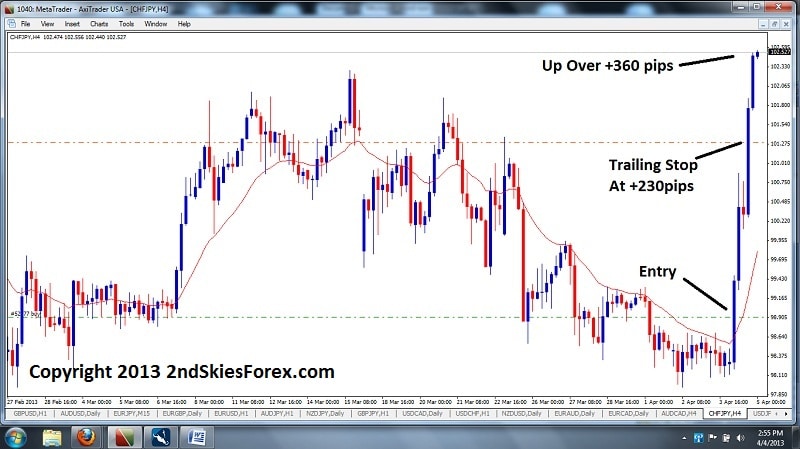
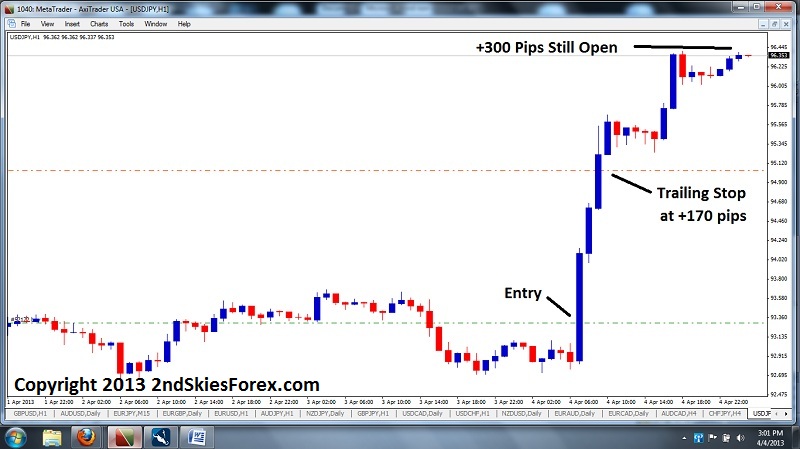
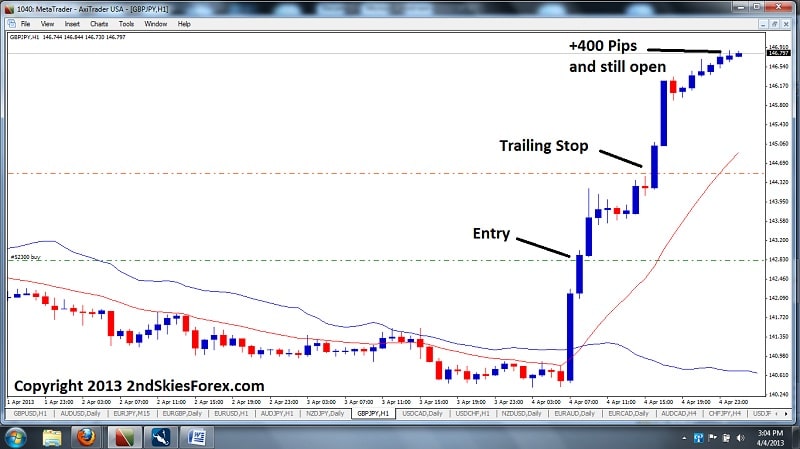
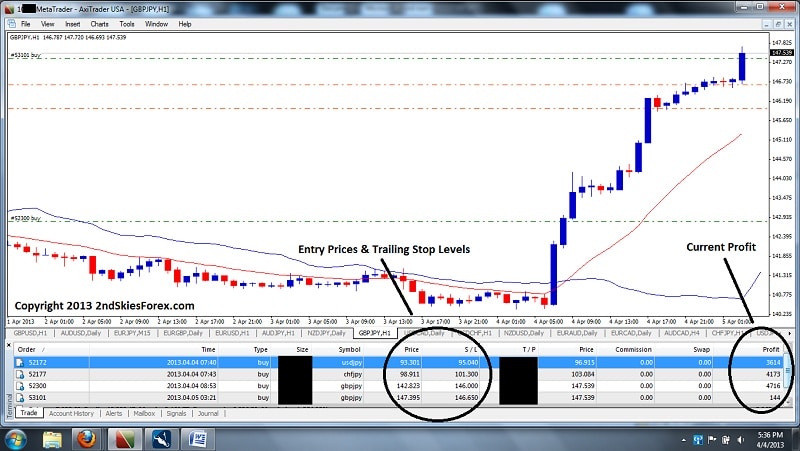
For the record, I have no idea if Michael Jordan trades. I have no idea if he even knows about the Forex market or is actively involved in his investments. Nevertheless, he helps me with my trading.
I have read over 9 books on the man, have his DVD (Michael Jordan to the Max), seen pretty much every game and am constantly reading his quotes. Why? Simply put, he embodied greatness.
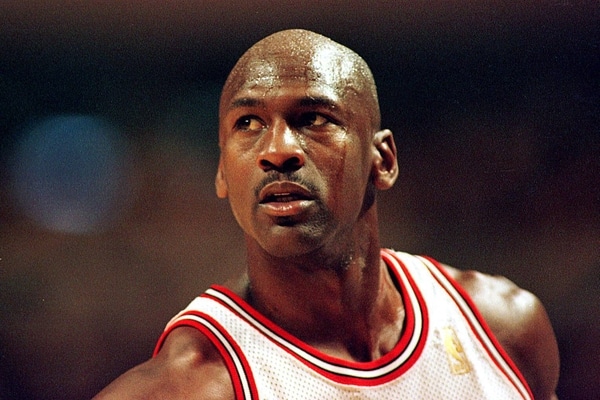
Many people think he was born with some magical talent to play basketball and nothing could be farther from the truth. The first time he played, he could barely dribble the ball. He couldn’t make shots and had none of the moves or skills he was famous for.
Many people only know him when by the time he was already great with the Bulls, or a standout player at UNC – Chapel Hill where he won the National Championship as a freshman. But few know the journey of how he got there, how he struggled, how hard his work ethic was, what challenges he faced, how he overcame his weaknesses, how focused he was and how he had to make his greatness through effort, discipline, and will.
His Early Years
Michael came from a family of ‘sharecroppers’ – people who rented the land and shared the crops they produced. His grandparents were born sharecroppers and worked extremely hard. They had food on the table but were still poor. His parents had this hard work ethic built into them and it was a hallmark of their character. With four children to raise, James (Michael’s father) built his own house on a plot of land (working on weekends) they saved up for years to buy. While building this house, Michael, the youngest of four, got to see the results of hard work first hand.
Even though his mom had four children, she also worked a full time job.
When the father later started playing basketball with his sons, he never made it easy for them. They had to earn their wins. Michael being the youngest of 4 had to play even hard since he was physically smaller than his older brother Larry who he played against all the time. Larry also never eased up on Michael and they played for hours until dark. From the very beginning, Michael had to earn all his wins.
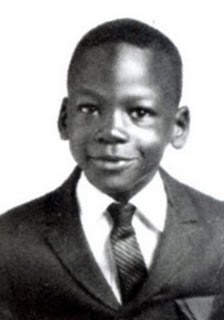
Later they both joined a youth team where Larry was the star and Michael was just another player. Although he had athletic skills, nobody thought of him as anything special in any sport he did. Hard working yes, but not special.
What is interesting to note is his father and brothers were not that tall, some just barely over 5’6″. But something happened to Michael. He never stopped growing like the others did when he was as tall as them. Many people in his family think he willed himself to grow.
Nevertheless, when high school came around, as a sophomore, he tried out but didn’t make the varsity team. He was hurt and his confidence was shaken. Being placed on the junior varsity team, after digesting his hurt feelings, he determined to become better. He worked hard at practice, so much so eventually the other players could not keep up with him. Even after having a great season with the JV team, when the varsity team was entering the state tournament, Michael was not selected to the group. So what did he do? After hearing the team’s manager was ill, he decided to fill in for him. He wanted to be there so bad, he would get there any way he could, even if that meant carrying towels and gym equipment for the players.
When the season ended, did you find him swimming at the pool or playing games with his friends? No. He was practicing every day on the basketball court hours on end. In the next year, he made the varsity team. Did he start off having great success? No. He actually struggled, made lots of turnovers, had wild shots and made all kinds of mistakes. He actually was a disappointment to his team and his coach.
Going into a holiday tournament, his team made the finals. Although he was playing all right, the game was close. His team needed someone to stand out in that moment. This is where Michael came in. With only a few minutes to play, something happened in Michael. He got really focused and had an intensity about him. He just started making plays and shots and steals that it was bringing his team back in the game. All the hours of practice over the years was starting to kick in. But there were only seconds left and his team was still down. Trailing by a point, his team gave Michael the ball. The team started to collapse on him so he pulled away for a shot. The ball was in the air while the buzzer sounding. Michael made the game winner! There was no fear of losing or of looking like a fool. There was just the concentration of the moment and what he had to do. Interestingly enough, Michael made the teams last 15 points of the game.
That summer he was the first student from his school to receive an invitation to the 5-star camp, a collection of the best coaches and players from the country receiving instruction and competing against the top players. Michael could not believe he was invited and wasn’t sure he belonged. So what did he do? Practice harder than anyone in the camp. He outplayed everyone there not through skill, but through having an unmatched intensity. He received more trophies from the camp than any other player.
Returning home from camp, did he rest on his accolades? No. He became possessed. Starting his senior year, he would go to the gym while it was still dark out and practice. After school was over, he would practice even more – again till dark. When the season started, even though he was on the Varsity team, he also practiced with the JV team to get in more time. After returning home from practice at school with both teams, would he rest? No. He would practice some more. When he started the season, he was a marked man, often finding 2 or 3 people guarding him. Did he balk or fade under the challenges? No. He averaged more points in his senior year than the one before even though he was guarded more intensely.
He then went to UNC as a freshman trying out for the team. Only 3 freshman before him ever started on the team. Did that stop him? No. He worked harder than ever. In the first game of the year, he got the nod, even through having a bad ankle. How did his first shot go in front of 11,000 fans and a regionally televised game? He missed and it clanked off the rim. Did that stop him? No. He got over his nervousness, stopped worrying about being careful and played. He let go of his fears and started playing using everything he had. And he got better.
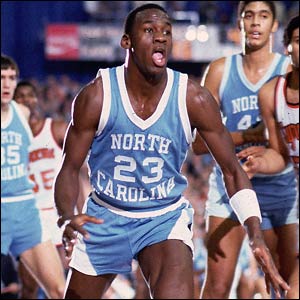
UNC eventually made it to the championship game in the NCAA tournament and were playing against another freshman (Patrick Ewing) thought to be the best player in the league. It was played before 61,000 fans and nationally televised. Imagine the nerves in being a freshman playing for a game like this. With UNC down by 1pt at the end of the game, instead of giving the ball to their top player James Worthy, the coach decided to give the last play to Michael, a freshman. With Worthy and Sam Perkins covered by Georgetown, Michael was perfectly open and took the last shot. He flung a high-arched shot that seemed to hang in the air forever. It snapped right through and he made the game winner as a freshman. Michael Jordan just made the game winner in a national championship. And this was someone who 4 years ago did not even make his varsity team.
Only two days after making the game winning basket and becoming one of the best known players in the country, did you find him relaxing with his friends, drinking at parties or playing games? No. He was back at the gym practicing and getting ready for next season.
I could go on an on about Michael’s accomplishments and many people are aware of his professional career. But few understood all he went through to get there, and what actually made him great.
How Does Micheal Help My Trading?
I can think of no other person who inspires me more to become better at what I do. Here was someone who wasn’t born great, but made himself that way. He worked harder than anyone else. He was more focused than anyone else. He was more determined than his peers and never let obstacles or losses overcome his mind. He used his will to make himself great at what he did. He faced his fears, doubts, and nervousness, yet he never stopped working on getting better.
Anytime I am tired, or think I have trading figured out, or don’t want to study, practice, work, or get better at trading, I think of Michael. Its the same reason on a saturday morning at 8am, while others at the university were recovering from their nights of drinking, I was in the library studying for the next 6hrs. I didn’t graduate a Golden Key National Honor Student because I was smarter than others. Shoot I barely graduated high school. I just worked harder than them. I sat down and continued to study, even when I wanted to get up, or was tired, or didn’t feel well. When I was playing soccer for a nationally ranked college team and had set three records the prior year, did I relax and sit on my accolades? No. Anytime we did our ‘flagpole run‘ from the field to the pole and back (a 3/4mile sprint), I always came in first every single time for the entire year. Its why I played 330 days a year.
When I lost $50,000 in 30mins of trading, did I give up, stop, quit or say I’d never do this again? No. I vowed to never make that mistake again and started learning more, practicing more, figuring out where I went wrong and correcting my mistakes. Anytime I ran into a challenge or faced a major loss in trading (which I had many times over the years), I thought of Michael and never gave up. I wasn’t born understanding markets or how to trade. Nobody in my family traded and I did not take one business class in college. I was a yoga teacher prior to trading and had absolutely no experience in the field.
When I applied for a job on Wall Street, did I let that stop me? No. After my first interview, one month later I was being flown out to Wall Street to learn the Forex markets from the market maker. After intense training sessions, did I rest and have a beer at the bar like the others? No. I organized after training sessions with the other trainees so we could study the markets.
When I went to the San Francisco office, I started with a group of 5 others who were all more experienced than I, some with masters degrees in finance or economics. Did I let that stop me? No. Although after one day of being 6mins late to work, my boss came on the company chat and asked me a simple question, ‘what time you supposed to be here?‘ I replied, ‘10‘. He then asked, ‘what time is it now?‘ I quickly typed, ‘10.06‘. What did he say? ‘Don’t ever be late again‘. And I never was. In fact, from that day on, I was always early, sometimes up to 2hrs and stayed always past after I was to go home. I came in on my days off and sometimes worked 7 days a week. I worked so hard that after a year, the same intimidating boss I had was about to ask me to take a vacation when I took my first. Even though I had 2 weeks vacation time, I took 4 days.
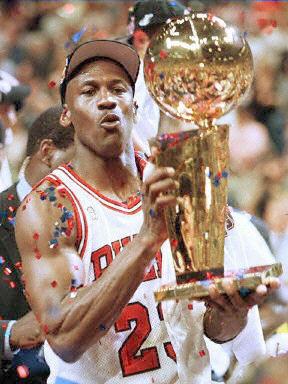
When I think of any degree of success I have earned in this field, I think of Michael Jordan and how greatness is earned and rarely ever given. It takes hard work to be great at anything. It takes never-ending focus and dedication, even after failures. Its the same reason on a sunny Sunday while I can see others out with their family and friends having fun, I am sitting in front of my charts, studying quantitative data, patterns, doing trading exercises to improve my analytic or pattern recognition skills, and continually working on my weaknesses. Its the same reason when im training in olympic archery, I am thinking of how it will improve my trading and what I can learn from it.
I actually met Michael once, when he was playing for the Bulls in 1992. After a home game, I was downtown and was still in the city an hour and half after the game. I pulled into a gas station as I needed to fill up. When paying for the gas, I noticed the attendant was distracted. I asked him what he was looking at, and he pointed to a black Mercedes with the license plates (MJJ JVJ – him and his wife’s initials) and said, ‘that’s Michael Jordan’. I went over to the car where he was talking to others. I told him amazing game and how thankful I was for watching him play. And then I did something a little out there. Knowing his competitive spirit, I asked him if he wanted to race. I had an older looking Chevy El Camino which had a hidden monster under the hood. He looked at it and said, ‘that? you want to race me with that?’ I calmly replied, ‘yes’.
What happened after is a story for my grand-kids.
Observations of Beginning Traders
I think many times, when talking to other beginning traders they want to take the easy way out. They ask others for trade signals or if their trade will work out. They would rather have someone else think for them instead of learning how to trade the market themselves.
Nobody ever became great by having someone else do the work for them. They listen to their minds, have no patience for a trade and want instant gratification. If their own minds knew how to trade successfully, they’d already be there. Yet they still do what they want to, not what their training has taught them to do. Some of them don’t even go through any real organized training or online classes.
They don’t want to fill out their trade journals, or performance sheets, or study their past work. They just want to make money and they want it fast. Never in Michael’s mind was instant success or gratification. If it was, he would have never made it. He did everything he needed to become better at what he did and he never rested, nor asked others to think or work for him. He faced his fears of losing, of being a fool or wrong and went forward anyway. I think the reason why so many traders cannot wait for a trade to play itself out is fear – fear of the uncertainty. This is why they go for shorter trades or close it out because then its certain they know the outcome. They would rather be controlled by their fears than confront and digest them. I think newer traders worry about being careful or making a mistake thinking it means something about them, their intelligence or ability. If you have a long trading career, you will make thousands of mistakes. Stop trying to not to make any mistakes or losses and start trading.
In closing, I’d like to share one quote of Michael’s that I am constantly haunted and inspired by, one that I will never forget which he said at his Hall of Fame speech.
“One day you might look up, and see me playing the game at 50….oh don’t laugh (and here’s the part I will never forget), because limits, like fears, are often just an illusion.”
I hope this has been helpful to you and your trading process, and hope that Michael’s life, story, and example of what hard work can do, will also be an inspiration for you as it always will be for me.
Chris Capre
2ndskiestrading.com
Twitter; 2ndskiesforex