Tag Archive for: mindset

What’s Inside?

  • The 4 stages to becoming a millionaire trader
  • What is the most important stage to making money trading?
  • What trading and mindset skills you need to become a profitable trader?

Since February of 2018, I’ve been envisioning how I want to build a complete trader training program that will teach you the stages, skills and mindset you’ll need to build to become a highly profitable trader who can pull a million dollars out of the market. I actually started working on this article over 6 months ago, and it has finally come to fruition.

If there was only one trading article you could read on my site, this would be it, so grab the popcorn as it’s a heavy hitter.

The goal of this article is to teach you about the 4 stages to becoming a millionaire trader. It’s designed to be a roadmap and structure for how to get from where you are now (likely struggling) to becoming a professional trader who can make a million dollars trading the markets.

millionaire-trader 2ndskiesforex

Before I get into the stages and roadmap, I have to explain a fundamental component and basis for this article.

Buddhism And Trading?

For the last 18 years, I’ve been training in Tibetan Buddhism, particularly in the Nyingma tradition. One of the amazing components of training in Buddhism is the ‘structure‘ and ‘stages‘ they clearly lay out for you. And a fundamental aspect of Buddhist practice has to do with the following formula:

Base, Path & Fruit

To explain this simply, the ‘base‘ is the starting point and foundation you build everything else upon.
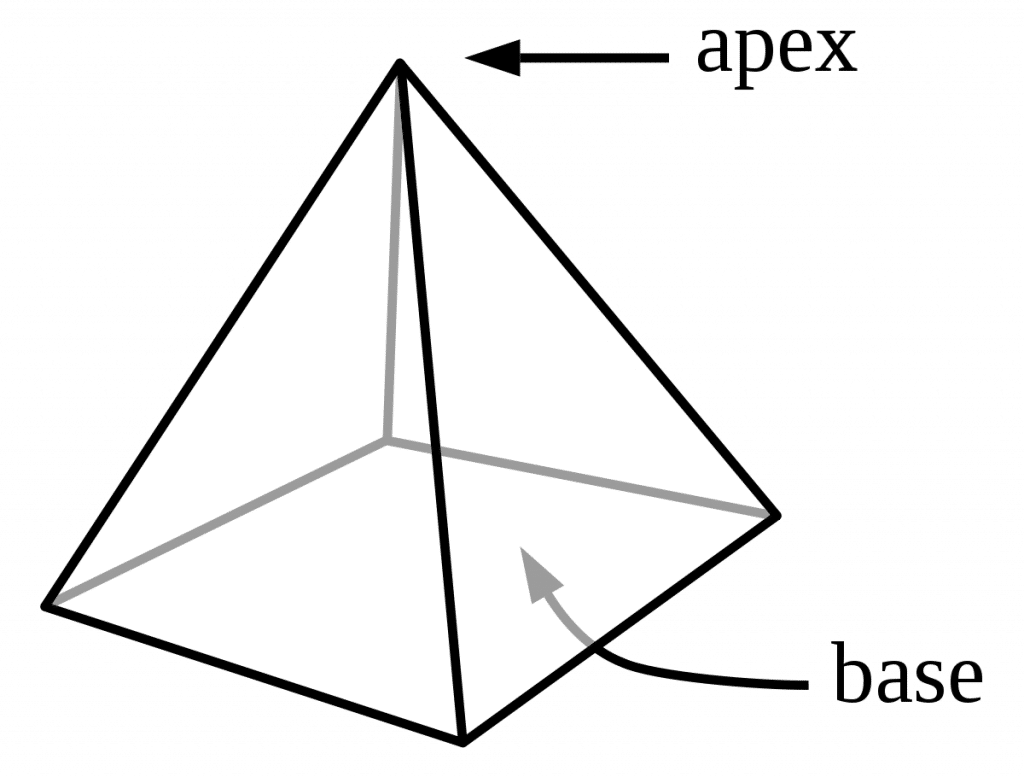
base of pyramid

It’s a fundamental level of direct experience and understanding you need to have to complete a specific aspect of your training. It’s arriving at the base which is what makes any practice, training or method work. Without this, you’re just wasting your time.

Keep in mind, it is not something you can arrive at ‘conceptually‘. What I mean by this is, it’s not something you can just read in a book and understand. You have to have the actual direct experience before you can progress any further.

Think of it like this:

Who would you trust more? Someone who’s lived in Buenos Aires (Argentina) their whole life, and knows the city, streets, traffic patterns, restaurants, various barrios, how ‘corruption’ affects their daily business, local customs, etc? Or someone who’s spent the last several years ‘reading‘ about Buenos Aires, looking things up on google, and watched youtube videos about it?

I’m guessing every time you’ll take the former hands down, which you’ll notice has nothing to do with ‘intelligence’. The person who’s lived in the city has a ‘direct experiential‘ knowledge about Buenos Aires that cannot be read in a book, watched in a video, or learned ‘conceptually’. It has to be a direct experience!

The same goes for the ‘base’ in trading. If it’s not a direct experience, you simply cannot progress any further. This is what I mean by ‘base’.

The ‘Path‘ is the practice, methods and training you use to get you to the direct experience. It needs to be a specific path which takes you from point A to B.

path

The path needs to be very specific and clearly demonstrated to produce real results.

The ‘Fruit‘ is what you get when you fully complete the ‘path‘ by using those practices, methods and trainings. It’s the ‘result‘ of what you get when you do the work, and it also should be specific.

lots of money 4

If you have the base in place, then you can begin the journey. If not, you’ll need to arrive at the base (just like you have to arrive at ‘base camp’ to climb Mount Everest), before you can proceed any further. There is absolutely no way to skip steps here.

This entire training and article is built upon these principles of Base, Path and Fruit. Simply put, if you follow the structure I’m laying out here for you, your progression will naturally follow and you’ll see the results in your trading performance, mental execution and mindset.

Each of the 4 stages to becoming a professional trader has it’s own ‘Base, Path and Fruit’. Before you can progress to the 2nd stage, you’ll have to complete the first. There is no way around this! So if your goal is to make a million dollars trading, you’ll want to go straight for the first stage.

Becoming A Millionaire Trader (Stage 1)

The very first stage to becoming a millionaire trader is what I call the ‘Stage of Discipline‘.

discipline

The ‘base’ of this stage is having the direct experience and realization that:

a) your brain is currently not wired to trade successfully
b) you’ve had the experience of how your mind, emotions, and skill-set are currently not sufficient to consistently make money
c) have a real passion for trading, and
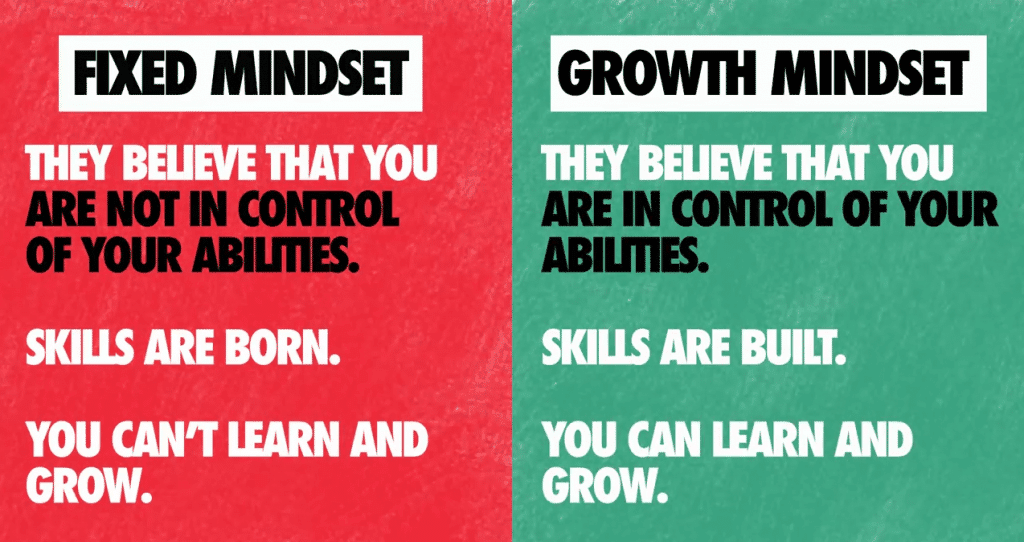
d) a mindset focused on growth

If you have those 4 things in place, you have the sufficient ‘base’ to begin the first stage.

By now, you’ve probably witnessed how your emotions affect your trading decisions (FOMO, not pulling the trigger, fear of losing money, risking too much/too little, etc). You’ve probably also noticed how you’re not consistently disciplined in your approach (system hopping, changing instruments, not sticking to your trading plan, etc).

Sound familiar?

If you’ve realized what you’re doing isn’t working, and that you’re lacking certain skills + training, but still have a passion to make money trading + are focused on growth, then congratulations – you’ve arrived at the base of the first stage. You’ve accepted the fact you (by yourself) cannot make this work, that you need a trading mentor + build new habits to succeed.

chris capre bw main foto

If you’re here, then you’re ready to actually begin the first stage, which is the stage of discipline.

The only thing you need to pack in your bags from here on out is a commitment to getting past this first stage. You don’t need to have the commitment to become a billionaire trader. Just having the commitment and openness to train is the minimal requirements to begin the first stage. Consider this stage to be your ‘apprenticeship‘ in becoming a successful trader.

The ‘fruit’ of the 1st stage of discipline is ‘consistency‘. If you don’t have consistency, you’ll never a) succeed in trading, and b) make it to the 2nd stage.

I say ‘consistency‘ is the ‘fruit’ of this stage, because it’s what you get when you have a solid level of discipline in place. Without this, there is no progression in trading, and you’ll continue to make the same mistakes over and over and over again.
making same mistakes

Does this sound like your current experience?

Thus, discipline is what helps you exit out of that cycle (repeating the same mistakes). It’s the force which allows you to break through your current bad habits around trading. It’s what allows you to execute the same things over and over again, regardless of the emotions you feel, or obstacles you come against.

Consider discipline a type of ‘armor‘ against that which will knock you off your horse and derail your progress. Essentially, it protects you against yourself, and is absolutely necessary in trading..

armor

From my experience, both in Buddhism, and in trading, it actually has to get worse before you give up your current approach (which likely isn’t working). You actually have to suffer to the point you realize “I no longer want to suffer like this. I’m open to trying it differently.” This realization creates the first real opening for you to get out of that vicious cycle of repeating the same mistakes over and over again.

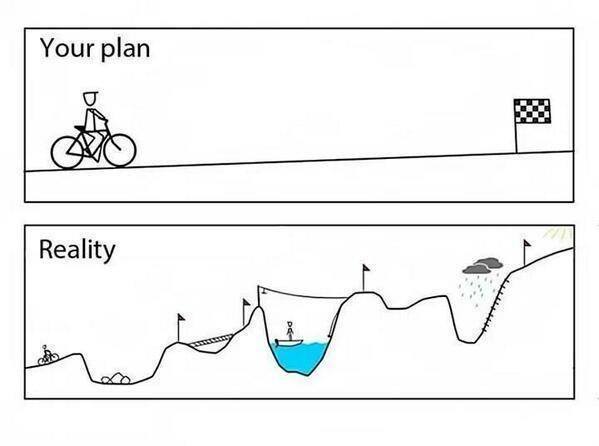
The ‘path‘ of the stage of discipline is the most intricate and nuanced part of your trading progression. It’s the hardest part of the mountain to climb, and requires the most effort on your part. This is because you’re going to be fighting against much of what you currently are, which by definition, is insufficient to consistently make money trading. If you were already there, you’d be doing it.

The ‘path’ has to consist of a series of methods and skills (trading and mindset wise) you’ll need to build to get to the ‘fruit’.

path to fruit

Practices & Methods For the Stage of Discipline

As stated before, the goal or fruit of the stage of discipline is consistency. This means consistency in your execution, decision making process, trading strategies you are using, what instruments you trade, risk management, etc.

Consistency, however, has a ‘root cause‘, meaning the root of what it grows out of. As I’ve stated before, consistency can only come from the mind. If you do not have consistent thoughts, thinking patterns, neurological structures, mindset, (etc) there will be no consistency in your trading. Hence your focus for building ‘consistency’ has to primarily consist of (and begin with) your mind.

summary

If you are currently not experiencing any sort of consistency in your trading, then congratulations, you’ve discovered the root cause of your inconsistency (your mind). Now your initial goal in trading and becoming consistent may seem counter-intuitive, but I’m guessing you’ll find it makes sense when you fully understand it.

Your initial goal in trading should be to become a ‘consistentlylosing trader. Now many of you are likely thinking “I consistently lose now, why would I want this?” While that may be true in ‘form’, it’s not true in ‘essence’. What I mean by this is, while you may be consistently losing money, there are likely many components of your performance which are not ‘consistent’.

Some of these components can be:

  1. Risk Management – are you consistently risking the same % per trade? If not, then you’re not ‘losing consistently’.
  2. Trading Instruments – are you consistently trading the same instruments till you have a sufficient baseline to make a quantifiable decision? If not, then you’re not ‘losing consistently’
  3. Times of the day – are you consistently trading the same times of the day? If not, then you’re not ‘losing consistently’
  4. Pre-trade preparation – are you consistently preparing mentally for your trading day with the same routine? If not, you’re not ‘losing consistently’
  5. Pre-trade analysis – do you have the same consistent routines and methods (price action, ichimoku cloud trading, etc) for finding trading setups? If not, then you’re not ‘losing consistently’
  6. Post-trade analysis – do you have the same consistent routines and methods for analyzing your completed trades? If not, you’re not ‘losing consistently’
  7. Reinforcing successful trading habits – do you have the same consistent routines and methods for reinforcing successful trading habits? If not, then you’re not ‘losing consistently’
  8. Trading plan – do you have a detailed trading plan which has clear instructions for how to trade, how to train, and how to progress in your trading? If not, then you’re not ‘losing consistently’

I could go on as there are many other variables you’ll need to ‘lose consistently’, but my guess is, when you read the above and really take it all in, you’ll realize that you’ve been ‘losing money’ consistently, but not ‘losing consistently’. There a difference.

It takes discipline and a courage to say “I’m going to focus on consistently losing”, just like it takes discipline and commitment to not hit the target consistently in archery. But that is your initial goal in archery (not just hitting the target), but ‘consistency’ in your technique, process and movements. If there is no consistency in your stance, alignment, breathing, holding of the riser (main bow structure), how you grip the bow string, how far you pull it back, etc…there will be no consistency in where your arrows land.

(Image: Brady Ellison – #1 US Archer – Recurve Bow)
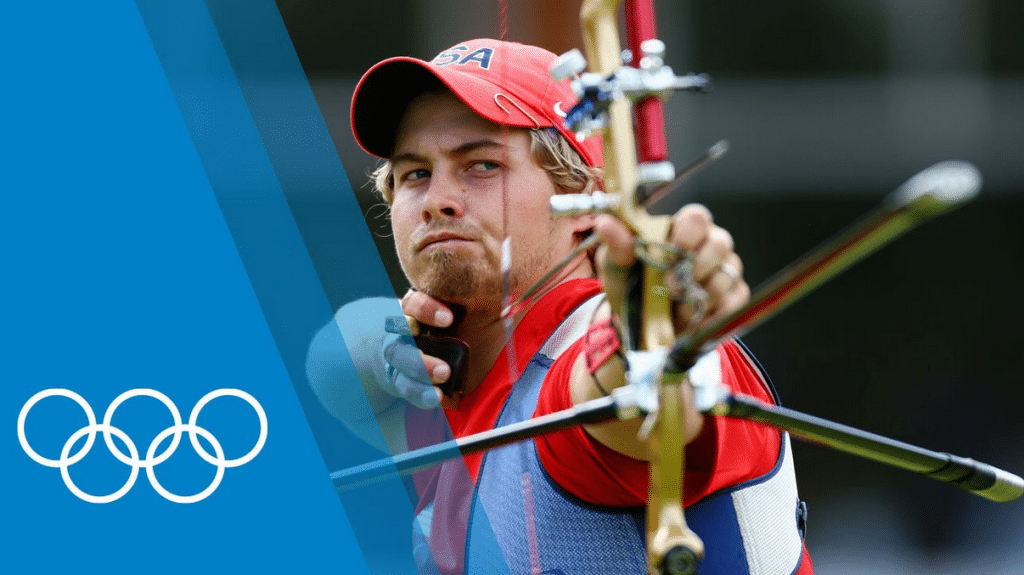
brady ellison archery

Trading is no different!

Hence in sounding somewhat masochistic, your initial goal in the first stage of discipline is to learn to ‘lose consistently’. By doing this, you’re building the foundation which the entire house you want to build will rest upon. Then you can focus on being a consistently break-even trader. Then you can focus on being a consistently profitable trader.

But before all this, you’ll need to focus on building the prerequisite trading skills, which can be defined as the following:

1) Trading Methodology & Approach

There are only 4 major trading methodologies, or approaches to the markets. They can be any of the following; 1) technical, 2) fundamental, 3) sentiment, 4) flow based.
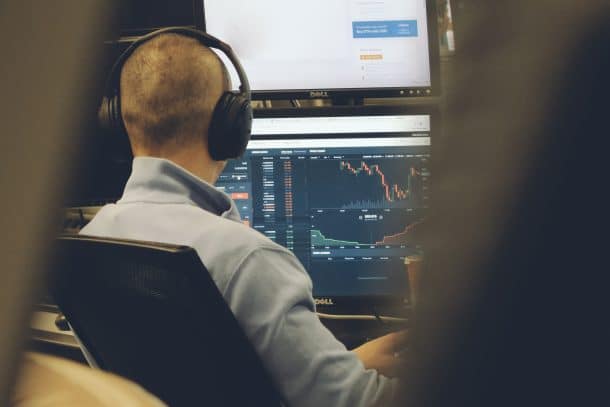
trading for a living1

Now any one of these can fall into broad categories, such as (discretionary, rule-based, hybrid, quantitative).

The approach I teach is a ‘technical‘ model based upon understanding price action context and the order flow behind it. I teach this method because it can be applied to any instrument, time frame or environment, and is based upon what all trading decisions are based upon (*information).

Regardless of whether you are a technical, fundamental, sentiment or flow based trader, all trading decisions are derived from ‘information’. Eventually that information has to be converted into an actual trade (and thus order). All ‘activated’ orders become ‘actualized’ order flow. And order flow is the most proximate driver of price action.

This is why I teach price action context and the order flow behind it, because I’m teaching you a ‘root’ method which communicates the footprint of all orders and trading decisions. By understanding these, you can give yourself the highest probability for trading with the dominant order flow in the market, which is what drives all price action. By doing this, you can learn to trade with the larger players who will most likely dominate directional price movements (which is what we want to capitalize on).
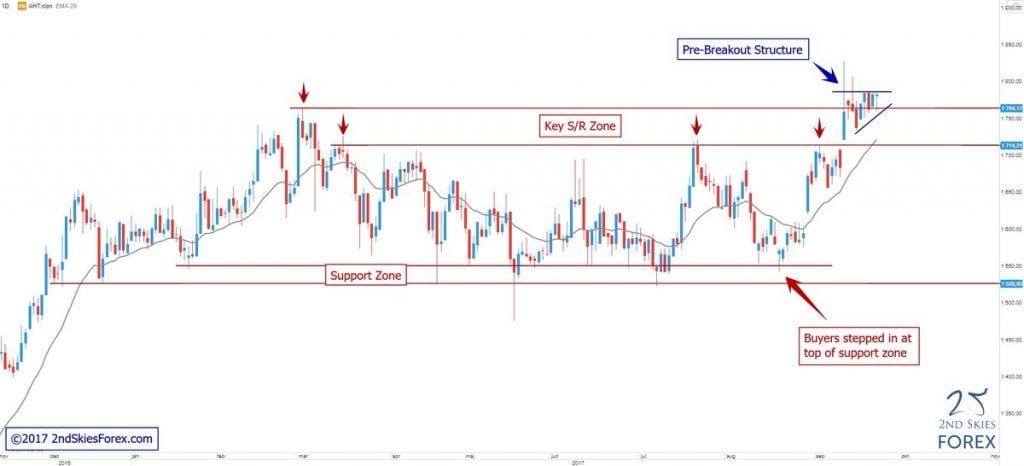
price-action-2ndskiesforex

Price Action Trading Skills

There are many price action trading skills you’ll need to build, and it is important not to learn these skills out of order. I often find traders trying to learn more advanced skills before they’ve built a solid set of foundational skills. One common example is struggling traders trying to trade counter trend before they’ve learned to trade with trend (with the latter being easier).

Now assuming you understand what candlestick charts are, time frames, and what the basics of price action are, then you’ll need to build your core skills of price action. In price action trading, the first set of ‘core’ skills you’ll need to learn is what I call the 3 pillars of price action context.

I’ve talked about the first pillar of price action context, which is being able to identify impulsive and corrective moves. The reason why this is the base pillar is it gives you the most amount (and most nuanced) information about the price action and order flow happening right now.

It tells you who’s in control of the market (buyers/sellers), and who’s not. It tells you how to read momentum in the price action without any indicators. It tells you when are optimal times to take profit, and not take profit. It tells you when you’ll need to be patient, and when you need to make a quick decision. It tells you when trading breakouts are more likely (or more probable) to occur, and when they are less likely to succeed.
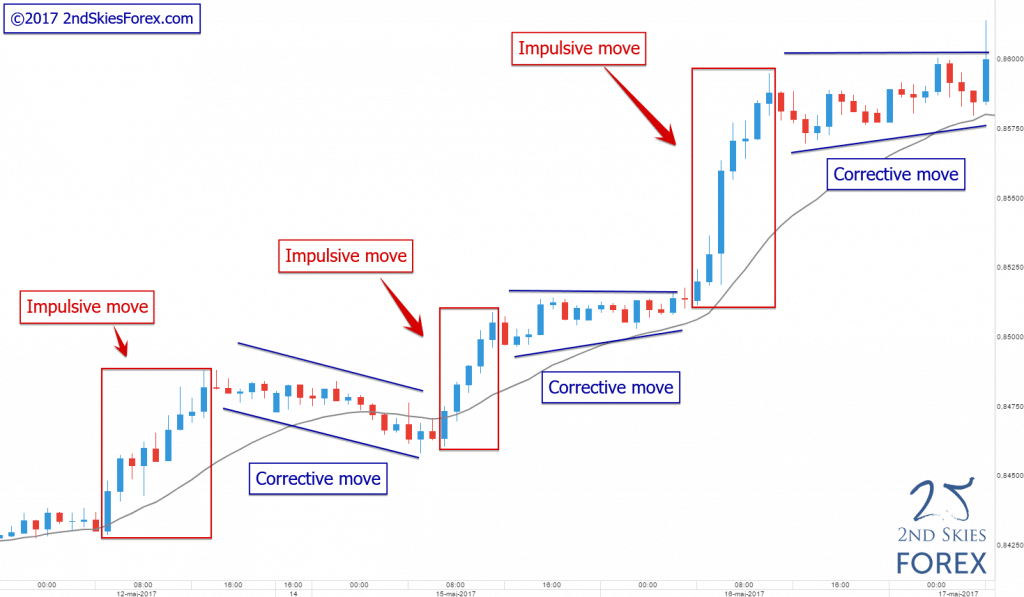
impulsive-and-corrective-price-action 2ndskiesforex

There is a lot more impulsive and corrective moves can tell you about price action, but by learning these, you start to learn how to think like a price action trader, and see the dominant order flow behind it. This is why it’s the first pillar. If you want to learn about the other two pillars of price action context and the order flow behind it, then check out my price action course where we talk about this extensively.

Now before you can even practice these skills and making actual trading decisions, you’ll need to first be able to identify (with 90+% accuracy) these 3 pillars of price action context. My formula for how to build your trading skills (and price action skills) is simple:

Sim, then Demo, then Live

What this means is, after you’ve watched videos and understood (conceptually) the components of an impulsive and corrective move, you’ll want to start building your pattern recognition skills in the charts. You build these pattern recognition skills so you can identify them automatically, and thus, sub-consciously.

If you’ve ever looked at a chart and had the thoughts, “Is this a such and such pattern? I’m not sure, how do I know? I know it said it has to have x, y and z, but is this part the same, or is it different…

Have you had this experience before? If so, then your skills are not ‘sub-conscious‘. The reason why this is important is you want to use your cognitive thinking, analysis and bandwidth for finding profitable trade setups. If you have all those thoughts going through your mind, then congratulations – you’ve now realized your skills are not sub-conscious, so that should be your next goal.

By starting with a trading simulator, you can have the opportunity to watch the price action unfold, pause it, take time to read it correctly, then resume the historical price action on the chart unfold.
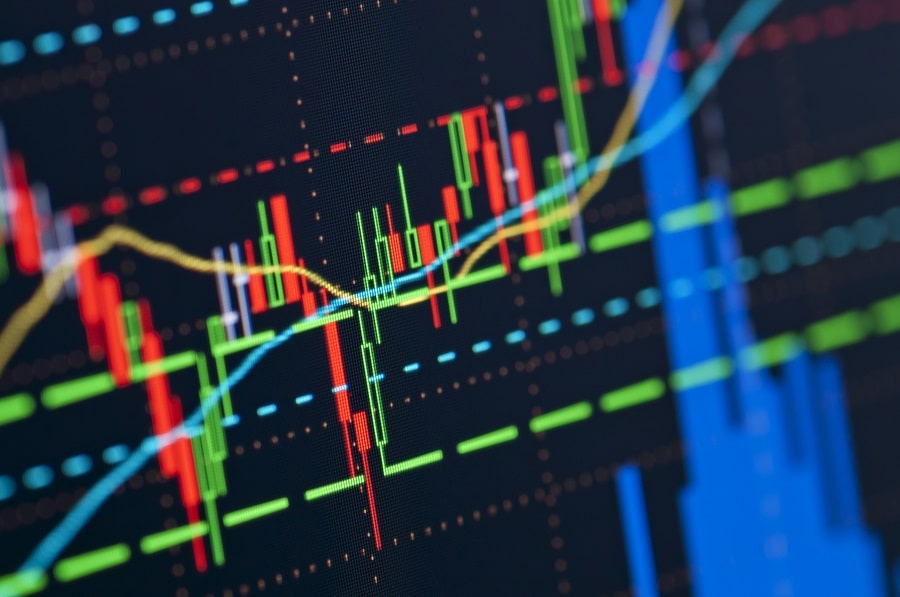
trading simulator 2ndskiesforex

This is why sim is the best place to start, because on demo, the charts just keep moving on whether you got the analysis correct or not. Just like pilots start off in a flight simulator to make sure they have the basic functional skills to fly a plane, you also need to start off on a simulator.

By looking over thousands of candles and charts in a short period of time via a trading simulator, you can increase your learning curve, and accelerate your pattern recognition skills, particularly being able to identify impulsive and corrective price action.

Once you’ve seen enough impulsive and corrective moves, your brain will eventually assimilate these patterns into its database, and be able to identify them on any instrument, time frame or environment with ease (and without doubt).

After you’ve mastered all 3 pillars individually, the next step is to assimilate them together into one cohesive picture (or gestalt). The goal here is to be able to easily identify all three of the pillars of price action context, then be able to come up with a ‘most probable’ direction of the market.

I say ‘most probable’ because this is a mindset you’ll need to develop to make it out of the first stage of trading. Beginners try to use ‘confirmation price action signals‘ because they think they ‘confirm’ the trade and direction. But 1, 2 or 3 candles is a small amount of price action + order flow, and rarely ever dictates the next move (~1% of the time).

Hence you have to shift your mindset from ‘confirming‘ (because there is no certainty in the market) to ‘probabilities‘, because probabilities is all you are ever dealing with. There is no certainty, and never will be when it comes to price action and the next direction. This is why I say confirmation price action signals will crush your account. If these so called ‘confirmation price action signals’ actually ‘confirmed’ anything, there would be ample statistics and data to back that up. Yet nobody to date has been able to provide this (which should tell you everything you need to know about them).

losing money trading

Now while you’re building your core price action trading skills, you’ll also need to build your mindset skills. To succeed in trading, you’ll need a successful mindset which will keep you on track when things are challenging, and help you execute what you need to when your trades and emotions are really affecting your thoughts and trading decisions.

Mindset Skills to Build Consistency In Your Mind

If you’re working towards consistency in your mind, there are several core mind/mindset skills you’ll need to build. For the purposes of brevity and not turning this into a long novel, we’ll talk about the 3 most important mindset skills you’ll need to build consistency in your mind and make money trading.

The first mindset skill you’ll want to build is understanding how the brain works. By understanding how your brain and mind work, you can accelerate your learning process by working with how your brain functions, not against it.

One of the most fundamental aspects of the brain is its ability to re-wire itself. This principle is called neuroplasticity. 
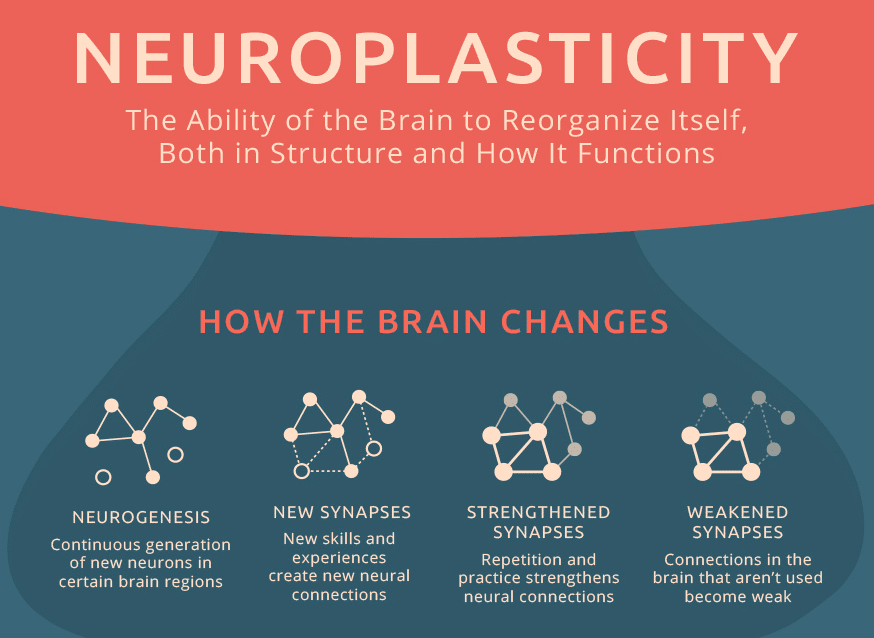
neuroplasticity

Neuroplasticity can be summed up by the following phrase:

“Neurons that fire together, wire together”

Neurons are the basic neural cells you have in your brain. They connect to each other through axons and dendrites. By connecting to each other, they can pass information via electrical signals.

If you want to wire in a new trading habit, you’ll have to activate neural circuits which do this over and over again. By doing this over and over again, they strengthen those connections till they become ‘dominantly wired‘. Another term for ‘dominantly wired’ is ‘habit‘. Anything you have dominantly wired in your brain is a habit. So by firing the same neurons together, they wire together and form specific habits you’ll want and need to build a successful mindset.

rewiring your brain

This is where understanding how the brain works helps.

There are 7 components to neuroplasticity, but there is one fundamental ‘root‘ component behind all neurological wiring: Repetition.

By repeating the same thing (and thinking pattern) over and over again, you can wire in the trading habits you’re looking for.

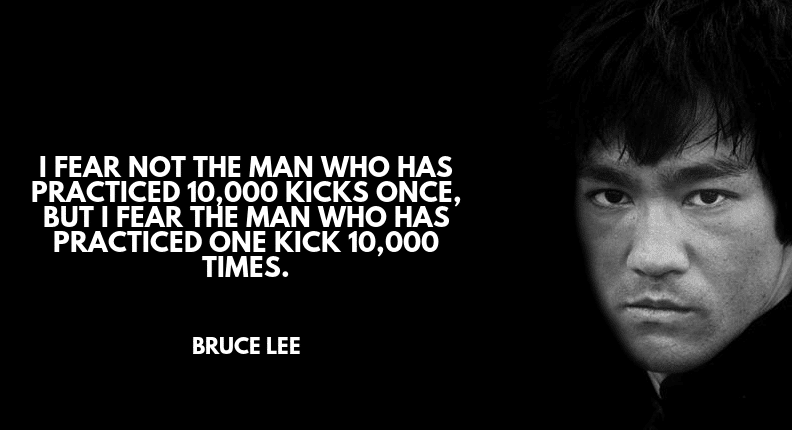
It’s why basketball players will shoot free throws every day in practice. It’s why quarterbacks (American football) will practice throwing the football over and over again, so that their mechanics are automatic and sub-conscious. It’s why Bruce Lee said “I fear the man who practices one kick 10,000 times“, because such a person has that has practiced a kick 10,000x likely can throw it with speed, precision and power.

Repetition is the most fundamental building block to wiring new trading habits. Thus, understanding how the brain works is a fundamental mindset skill you’ll need to develop.

The second mindset skill you’ll need to build is what I call the GBT mindset. GBT = getting better today (also known as a ‘growth’ mindset).
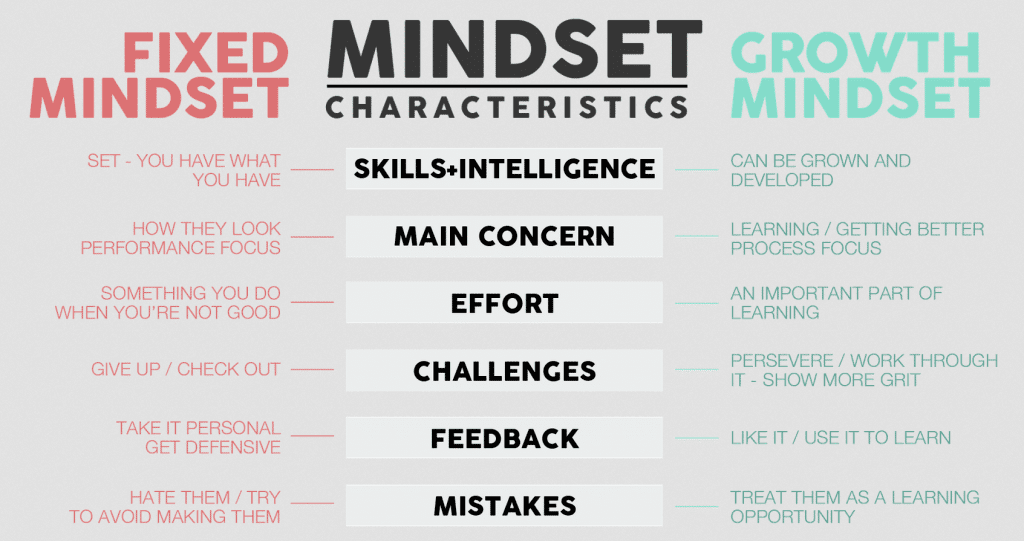
growth-mindset 2ndskiesforex

Notice the focus here isn’t ‘profitable trading now‘. It’s a trading mindset that works every single day to get better. By getting better today at your skills, you eventually build enough skills and competence to make money trading.

The GBT mindset is one that is focused on the process, and has a well designed process + skills + goals they are focused on. The process aspect is the methods and plan of action you engage to build your skills, which allow you to reach your goals.

If you’re just focusing on the results “dang, I’m still not profitable yet“, then you’re jumping too far ahead and not focused on what you need to succeed (skills: 1) technical, 2) risk management and 3) mindset). Hence your ‘goal’ right now if you’re not a profitable trader should be to build the skills to make money trading.

This is why you need the GBT mindset, and an approach which focuses on building your skills step by step, and getting better today at your current level of skills. Then once these are sub-conscious, you take on the next challenge.

The third mindset skill you’ll need to build to become a consistently profitable trader is ‘self-awareness‘.
lao tzu self awareness

Now I’m not saying you have to become a zen monk to become a good trader. But you’ll need to develop a minimum level of self-awareness to make money trading.

Why?

Because if you really understand how the brain works, you’ll realize you are actually fighting your own brain and evolution to build a successful trading mindset.

How so?

Let me demonstrate this with a few key brain facts:

  1. You have about 500% more neurons for finding the negative vs the positive
  2. You are more likely to choose an immediate reward (even if it is a lesser reward) than delay gratification (for a larger reward)
  3. Your emotions heavily influence how you interpret (and code) an experience, memory or event

Now lets examine these 3 brain facts.

The first one should be obvious as to how it can affect your trading. If you are 5x more likely to notice the negative vs the positive, what do you think that means when you make a mistake, or a trade starts to go against you? How do you think that will affect your thinking in real time when you have to make clear, calm trading decisions? Do you think it will help, or hurt your decision making process?

Ever experienced a trade that was a winner but starts to go against you? Were you totally relaxed, or feeling ‘stress’ when it started to pull back? And do you think that stress affected your analysis and decision making? This tendency to notice the negative vs the positive is called the negativity bias.
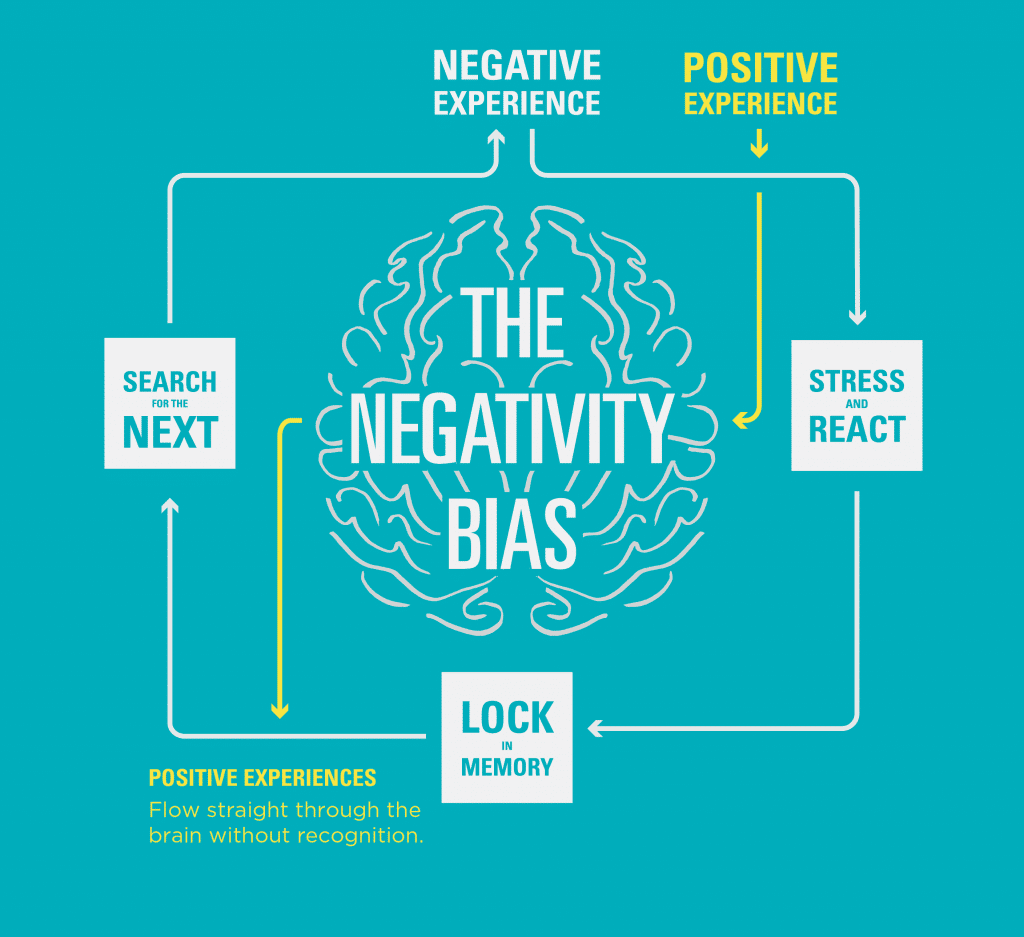
negativity bias in trading 2ndskiesforex

What about the 2nd brain fact? Ever chose to exit a winning trade too early? This is your brain working against you. If you’re more likely to choose a lesser immediate reward, don’t you think that will become problematic in making decisions which will lead toward long term success and trading habits?

In terms of the 3rd brain fact regarding emotions, just think about the majority of emotions you’ve experienced in trading. Have they been mostly positive or negative? Have they mostly helped or hurt your trading process, thinking and mindset? Do you even know how to use emotions to your advantage in trading? My guess is no.

Hopefully it is becoming clear why self-awareness is key. You can determine if the self-talk that’s going through your mind is accurate (“something doesn’t feel right about this trade“), misleading (FOMO, fear of pulling the trigger, etc), or not important (“I wonder how many people liked my last tweet”).

By building self-awareness, particularly around trading, you can learn to know when you need to stick to your discipline and/or trust your gut instincts. You can also learn how to self-regulate your mind, emotions and psychophysiology so you can make the most optimal trading decisions.
self awareness

Simply put, if your biology and psychophysiology is off (heart rate, breathing, skin conductance, etc), the chances of you making a bad trading decision go up exponentially! And more often than not, the difference between making money trading and losing money trading comes down to the trading mistakes you make.

Becoming A Clutch Performer

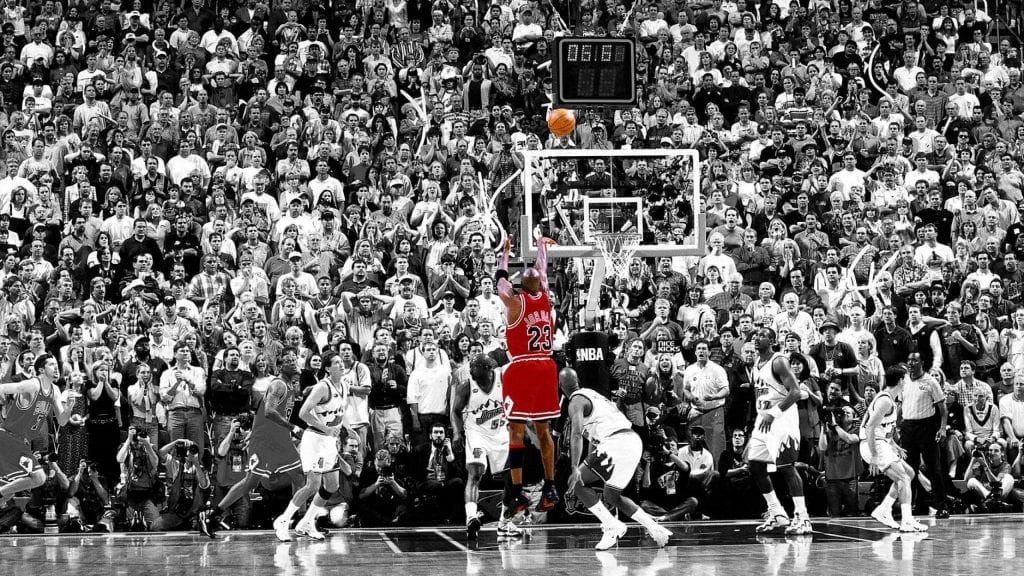
The term ‘clutch athlete‘ is actually misleading. When the game is on the line, the statistics are clear. The best performers are not performing at their peak, or above their baseline. They’re actually performing below their baseline. The difference is, they make the least amount of mistakes compared to their baseline, while the non-clutch performers make more. This is why specific athletes are clutch, because when the game is on the line, they make the least amount of mistakes, and thus outperform everyone else.
mjh game winning shot

Trading is a peak performance endeavor that is skill based. There is no way around it!

This means you’ll have to learn how to become self-aware when trading gets intense. If you want to make a million dollars trading, you’ll need the 3 mindset skills I’ve listed above when you have 5 or 6 figures on the line.

By becoming more self-aware, you’ll start to build the psychological and mindset skills to become a consistent trader who makes ‘consistent’ trading decisions, regardless of the pressure or challenges you’re experiencing while trading. You’ll be able to direct your cognitive and mental activity in the right direction, while avoiding getting swept up by your emotions, or negative self-talk.

There are many ‘methods’ and practices you can use to build self-awareness. I teach several of these in my traders mindset course. But one method we focus on in our traders mindset course is meditation, which is scientifically proven to help improve your neurological and cognitive performance in a variety of trading activities.

meditation for trading 2ndskiesforex

I’ve been practicing meditation since 2000, done over 10,000 hours of meditation practice. I’ve completed a 1 year meditation retreat. I’ve completed 3 one month retreats, about 150+ weekend meditation retreats, and trained with the same meditation teacher since 2001. Needless to say, it seems fair to say I have a ‘solid’ training in meditation.

I recognized early on how important meditation is to my trading mindset, and thus created a 12 lesson meditation series specifically for traders. The goal of this practice is to build self-awareness, increase your emotional IQ, and help you enhance your brain’s functioning, which meditation has been scientifically proven to do. If you want to learn more about how to use meditation to become a better trader, then check out my traders mindset course.

Now there are many techniques you can use to build a successful trading mindset, but these are three most ‘fundamental‘ I’d highly recommend you focus on. There are other mindset skills you’ll need to complete the first stage of trading (discipline) and get to the fruit (consistency), which could take me an entire book to write and flesh out. But I feel I’ve given you a glimpse of the first stage of trading.

Getting Past the Hardest Stage (*And Not Jumping Ahead)

From my experience in working with thousands of traders, helping many traders become profitable, I’ve seen how every trader which has failed to become a profitable trader has never completed the first stage. They’ve either a) never built the mindset skills to become a ‘consistent’ trader, b) never built the core foundational skills, or c) tried to skip various aspects of both.

From all the students I’ve trained that have become profitable traders, they’ve all completed the first stage without fail. I’ve yet to meet a profitable trader who is able to make money consistently while skipping the first stage. There is no way around it!

Now if you want to learn about the other 3 stages to becoming a million dollar trader, I’m doing a private member webinar this weekend (Dec. 22nd) for all my course members. After the webinar, I’ll be making this webinar available to all my members so they can follow this road map and become consistent traders.

If you want to learn how to become a member, click here.

Now I hope you’ve gotten a tremendous amount of value out of this article, and use it as a guide and road map to your successful and profitable trading.

Please make sure to leave a comment, and share this with any friends or forums you feel will benefit from learning about the stages to becoming a million dollar trader.

Until then, may you see real growth in your trading and mindset.

4 Stages To Becoming A Millionaire Trader

What’s Inside?

  • How did a monk produce brain activity 40x longer than the avg. human being?
  • Are there ways to command your focus, attention and brain to improve your trading?
  • What simple exercise can wire your brain for trading success?

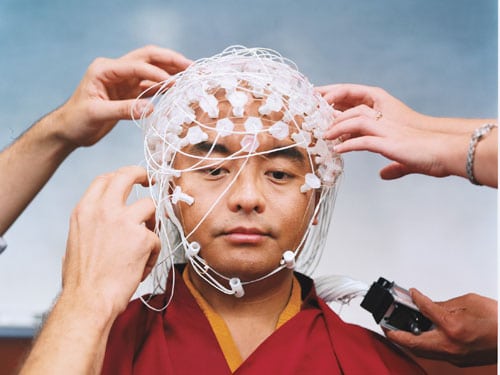
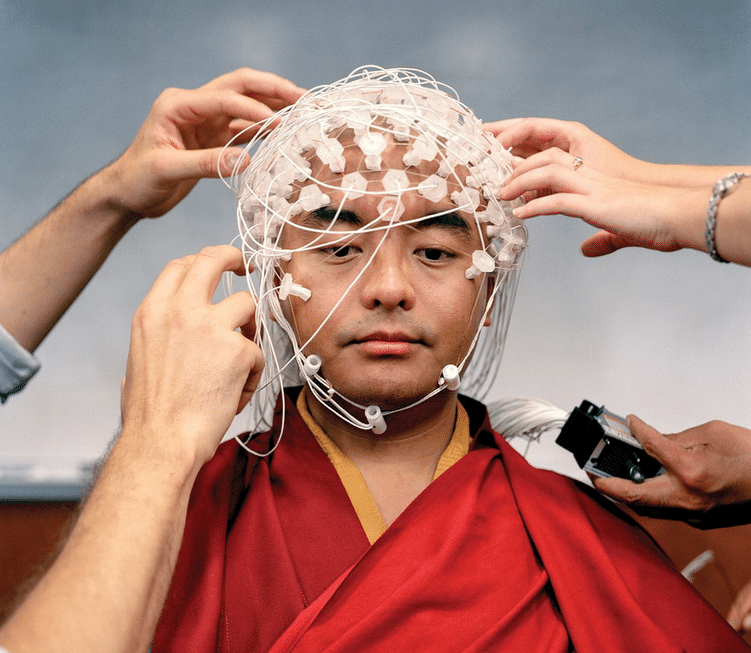
There was a monk who had traveled 7000 miles, over 3 days, 10 time zones and after one night’s rest, opened a glass door and walked into a science lab. He was going to be given a simple test over 6 minutes with 256 sensors monitoring his brain’s activity. The experiment was simple:

For 1 minute, this monk would have to meditate on compassion. Then on cue, he’d have to relax his mind for 30 seconds with no focus on his mind, then repeat another 1 minute focus on compassion. He’d repeat the cycle between focus on compassion and a mental resting period 4x.
mingyur rinpoche 23
The monk being tested is Mingyur Rinpoche. He’s completed a 3 yr meditation retreat where he was meditating 8+hrs per day every day for 3 years, 3 mos and 3 days. Over his entire life, he’s completed 62,000 hours of meditation, by far the highest of any other meditators tested (normally 12-24K hours).

In the first test, his brain was measured via an EEG machine which measures brain activity over time. What the scientists found had astonished them. They had never seen anything like this in any human being they’d ever tested (or known to be tested).

Never Before Seen Brain Activity

During the second the 1 minute focus on compassion began, Mingyur Rinpoche’s brain activity lit up and shocked the scientists. He had instantly transformed his neural activity to produce high levels of gamma spikes.

Gamma spikes are intense bursts of brain activity that often represent a major ‘insight‘ where everything clicks in your brain and you see things in a completely new light. Think of those moments where you felt confused, but then had a sudden burst of clarity and insight into a particular problem, like finding two pieces of a puzzle you couldn’t find before.

insight
Normally these gamma spikes last .5 seconds for the average human brain. In contrast, Mingyur’s brain produced high level gamma spikes for the entire minute! This is 40x longer than the average human being. So for that entire minute, Mingyur’s brain was experiencing a level of insight, where his brain was working in harmony, creativity and clarity.

Changing Mental States At Will

What was fascinating the scientists during the experiments was how Mingyur Rinpoche could change in his neural activity at will. Normally for solid meditators like myself (well over 6000 hours), it takes me a few moments to relax my mind and change mental states. Not with Mingyur who could command his focus and attention at will.

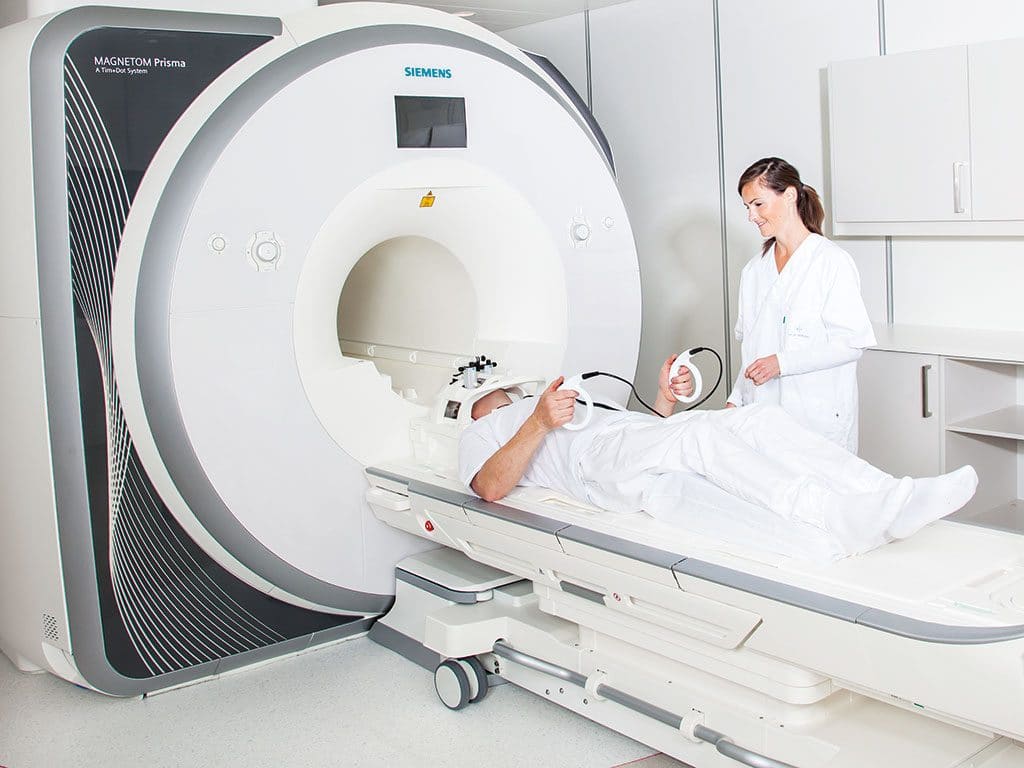
Now the problem with the EEG machine is it doesn’t tell you where in the brain this activity is happening. So the scientists decided to test Mingyur on an fMRI machine which will light up regions in your brain that become active during any tests in a 3D visual.

fMRI (image below)
fMRI
The moment they started testing Mingyur’s brain under the fMRI, again, they were shocked at what they found.

Repeating the same exercise and focusing on compassion, the neural networks which light up when experiencing empathy and compassion were showing activity levels 700-800x greater than during the 30 second resting period.

How Could This Exercise Affect Your Trading Mindset & Performance?

I want you to think about that for a moment…what would it be like if you could, on cue, activate a neurological state in your brain that was 700-800x stronger than when your mind was at rest?

What other corollary benefits could this level of focus and mental control give you in other aspects of your life (trading, studying, training, making money, reading, at work, etc)?

Oh and those gamma spikes that were initially measured in the EEG? Normally those are only found in singular or small isolated regions of the brain for us mere mortals, lasting about .5 seconds. In Mingyur, they were happening all over his brain for an entire minute!

Lastly, when the scientists looked at the resting period before they began the experiments, they noticed the experienced meditators they had tested showed 25x more gamma oscillations and activity than your average joe.

In other words, they had a 2500% greater chance to experience insight, creativity and clarity in their brains and minds than you and me. It’s as if his entire brain was synchronized and working in complete harmony (which is not how your brain works right now).

whole brain synchronization
Think about what benefits this would do for your trading performance, mindset, finances, work, relationships and your life. Do you think these could be useful to help wire your brain for trading success?

If you want to learn the basics of how to use meditation for your trading success, click here.

Also we have a great infographic on meditation for trading.

And for those who are more serious about their brain, health and success, check out my traders mindset course where I teach you a 12 lesson meditation series to help give you the same benefits Mingyur experiences in his brain and life.

Now Your Turn

Do you think meditation can help you trade more successfully? Do you think meditation can help change your brain and mindset?

Make sure to leave a comment below, and share this article with others you think can benefit from it (as sharing is caring).

I know, it seems like we’re well into the new year. But I just completed my Losar, which is the Tibetan new year. The Tibetan Losar is similar to the Chinese New Year as it comes in early February. 

happy losar

However, Losar tends to be slightly different. Leading up to Losar, there are generally 3 main things you focus on. They are:

1) Practicing (meditation, yoga, martial arts, etc) + raising your energy (cleaning up your house, working on uncompleted projects)

2) Clearing any debts you’ve accumulated over the last year

3) Reflecting upon the lessons from last year so you can move into the next year clearer and wiser

It is this last experience I’d like to share with the hope that you become more successful in trading (and life as well) for 2019.

Let’s jump in…

Lesson #1: Wisdom and Confusion

Over the last 10 years, I’ve lived in 5 countries, learned 2 new languages, and visited over 40+ countries.

traveling

If there is one thing I’ve discovered from all my travels, observing how other cultures live, think, what they value, etc…I’ve seen that every culture, every family, every individual has wisdom and confusion. I’ve yet to meet someone across all my travels which has invalidated this theory. The bottom line is, unless someone is enlightened, they will always be a mixture of wisdom and confusion.

When you realize this, you’ll understand how there is no perfect ‘system’ (politically, economically, socially, etc), and there is no perfect country to live in. All are based on people that have wisdom and confusion, and thus all have their strengths and weaknesses.

This is a very powerful stance to take because it means you can no longer completely discount certain things, like capitalists do to socialists (and vice versa), or republicans do to democrats (and vice versa). Imagine what the various political/cultural/religions divides would be like if both sides of the isle took this stance.

From my experience, generally problems start to occur when you think that one person/system/religion (or yourself) is either all wisdom, or all confusion.

For 2019, try taking this approach to all people, and see how it changes your experience of them. My guess is you’ll find yourself being more open, relaxed and flexible in your thinking.

Lesson #2: “Avoiding Negative People”

negative people

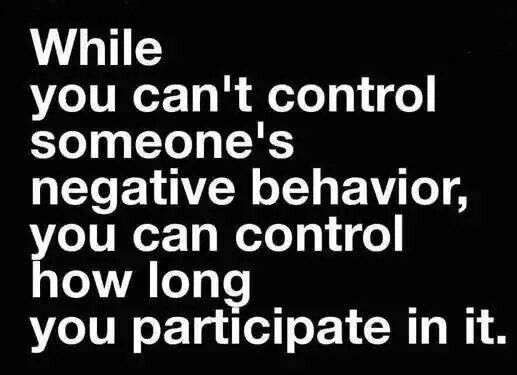
Along those lines, I’ve recently seen this phenomena of people saying “I’m avoiding negative people“. This kind of thinking is both helpful, and problematic when you really understand it.

The whole concept of ‘avoiding negative people‘ actually has some wisdom as people can be quite ‘negative’. By and large, most people’s brains are wired so that they will have 5 times more neural cells for noticing the negative vs the positive.

That can be a problem if every 5 out of 6 thoughts you have about yourself/others is negative. How can you build real confidence in yourself if your self-talk is constantly negative? How can you build the traits you want if you hang around a lot of people who 5 out of every 6 statements about you/life/success is ‘negative’?

You can’t. This is where the wisdom of ‘avoiding negative people‘ comes in because you’re trying to rebuild your belief system, self-image, and positive habits.

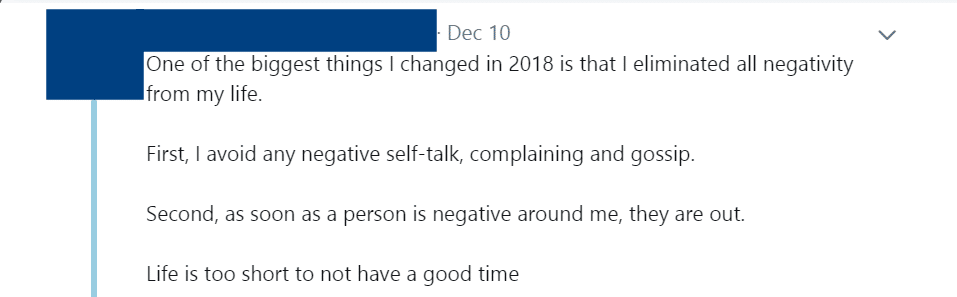
The problem though is thinking this approach of ‘avoiding negative people’ is a be-all-end-all approach. I recently read a tweet from a trader friend (whom I like and appreciate). Here is what they posted:

misunderstanding-negative-people

Akin to point #1, (IMO) this tweet has a mixture of wisdom and confusion. Why?

First off, you cannot avoid all negativity in life. It’s unavoidable! People (including you) at some point will go negative. If you tried to avoid all things negative in your life, you’d be living in a bubble and never interact with anyone. And I’m not sure how you can be a mentor to anyone if you hold fast to this approach.

The whole basis of any teacher-student relationship is taking the student from confusion/negativity to wisdom.

mentorship

With that being said, how can you be a trading mentor if you’re cutting out all your students who go negative one time? If you did that, you’d likely have no students. So this approach really lacks vision.

Along those lines, ask yourself about those in the military who went to fight the Nazi’s. What would the world be like if they all avoided negativity? Who would take on those battles, make those hard choices, sacrifice their lives for a better good?

wwii fighters

Another major problem with this approach is it assumes that you are the ‘wise‘ person, and others (who are negative) are ‘confused’. IMO, this is a pretty arrogant position to take when you really think about it. Maybe your level of wisdom is another person’s level of negativity. Maybe someone much wiser than you would view your beliefs as ‘negative’. So what then? Should they avoid you?

When you really examine this approach, you realize it has its limitations. It has both wisdom and confusion. Can you see how this is helpful and hurtful as an approach?

Lesson #3: Understand Principle & Function

This brings me to my third lesson – understanding principle and function. Principle relates to the basis/fundamental understanding of something and what its founded upon. They explain the how/why things work.

The method of ‘avoiding negative people‘ is based upon the principle that you/others will often lean towards a more ‘negative’ way of seeing things, especially if your brain is wired that way.

Function is having a clear insight as to when this approach/method/practice is useful, and when its not. My guess is the author of this tweet at some point in their life (at least before this tweet) was ‘negative’. What if someone much wiser than them wanted to help them, but decided to ‘cut them out of their life the moment they went negative‘? How functional would that be? How would people ever really grow, or get help from others?

When you realize principle and function, the idea of ‘avoiding negative people‘ or any other method becomes more appropriate in specific situations/times, and completely misunderstood in others.

Hence learn to see the principle and function in your training, growth and development (in all things you do) and you’ll find yourself using the right tools for any situation. Using the wrong tools at the wrong time often creates more problems.

tools

NOTE: this is not something I created – the concept of understanding principle and function. It’s a particularly buddhist approach to training and teaching. It’s just been a major lesson I’ve had to really work with this year.

4) Find Somebody Wiser/Kinder/Clearer Than You

I think we can all agree there is someone out there in the world who is much wiser, clearer and kinder than we are. I also think if you are going to be any kind of teacher/mentor to others, you also need to be a student as well. Not only does being a student help you fully understand the teacher/student relationship, but it always means you’re no longer taking your mind/thoughts/ideas as gospel. It means continually exposing yourself to someone whom you trust to give you a less biased view of yourself, and point out any confusions you are missing.

I feel very lucky. 19 years ago I met my current buddhist teacher, and have been with her since I made a commitment to be her student. Yes, I’ve taken teachings/trainings from other buddhist Lamas and masters, but she will always be my ‘root‘ teacher. I’ve seen her continually grow and evolve at a pace and magnitude I’ve never seen anyone else do in my life, and have thus committed to being her student my whole life.

In essence, we are all students in life, and there are people out there who can help us become a better version of ourselves right now, while also helping us see our own confusions we are currently missing (trust me, they are there).

Hence, find that person who a) embodies something better than you are now, b) communicates in a way that makes intuitive sense to you, and c) is someone you want to train with (and wants to train you). My guess is when you do this, you’ll find yourself constantly growing, and being challenged to become a stronger, clearer, wiser version of yourself.

illusion

5) Building Bridges

The one thing I love about trading is it’s apolitical, non-religious, and doesn’t care about gender. I love the fact that I have students from every religion, across 60+ countries with diverse political beliefs. When people come together for a common goal, our differences aren’t the focus, nor what divides us.

Now with the current buddhist school I’m a part of, we have what you’d call a ‘senior student’ group that you have to complete practices and trainings for.

We recently had a student from Iran who grew up in a Muslim faith join our group. We have no judgments about him, his Muslim practices, faith, or traditions. We appreciate him for who he is and how he relates to us, not what we agree or don’t agree on.

By doing that, we’ve built a bridge between our religions, regardless of our differences. Imagine what the various political or religious conflicts would be like if people didn’t use those differences to see what’s ‘wrong’ with others beliefs?

Imagine what kind of personal, cultural and societal bridges we could build when we stop dividing ourselves from others simply because they hold a different belief system? What if we simply appreciated their good qualities and then looked for common ground?

Over this last year, I learned that when you do this, you build bridges in ways that allow us to work together for common goals, which tends to make us stronger as people.

sf bridge

6) Discipline Has A Momentum. So Does Its Opposite

As a whole, I generally consider myself to be a disciplined person. When I was 11 years old, I got my first job as a paper boy. Keep in mind, this is a job that has no days off. Papers are always being delivered every day, regardless of the weather, health or holiday.

I grew up in Chicago, and we can have some harsh winters. My job consisted of getting up at 5:30am before school started, so I could roll the papers, rubber band them, and put them in a plastic sleeve (if the weather was wet or snowy).

I can remember many days being sick with 100+ degree fevers, and yet still going out there on my bike. And if there was too much snow, I’d have to venture out on foot carrying over 35+ papers around my neighborhood to deliver them on time.

This was hard as a kid, especially getting all this done before I went to school, but I learned the power of discipline. I learned in those early years that what I thought were my limits, were just illusions in my mind. This has become a valuable resource and wisdom for me when I often think about not practicing, quitting, or taking the easy path out.

In trading, you will be tested, particularly in the first stage of trading to see how strong your discipline and level of commitment is. Just like the space shuttle spends the majority of its fuel trying to build enough momentum to leave the Earth’s gravity, so too will you spend a lot of energy trying to leave the gravity of your current habits, conditioning and limiting beliefs.

Hence cultivate discipline, and accumulate it over a long period of time. My guess is you’ll find yourself becoming more confident day by day  that you can reach your goals in trading, and life as well.

cultivating discipline

7) What Habits Are You Perfecting?

I want you to think about the most important precept of neuroplasticity: neurons that fire together, wire together.

In essence, what you continually think about, and wire together, becomes a habit in your brain, and thus tends to dominate your life.

If you think about what revenge trading is, it’s simply you taking revenge on yourself for making a mistake. If you continually do it again and again, you’re simply perfecting the habit of revenge trading, anger, and punishing yourself for making a mistake. Your creating the very problem you’re trying to stop (anger, frustration, revenge trading) by simply making those experiences become habit.  Hence you’re using neuroplasticity to become a losing trader.

People often think the actions they take is the basis for the habits they create, but I think traders and people also forget that what we continually think, and say (out loud, or internally) also creates habits, beliefs and neurological networks we’re vulnerable to repeat.

self talk

So examine your self-talk in trading, and notice the ‘quality’ of it. Notice your speech (internal or external) about yourself and others.

Hence take some time to reflect upon what habits you have created around trading. Just look to what you’ve been repeating the most. Whatever you repeat the most is what you’ve been perfecting. When you do this, my guess is you’ll find you’ve been much more responsible for your current struggles than you realize.

But not to worry, this is a good place to be at, and often is the starting point to making real change in your habits, skills and trading mindset.

8) Being Stuck Often Means You Have to Go To The Next Level

In the early summer of 2000, I was living out of my car – a black 2 seater Miata (man I loved that car). But this was not a happy time. I had less than $3 to my name, no home, no job, and had lost most of my friends to some dark circumstances.

I was stuck in a bad place. And on one of those cold late nights, trying to sleep in my car, I eventually had enough. I threw in the towel to the way I was living, and made a commitment to really change my habits.

I vowed to stop drinking/doing drugs, eat healthy, get a job, and start some sort of mind-body training (I first found yoga). I was tired of suffering in the way I was, and made a commitment to never put myself in a situation like this.

Lo and behold, a few days later, after showering in the local free gyms, I got a job. In a strange twist of irony and humor, it was at a brewery, but I didn’t drink while I worked there as I kept that commitment.

I eventually saved up enough to get a 1bdrm apartment in a shitty neighborhood where resident on the building spoke another language, and some of those ‘residents’ were cockroaches. However, I felt that was my cross to bear for getting myself in that situation.

Less than a month after I made this commitment, I was introduced to my current partner who had just started a teacher training program in yoga and meditation. In the blink of an eye, everything changed.

independence lake tahoe

When I look back in that period of my life, I failed to (at that time) realize how stuck I was in some really bad habits (which landed me where I did). The dark/stuck place I was in, was really the universe’s way of saying “hey, you need to evolve, you need to go to the next level.

Since then, every time I find myself stuck in a particularly situation I can’t seem to break the cycle of, or get out of, I look at my current life and see where I haven’t evolved. Sometimes just evolving in one area of your life helps to unlock the next door. And even if it doesn’t solve your current problem, you’ve raised your energy, and that tends to lead to better situations, connections and growth in your life.

So the next time you find yourself stuck (in trading, work, life, etc), take a step back and reflect upon the areas of your life you aren’t evolving, and see where it leads.

9) Breaking Big Goals Into Small Steps

How many new years resolutions have you failed to accomplish over the last 20 years? My guess is many. Did you know that those who sign up for a gym membership in January from a New Years resolution will more often than not stop attending the gym within 3 months?

New Years resolutions fail for so many reasons, particularly because you’re making big goals that are too far from your current level of skill, habit and mindset. Yes, it’s important to have big goals, but none of them matter if a) you don’t achieve them, and b) break them down into smaller steps.
Nobody sets out to climb Mount Everest in a year without ever climbing smaller mountains first. The same goes for trading.

So if you really have the goal to become a profitable trader, start with some smaller goals first. Start with the first stage of successful trading – consistency, and break that down into the small steps you’ll need to take to get there. Only when you’ve climbed one mountain can you make goals and aspirations to climb to the next peak.

steps

Hence ditch the fruitless New Year’s resolution. The numbers are against you. If you want to meditate every day, try meditating for 2 days in a row, then 3, then 4, then 5, until you can get to 7. Then try for two weeks, a month, and several months.

Do this enough, and in no time, you’ll have built the habits to accomplish your goals.

10) Big Journey’s Are Rarely Ever A Straight Line

Most likely, you’ve never heard the name Massimo Bottura, or Osteria Francescana. Osteria Francescana was rated the best restaurant in the world for 2018 and Massimo is the chef/brainchild behind Osteria Francescana.

massimo food

If you watch the Netflix series Chef’s Table (which I highly recommend), Massimo was episode 1. You learn about his success, about his 3 star Michelin rating, and about how many chefs and peers worldwide consider him to be one of the greats. If you were to learn about all his accomplishments, it would be hard to miss the most important part of his story – his struggles, failures, and journey along the way.

Even after finding his passion in cooking early on, Massimo had a long road to becoming one of the best chefs in the world. He had to apprentice for a long time, working long 10-14 hours per day for years on end. He had to study with many mentors and endured a lot of challenges before he could even open his first restaurant in Modena, Italy.

However, even after training for years on end with all the experience in the world, his restaurant struggled immensely. His style of cooking wasn’t well received, and he was going bankrupt trying to keep the restaurant open.

Just when Massimo was about to give in, his partner (and now wife) said “give it 1 more year. If it doesn’t work, we’ll close.” Keep in mind, Massimo had already sold everything he owned just to open his restaurant!

About a few months later, there was a really bad accident on the Italian highways near the Northern part of Italy. After being stuck in traffic for hours, a man decided to take a side route, and ended up in a small Italian town.

Hungry after a long trip, he decided to eat at ta small restaurant he’d never heard of before. It just so happened to be that this hungry man was also a food critic for a major food magazine. By the time he was done, he was completely blown away by the chef’s style of cooking, which was night and day different from most Italian cuisine.

He decided to write about his experiences at a restaurant called Osteria Francescana. In that moment, lightning had struck, and it changed the course of Massimo’s career forever. While Massimo’s worldwide success happened over a few short months, the journey there was hardly short, nor straight.

When you take a deep look at those who’ve become successful in their careers, you’ll find none of them built success overnight, nor in short order. They’ve all had to work for years at their craft before they had their breakout moment, and that path from start to success was never a straight line.

So give up the fantasy of trading and becoming a millionaire over night. This is not something to fear, but to celebrate. It’s what makes the journey, and experience of success even better than you could imagine.

massimo bottura

11) The Best ROI Trade Is To Invest In Yourself

If there is one lesson I could go back in time and teach to a younger me, it would be that the best ROI trade out there is to invest in yourself. Everything begins, and ends with you, your health and mindset. Those 3 variables determine what you think, decide and execute every day. It shapes who you surround yourself with, what support they offer you, what beliefs you share, what qualities you enhance them with, and they you.
It was 19 years ago, shortly after living out of my car, that I really invested started to invest in my health and mindset in any meaningful way.

Since then, I’ve:
-Paid for over 150+ weekend retreats
-Taken about 20+ online training courses is various skills that I needed to work on
-Read on average one book per week for the last 7-8 years
-Done about one 7 day pancha karma retreat (healing/detox retreat) per year for the last 8 years
-And continually pay to keep my body healthy through accupuncture, ayurveda, chiropractic adjustments and exercise

I’ve realized the most important thing I could invest in, is me, my health and mindset. I’m not saying you only have to look out for numero uno. Having a positive impact upon others is important. But you won’t be of any help to yourself or others if you don’t care for you health and mindset.


Hence ask yourself “What am I doing this year (activity, or training wise) to invest in me?” What are skills you want to build? What experiences are you embarking on that will enrich your life?

experiences

Take a moment after reading this article, and start really thinking about what you want to grow into this year. I’m not talking about the ‘things’ you want to buy. I’m talking about who you want to become as a person. Figure out what those are, then find ways to invest in them.

I’m guessing once you do, you’ll find it to be one of the best investments and trades you’ll ever make.

12) Making Money Doesn’t Make You A Wise Person

There seems to be this major cultural ignorance, that people who have made a lot of money are also ‘wise’. Wise as in they know what’s best for government, know what’s best for the economy, know what’s best for society, technology, your life, etc.

People seem to equate financial/business success with ‘wisdom’. This is a really strange phenomena because its implicitly admitting we value money above all, and that if you make a lot of money, we should listen to you on all kinds of subjects.

Making a lot of money just means one thing: you’ve learned how to make a lot of money. History is heavily littered with people who made vast sums of money, had massive success in their business/craft, but were miserable in life.

This whole problem has also entered the trading space with trading mentors. They seem to get some sort of success in trading, or business, and are now doling out advice on twitter like a life-coach.

Success in business or making money means just that (success in business/making money). It doesn’t make you some wise person who has clarity or insight into the human mind, what makes people happy, or wiser.

Know the difference.

happiness

13) Concept Is < Direct Experience

There is a fascinating book ‘Altered Traits: The Science of How Meditation Changes Your Mind, Brain and Body‘ by Goleman and Davidson. They had spent years testing the brains of experienced meditaters from various practices, traditions and experience.

However one particular subject caught their eye.  His name is Mingyur Rinpoche, and he’s the one person they tested who has spent spent more hours in meditation practice then any other (62000+). To put that in perspective, that is the equivalent to meditating 8 hours per day over 20 years, without ever missing a day!

Goleman and Davidson tested him during an experiment where he was to spend one minute focusing on compassion, and then rest his concentration and awareness for a short period of time.

mingyur rinpoche

His EEG activity (Electroencephalographic) had shown something the scientists had never seen before: high amplitude gamma waves, the strongest, most intense form of neurological activity. Gamma waves are the fastest brain waves, and occur when various regions of the brain are working in sync.

Ever have that sudden ‘aha‘ moment where everything clicked and came together? Most likely you’re experiencing a gamma wave. However for us mere mortals, these last about .5 seconds. Contrast that to Mingyur Rinpoche where they lasted the entire minute (while he was focusing on compassion).

Now keep in mind, these authors (and the other researchers they included) are ‘experts‘ in studying and understanding the brain. And yet, regardless of their high IQ’s, when they had to think about what Mingyur’s state and consciousness was like, this is what they had to say:

“We can only make conjectures about what state of consciousness this reflects. Yogis like Mingyur ‘seem’ (my emphasis) to experience an ongoing state of open, rich awareness during their daily lives, not just during meditation.” Source: Chapter 12, Altered Traits.

Notice how they are openly admitting their own limitations in attempting to understand what Mingyur’s state of awareness, clarity and insight is like during these states?

What they are implicitly admitting is, regardless of how strong your intellect is, to understand something ‘conceptually‘ is nothing compared to having the direct experience. Those ‘experts’ in the brain are completely powerless to fully understand Mingyur’s state of clarity, mindset and awareness.

This should help you come to a very important conclusion and realization:

Concept is < Direct Experience

14) Doing What I Was Trained To Do

On Monday, April 16th last year, around 8am, I had missed a call on my cell. I was in the kitchen making tea and getting read to start work. A few minutes later, at 8.04am, I got a text message. It read: “I need to talk to you asap, please call me.”

It was my sister. I called on the quick and the first words out of her mouth were “Dad’s gone.”

After spending a while on the phone, finding out what happened, and getting a flight, I did what I was trained to do (as a buddhist). I sat in meditation, then did practices for my dad.

I remember the scene very clearly. It was winter with lots of snow outside on the treetops and slightly cloudy. I looked outside my office into the vast space across the nearest mountain top to the east, and…just…sat.

My dad and I had a ‘complicated‘ relationship. I eventually made my peace with it, realizing our relationship would never be what I had envisioned between a father and son (does it ever???). But I had accepted it, and him for what he was…a mixture of wisdom and confusion, with definitely a lot of confusion.

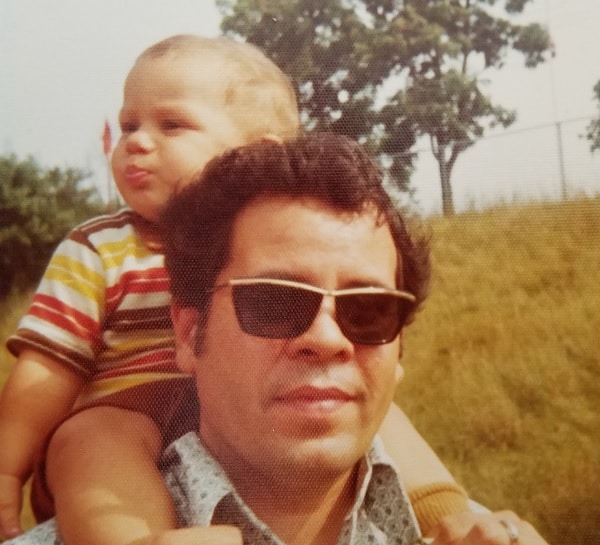
dad

I hadn’t seen my dad in months, and his last text msg to me was “uh rtrbnot, biilb, hybrid yy, we isthat, we.” When I got this, I thought he had just accidentally butt-texted me, so didn’t pay any attention to it. Who would think that was an actual message?

But when I sat there in meditation, I started to experience some regret for not texting back. Maybe he was trying to contact me, but was losing his faculties? Maybe he was reaching out, but couldn’t use text well?

When I sat there, a whole range of emotions and thoughts came up, including many, many tears. But instead of getting into the emotions specifically, I just sat there in the raw energy of them. It felt like I was on fire. It was both painful, and highly energizing to sit in such intensity, without making them mean anything about me, my dad, or our relationship.

I did what I was trained to do, and I’m glad I did, because I could have easily fallen into a deep cavern of regret, frustration, anger, or whatever about his passing, me missing his last text, or not seeing him before he left.

A few days later, there I was, standing in front of my dad, in his casket, the life gone from him. He looked like him, and yet not like him. It was kinda surreal. When I said my goodbyes, I left him one of my main malas, which I had chanted 100’s of thousands of mantras with over the years. I said my prayers for him, and shortly after, he was buried.

mala

When I came back home after the funeral, I felt a big vacuum. My dad was there for the 40+ years I’ve had on this planet. Now he was gone, and there was nothing I could do about it.

But while feeling this giant hole and vacuum, which felt very raw and open, I also felt the world, there in every moment, trying to fill up this hole…with life.

Life is pain and joy. It’s loss, gain, and everything in between. There are many ‘initiations‘ we go through in life (love, relationships, success, failures, death). It is during these moments, some of the most intense ones you’ll ever experience, that your training and mindset will be tested.

That which you are most trained to do (or most wired to do), will in most cases, be your dominant response.

Hence ask yourself, when the really intense moments in trading manifest, how strong is your training? What thoughts/actions do you default to? Is it something you can rely upon, or will it hurt you in such moments?

15) People Are More Complex Than You Think

One of the really interesting moments for me after my dad died was spending time with my family, and all the things we talked about regarding his life. I’m not sure why families do this, but often times, people reserve certain ‘details’ about others until after they die. And to no surprise, my family did just that.

I had known my dad was taking medications for years due to his declining health, but I didn’t know the extent to which he was. I also learned that from 60 yrs on, he was taking a steroid daily. Now if you know anything about steroids of any kind, they’re super intense, and are basically a last resort to stimulate some functioning in your body you can’t do naturally.

Sometimes they can be helpful, sometimes not. But one thing they are for sure is ‘mood altering’. So for the last 20+ years of my life, my dad was on a drug that likely affected his thinking, moods and mindset.

Which made me ask the question:

“How much of my dad was I really relating to these last two decades?”

I’ll never know, but the very question created a space for how I felt about my dad. Maybe all those times I felt he was being unconscious, highly moody, angry, loud, blurting out, etc. were actually caused (in part, or wholly) because of his medications.

Maybe if he wasn’t on them, he’d be a different person. I’m not sure I’ll ever know, but I know people who’ve been on meds, and who they are without them can be a completely different person.

I also learned many things about my dad in terms of how he dealt with tragedy, and losing a son who died on X-mas eve. I never got to meet this sibling of mine as he was before my time, but in learning how my dad responded to it, I can see a lot clearer why he was the way he was.

One thing I learned in 2018 is that people are often more complex than you think, and rarely are they ever ‘black and white‘ when it comes to their emotions, personality, and mindset.

And by understanding people are more complex than you often perceive, maybe, just maybe we can hold a little more space for them. Most likely, people are more complex than you think they are. And that accounts for what you’re perceiving about them as well.

16) Generosity Is A Wisdom

As I said before, there are traits and behaviors I learned from my dad, many of them being negative, but also some really positive ones as well. There is one thing my dad had down pat, and that was generosity.

My dad’s parents were super poor, and came from very hard conditions. My dad grew up in the streets of New York in a rough neighborhood. He saw very well how hard the poor people worked to get out of their situation. He also noticed how they struggled just to survive.

Because of this, I have probably a 1000+ memories of growing up in Chicago, and us pulling up to a stop light, and seeing someone on the side of road in -20F weather. Before we’d even get to the stoplight, my dad was reaching into his pocket to grab what few dollars he had. He’d open the window, call to the person, all while traffic is waiting behind him, and give them whatever money he had, suggesting they get some food and stay warm. He’d wish them well, and then we’d continue on our travels.

generosity

Often times, after this, my dad would say something like, “my god, it’s so cold out there, how are they surviving?” or “how can a country so wealthy leave people like this?” To my dad, it confounded him how we could call ourselves the ‘richest country in history‘, yet not take care of our own people. I too have pondered this question for decades, and only have partial answers.

I learned very early on from my dad that generosity is a wisdom. It’s a moment in time where we are not thinking about me/myself/mine. It’s a moment we’re letting go of that obsession, and thinking about the well being of others, and actually caring for their condition.

It seems we could use a little more of that spirit in the world today (generosity/thinking of others). It doesn’t have to be money, but could be time, energy, or just listening to someone who needs someone to talk to.

Hence, try the practice of being generous to someone (in any fashion) 1x per day for the next week (even if it’s only for a moment), and see how it feels.

17) Trading May Not Be Your End Game

I’ve been trading for over 19+ years. I’ve had 2ndSkiesForex for over 11 years, been practicing buddhism for 19 years, and only one of those can I confidently say I’ll be doing until the day I die (any guesses?).

Why am I saying this? I’ve taken on big projects that have succeeded well over a decade, and there are two things I’ve really experienced over these last two decades:

1) I’ve evolved as a person
2) With that evolution comes changes in what I’d like for my life

socrates

As I’ve gone through my physically unstoppable 20’s, worked like a madman and started several successful ventures in my 30’s, now that I’m in my 40’s, I’m much more aware of my mortality, and how my values are changing.

I’ve had periods over the last two decades where I’m not trading for a month or longer. And most of that time, I felt like I was missing something. Not an addiction, but a skill and challenge. When I’m not involved in the markets, something feels off.

However, I cannot imagine feeling the same in my 70’s, or 80’s. At some point, trading will not be there, and most likely won’t in my end game. I also don’t imagine being a trading mentor in my last days.

What I’m trying to say is, while right now, you may be uber-passionate about trading, and want to trade full time for years on end, who you are in 10 years from now ‘hopefully’ will be different. And along with becoming different, your values change. How you value trading now might not be what it is in 10 years.

Trading may not be your end game. It may be simply a stepping stone to something bigger, some future which you cannot imagine right now. Be open to that possibility, and avoid looking at any failures in trading as life or death. Maybe you’re on a path to a higher peak.

base camp

18) The Training Never Stops

I was recently wacthing the Tom vs Time series, which is about one of the greatest competitors of the last 100 years, Tom Brady. Whether you like him or not, you cannot deny his accomplishments and competitive fire. Tom is now 41 years of age, and has just won his 6th super bowl!

He’s an elite athlete in his own sport and position, and yet, after all the skill, knowledge and accolades he’s acquired, he still does something fundamental every day for 8+ months a year. He trains!

tom vs time

I think many struggling traders have this delusion that training and practice isn’t important, that once you are successful, you won’t have to practice or train any more. But any long term athlete, musician or trader will tell you, the training never stops.

There is no athlete that is playing competitively at a high level and is not training. There is no musician who is playing at a world class level who is not practicing their instrument week in, week out. And there is no profitable trader who isn’t doing their homework, reviewing their trades, and constantly looking for an edge in everything they do.

Training never stops. There is no arrival point where we no longer have to practice. Hence ditch the idea that at some point when you’re making money trading, that you won’t have to do any more work.

The work never stops.

19) Try To See People’s Goodness

There is one astounding fact about your brain (including mine) which continues to baffle me, yet explain a lot of world around us. It’s the fact that you/me/others have about 500% more neural real estate towards perceiving the negative vs the positive.

Chalk this up to evolution and our desire to survive as a species, but this trait of ours has run its course and isn’t really applicable in today’s world.

Regardless, if our brains are primed to see the negative more than the positive, then what does such a fact mean for how we perceive others? It means we’re most likely to notice, observe or pay attention to their negative qualities vs their positive ones with 5x’s the regularity.

This creates a myriad of problems in how we perceive others, along with what we reinforce in ourselves.

I think this 5x effect is why news organizations are more likely to publish stories which activate these neural networks. It makes them more money because it triggers more neural real estate in us, thus more likely to prompt a reaction.

I also think if we want a healthier society, we have to learn to balance these qualities out, so we’re able to perceive both the negative and positive qualities with equal skill and regularity.

Try doing this for a week, picking a few people, and notice how it affects your perception and experience with those people. It would be interesting to hear what you find.

goodness

In Closing

I sincerely hope you found some wisdom, insight and helpful pieces out of this article. As I reflected upon 2018, I see a year of growth, of great personal challenge, and laying the foundations for an amazing 2019. There were a lot of tough lessons to learn in 2018, and I hope to make less of these mistakes in 2019.

Please make sure to leave your comments, feedback and thoughts on my musings above.

Until then, may this article be of benefit to you in your trading, and life as well.

I’ve been wanting to write a mindset article like this for a long time, but a recent event has given me the final impetus to do so. The goal of this article is to be my last post to a particular group of people today affectionately known on the internet as ‘haters’. While this is not a trading related article, I believe it can be highly useful to you in terms of mindset, and what you want to avoid for yourself in terms of your own success, well being and self-image, all of which affect your trading and life.

Let’s jump in.

Why I Am Done With Haters

bye haters

If you’ve ever spent time on social media, or online reading any of the comments below various types of articles and videos, regardless of the subject, you’ll find one staple – the presence of ‘haters’. To be fair, I’m not sure ‘haters’ is the best word, but for now, it will suffice.

Haters are anyone who denigrate others, tell people what they are/are not, tell people why they are wrong, stupid, etc., all the while thinking they are the wise ones, while not having an open mind to different points of view, and are simply going negative when its not necessary.

putting people down 1

Although it may seem like there are more haters now with the presence of the internet, and the relative anonymity that comes with posting online, haters are not new to our existence. They’ve been around as long as humans have.

They are simply the byproduct of a fundamental part of the human experience whereby we express neurosis, confusion and ignorance. As long as those exist, there will be haters. And as long as you are not a hermit living in isolation, you will encounter them regardless of what you do. There is no way around this!

When you have a social media account with lots of followers, or post things online, you will without a doubt run into haters.

Enter Vinelco (aka James Peterson)

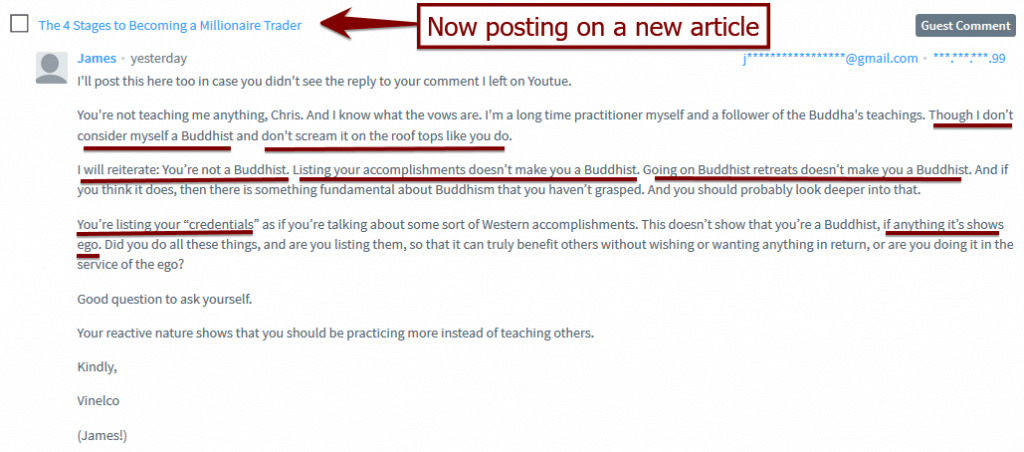
About a week ago, I got the following comment on my YouTube channel (click to enlarge)

james-patterson-comment-1

First off, why is this person making comments about my traders mindset course (via a video) regarding my NeuroTrader partnership and hedge fund trading program? What does their comments about my traders mindset course, or me being a Buddhist have anything to do with this video?

Never mind that incongruency, but another question comes to mind…

Why is this person talking about meditation and vipassana retreats when my traders mindset course is 18 lessons on building a successful traders mindset? Yes, there is a 12 lesson meditation series in the course, but that is in addition to the traders mindset lessons.

Clearly this person hasn’t taken my course, so why is someone without direct knowledge of my course claiming they have an informed judgment about something which they’ve never taken?

Lastly, why is someone who has never had a conversation with me prior to this (as far as I know), claiming I’m not a Buddhist without providing any evidence to demonstrate their claims?

fixing others


Along those lines, my questions to Vinelco and other haters are the following:

1) Do you really think going online, and having little to no prior communication with said person, then denigrating them, is an effective way to get anyone to take you seriously

2) Do you really think I’d value your opinions over others who know me well, or at least have had several dialogues getting to know me? Do you really believe that? If so, why, and if not, then why spend your time making such communications?

3) What kind of inner ecology/mindset do you have that you feel this is an effective way to spend your time and influence people in a positive way?

Thus far, I’ve never seen any ‘hater’ ever come up with any reasonable, cogent or clear response to the above 3 questions. Yet they persist in these behaviors regardless.

Moving On…

Before I share with you my response, I’d like to present you with another piece of evidence, specifically that Vinelco (on YouTube) also came onto my site around the same time, and shared his thoughts, again – not having anything to do with my mindset course (click to enlarge).

james-patterson-website-comment

Notice how they posted the exact same comment word for word? Who goes onto someone’s YouTube channel, shares their comments, and then goes onto their site, posting the exact same comments word for word? Did they write this out on some document, save it, then share it on two different channels? Honestly I don’t know, but it seems odd to say the least.

Regardless, I decided to entertain this comment, and give my response. For brevity’s sake, here are the main points of my response:

1) Why are you claiming I’m not a Buddhist without providing any evidence to the contrary?

2) Here’s why I think I’m a Buddhist (which I’ll clarify further below).

3) Why are you claiming to know something about my traders mindset course when a) you haven’t taken it, and b) the course is much more than my meditation series?

Why I Think I’m A Buddhist

buddhist statue

First off, for disclaimers sake, I am not a Buddhist lama or teacher. I am also not a Buddhist scholar. I’m simply giving my reasons for why I feel I’m a Buddhist practitioner. I also haven’t asked my teacher this question, or looked for any formal discussion on this. I’m simply providing my thoughts on what it is to be a Buddhist.

If my teacher reads this, and disagrees, I’ll gladly accept her feedback, take that perspective on myself, and post her response in the comments below. If there is any fault in my description of what it is to be a Buddhist, the fault is simply mine, should not reflect upon my teacher or school in any way, and I take full responsibility. Here goes…

I think 3 general qualities make someone a Buddhist (or Buddhist practitioner):

1) That you work with a teacher. This can either be a type of ‘spiritual friend’, or ‘vajra master’.

2) That you minimally take refuge in the 3 jewels (Buddha: teacher, Dharma: Buddhist teachings, and Sangha: Buddhist community), and continue to take refuge in them over the course of your life once you’ve made that commitment.

3) That your training, focus and efforts are dedicated towards reducing/eliminating the causes of ignorance, confusion and suffering (either for oneself, or for oneself + others).

From my perspective, if you are doing the 3 things above, then you can consider yourself a ‘Buddhist’.

jason cooper 482297 unsplash

Let me briefly unpack these 3 above, and why they are important.

#1 Working With A Teacher

There are many schools and traditions in Buddhism, and they all vary in terms of how you should work/relate with a teacher. But as far as I can tell, on some level, regardless of the school or tradition, you work with a teacher.

To sum up the ‘why’, a simple answer would be:

If you’re not working with a teacher, and just going on what you think, interpret and perceive, how are you ever going to go outside of your own mind, conditioning, beliefs and confusions?

pema chodron quote

I work with a teacher, and have been with the same one for the last 18+ years. I communicate with her regularly, take regular teachings from her, let her decide what practices I should engage, then I commit to those practices till she feels I’m complete, take her guidance as an instruction, and a lot more, but this sums up my basic relationship with her.

My reasoning above why I work with a teacher is also the same reason why I think you should work with a trading mentor. How will you ever get past your habits, confusions and non-productive behaviors if you’re not constantly getting feedback from your mentor?

#2 Taking Refuge

I’ve not only taken refuge in a formal ceremony several times, but continually take refuge in what are called the 3 jewels, and will continue to do so for the rest of my life.

#3 Training to Eliminate Ignorance + The Causes of Suffering For Oneself (and others depending upon the tradition)

Unless someone is liberated from the causes of ignorance, they will continue to experience it and repeat the causes/conditions which further create more ignorance. This is what leads to the causes of suffering for oneself and others. IMO, to be a Buddhist practitioner, you have to continually train until your training is complete.

When you examine the 3 points above (which is a huge simplification), IMO it makes me a Buddhist practitioner. I don’t mean to claim this as some sort of ‘identity’, just merely a fact of what my understanding of being a Buddhist is really about.

Back to James Peterson

I wrote my response to James, and ended with a clear communication stating that I have no interest in them posting any more comments on my channel or site. You can read my full response here.

Lo and behold, James Peterson didn’t get that communication (or decided to ignore it), and a week later decided to post the following, again…both on my YouTube channel, and my website (click to enlarge).

james-patterson-website-comment-2

Looking at the above, notice how James is no longer talking about my mindset course? Dear James…if that was your main critique before, why are you not following up on this? And why are you posting on a different article than before?

Regardless, I’d like to communicate a few things here as my main response to James.

RE: “Screaming I’m a Buddhist from the rooftops…”

Really? That’s interesting, why do you say this? Reason I ask is, if you search on my site, you’ll find somewhere between 6-10 pages/articles/posts where I talk about being a Buddhist.

We have 1000’s of pages on my website, so are you saying that the 6-10 pages out of 1000+ (or <.1% of all pages) = ‘screaming from the rooftops‘? Really? Ok…that seems a little extreme.

RE: “You’re not a Buddhist…”

Really, what are you basing that on? According to my assessment of what it takes to be a Buddhist, I fit that criteria. Yet I haven’t seen you provide any evidence to the contrary.

But a couple questions come to mind for you James:

1) How many conversations/dialogues have you had with me prior to this? As far as I can tell – none! So are you really claiming to know something fundamental about me, while having no prior dialogues/communiques with me? Really? Ok…that’s interesting.

2) Along those lines, do you really think I’m going to listen to you based on your two posts, particularly where you denigrate me, belittle me, and make a lot of inaccurate/uninformed statements about me/my course?

Why would you think I’m just going to believe you, respect your comments, or even take them seriously? If you believe this, why? And if not, why make such an effort?

anger quote

RE: “Listing Accomplishments/Credentials Does Not Make You A Buddhist…”

Yes, I agree, however I wasn’t listing them as ‘accomplishments‘. I was merely providing various reasons (according to my criteria) why I think I’m a Buddhist. I don’t think they make me special, nor do I view them as ‘credentials‘. I view them as facts of actions I have taken, and that they fulfill my criteria for calling myself a Buddhist.

RE: “If anything, it shows ego…”

Yes, I still have an ego, especially since I’m not fully realized in the nature of mind. But my guess is, you’re not willing to make this claim either (that you’ve fully realized + stabilized the nature of mind). If that is the case, then isn’t your ego still present in you in some moments of time?

Does the fact you were clearly told “hey, your voice is not welcome here“, and yet decide to come back, suggest the presence of ego?

Does the fact that you think I’d actually value your statements about me, despite not having any prior communications with me, suggest the presence of ego?

From my perspective, I’d say yes, but am open and willing to be wrong on this.

RE: “I’m a Follower of the Buddha’s teachings…”

Really? Please clarify where in the Buddha’s teachings it states you should go onto someone else’s website/channel, and denigrate them, while giving unsolicited advice? I’ve yet to discover those teachings, but am open to them being there.

In Summary

TBH, I don’t think James Peterson is a ‘hater‘. I don’t know enough about James to make this qualification. I use this word ‘hater’ because over the last 11+ years of running 2ndskiesforex, I’ve run into many people who have come onto my site, and acted in a similar way to James. I’ve had people call me all kinds of various names, which really weren’t kind, nor were they meant to create real change in someone.

3 solutions

For now, I’m sticking with the general approach that anyone who comes onto my site, tries to denigrate me in any way, without an open mind, or interested in dialoguing about whatever they feel I’m doing wrong, in a constructive manner, will not be welcome, accepted, or allowed a voice here.

My general requirements for allowing any voice on my website or social media channels are simple:

1) your tone is neutral or positive (as a negative tone isn’t constructive)
2) you are open minded
3) if you disagree, state why with facts/data (whenever possible), and if not, then explain your reasoning while being open to different perspective
4) you are willing to be wrong, and see another persons perspective, regardless of whether you agree or not

If you follow those rules, and aren’t trying to promote someone else without prior approval, your comments will be posted. If not, then you have no business posting here, and I will simply delete your comments. Thus, don’t bother wasting your time – my guess is you have better things to do!

From my training and perspective, all people, unless they are realized + stabilized in the clear nature of mind, will display a mixture of wisdom and confusion. And I think people like James who do this are (more often than not) acting from confusion when it comes to actions/communications like this.

As a whole, I don’t want anyone to suffer, and I don’t want people to experience ignorance, or suffer from it. I certainly don’t want James to suffer in any way from his actions or communications with me. I sincerely wish James be free from suffering, and the causes of suffering, just like I wish the same for you and me.

compassion quote

One of my main goals in life is to have a positive impact upon myself and others. I can’t do this with haters who a) don’t respect me, and b) aren’t even willing to entertain my ideas and perspectives. Thus it wastes both our time, and serves no purpose to engage with these people.

It is my hope with this article, that any/all who read it become just a little more kind, clear and aware of how they act/communicate online (or in person) with others.

I myself make mistakes, and will continue to do so, especially since I too am a mixture of wisdom and confusion. Hopefully over time, I’ll make less of those mistakes, and continue to become more free from ignorance and the causes of ignorance. And that is my wish for you as well, whether you’ve been kind to me or not, whether you’ve spoken with me or not.

Hopefully I’ve accomplished this with my post.

Until then, I’ll look forward to your comments/feedback (assuming you meet my general guidelines), and wish you good health and growth in your mindset, trading and life.

This year will mark my 18th year of trading the forex and financial markets. I’ve learned some incredibly valuable trading lessons I wish I had been taught when I first started out. These are lessons which have cost me probably north of $2-3 million dollars in losses, missed opportunities, and making mistakes which took years to figure out (and unwind).

If you’re a struggling trader who’s making the same mistakes over and over again, take heed of these lessons as they’ll save you years in your trading process, and likely well over 6 figures in unnecessary losses.

Hence if you want the fast track to becoming a successful forex trader, learn everything there is to know about these 18 trading lessons. Do this and you’ll find yourself making more money and having greater trading success than before.

Let’s jump in.

1) Invert the Equations Of What Most Are Doing

I have a general formula which I apply to trading and life. That formula is to invert the equation (or process) of what most people are doing.

The bottom line is most people are not successful at trading. In fact, with almost all things in life, most are not in the top 10% of anything they do (job, profession, sports, martial arts, etc).

If that is true (it is btw :-), then most of them are likely following similar patterns and equations for their job, profession, sport, etc, and its NOT WORKING!

trader formula for success 2ndskiesforex

What’s the most common pattern you see with struggling traders? Most are not following their trading plan. Most don’t have a proper risk management profile. Most are spending their time on the charts and strategy, not their skills.

Hence, whatever the majority of people are doing – you’ll have to invert that process & equation. Follow this formula and my guess is you’ll find out how well it works in trading, and life as well.

2) Good Trading Requires Good Trading Skills

Trading is a skill based endeavor. There is no way around it. If you want to make money trading, you’ll have to build the skills necessary to do that month in, month out.

core trading skills

Most traders spend between 75-90% of their time looking for ‘the’ strategy, focusing on the charts, focusing on the next trade and how their going to make money. And most are losing money!


Look, it’s quite simple. If you want to play like Mozart, do you start off with the focus of playing like Mozart, or do you focus first on learning the keys, building coordination your fingers, learn to read sheet music, learn how to play chords?

The answer is obvious. You focus on the latter. Those are the core skills of playing piano. Do that, and in no time, you’ll be playing Mozart. Trading is no different.

3) Sim, Then Demo, Then Live

I have a framework for how you should build your trading skills to make money trading. The process is simple.

First, you practice on a trading simulator, focusing on the core skills of price action context. Second, you practice synthesizing those skills on sim, and then start practicing on a free demo account, first finding potential trading opportunities, then trading them on demo. Third, after you’ve built some consistency there, it’s time to go live (starting with a small amount first, then building your acct as you progress).

The formula is simple: Sim, then Demo, then Live.

simulator practice training

Do that and you’ll shorten your learning process.

4) Treat Demo Trading Just Like Live Trading

Ever thought to yourself “I can’t get excited about trading demo as there’s no money on the line“? Anytime a struggling trader tells me that, I know that they (right now) don’t have the mindset to make money trading.

Think demo trading is something not to be treated seriously? Think practice is over-rated?

Watch the following video of Michael Jordan on practice and how he related to it. See how intense he is about practice. See how seriously he’s taking it, then compare that to how you’re relating to practice.

As Michael said, “Every day in practice was like a competition to me. So when the game comes, there’s nothing I haven’t practiced before. It’s like a routine. I never feared about my skills because I put in the work. Work ethic eliminates fear.

After watching this video, tell me if you can still justify treating demo as ‘not-important‘. My guess is after watching this video, you can’t.

5) In The Beginning, Use Bigger Stop Losses, Then Decrease Them Over Time

75% of my students who do a ‘Trading Analytics‘ session with me (where I use 20+ metrics to analyze their performance and help them reduce their leaks while increasing profits), have one thing in common. Their stops are too tight.

In the beginning, your goal should be accuracy and consistency. Tight stops in the beginning requires precision. Do you really think you have precision in your trading skills right now? If the answer is no, try widening your stops a bit and see if your accuracy increases. If it does, you’re on the right track, like my student below.

trading analytics 2ndskiesforex

However you cannot always have bigger stops as it will decrease your profitability over time. You’ll be leaving money on the table. So focus on consistency first, then precision later.

6) Preparation is Highly Underrated By Most Struggling Traders

How much do you prepare (mentally) for your trading day? 10 mins? 15 mins? I’m willing to bet 75% of the traders struggling out there spend 15 mins or less preparing for their trading day. Are you one of them?

What’s the most important tools for a Football player? His body and his mind. What’s the most important tool for you as a trader? Your mind (for the most part).

Hence you need that tool (your mind) to be sharp and prepared for your trading day. Treat preparing for your trading day like a professional athlete, then see if your performance (and mindset) increases.

trading preparation 2ndskiesforex

7) Whatever You Don’t Measure, You Won’t Improve On

How many metrics of your trading performance are you measuring right now consistently? My guess is 90+% of you struggling traders out there measure 3 things at most:

#1 – % accuracy for your trading
#2 – account balance at the end of the week/month/year
#3 – how much your account is negative from your original starting balance (or how much you need to get back to break even)

Does this sound accurate?

How many metrics do I measure about my trading performance? About 20, and I can measure them so quickly, it takes me < 15 mins to measure.

Bottom line is, whatever metrics regarding your trading performance you are not aware of, you cannot fix. You have to be aware of your trading mistakes before you can fix them.
But even then, if you don’t take the next step (measuring them), you won’t know what your baseline is, and how you can improve.

And if you don’t know what your baseline is, and what you need to improve on, how do you plan on getting better?

8) Consistency Comes From The Mind

I’m close, but can’t seem to break through. All I’m really needing is a consistent trading strategy and trading plan.” Ever thought that to yourself?

Where do all your trading decisions come from? They come from your mind.

consistency tony robbins

How many times have you written out a trading plan, and not followed it? How many times have you not followed your trading strategy? How many times have you not pulled the trigger when your trading setup comes?

Consistency in trading doesn’t come from the strategy or your trading plan. You won’t experience consistency in your trading till you have consistency in your mind.

Hence if you want to experience more ‘consistency‘ in your trading, you’ll have to wire consistency in your mind.

9) Information Does Not = A Good Trader

How many trading books have you read? How many trading videos have you watched? Probably a lot, yes? Yet you’re still struggling to make money trading. Why is that?

If watching videos, reading books (i.e. taking in information) made good traders, you’d likely be there by now. But you’re not. And that reason is simple.

Information does not = successful habits.

Trading is a skill based endeavor. I’ll take the trader who’s read only one trading book, and watched one trading video, but has practiced the core skills of price action context vs. the trader who’s read 100’s of books, watched 100’s of videos, but doesn’t practice their trading skills.

bruce lee famous quote


10) Successful Trading Requires A Successful Mindset

To make money trading, you’re going to have to build a successful mindset. This is a mindset which focuses on getting better every single day, regardless if they made money that day or not. This is a mindset which embraces the challenges trading provides.

There is a mindset you’ll need to make money trading. While that mindset is not fixed, there are certain habits and patterns of thinking you’ll need to make money trading. You’ll see these patterns in the best traders of our time.

Hence if you want to make money trading, you’ll need to build the mindset to get you there, and keep you there.

growth mindset vs fixed mindset 2ndskiesforex

11) Trading Can Be A Lonely Venture. Join A Trading Community!

Ever feel lonely in your trading quest? NEWS FLASH: You’re not the only one who feels this. Most traders do.

Anytime I visit traders and students in other cities, they all tell me how relieved they are to realize they’re not the only one having these experiences. There is no university degree in trading. Very few people will ever work at institutions with other traders. Plan on not being that person.

Once you realize this, and that you’re not alone, you also realize how beneficial it is to join a trading community.

I feel really proud on the trading community we have at 2ndSkiesForex as they’re all open, friendly, and really helpful towards others, especially the senior students. We’re all here for the same goal, and we realize how important it is to communicate and interact with others on this journey.

trading community 2ndskiesforex

Why should you try to tackle such a challenging profession as trading alone? Why not join an active trading community that supports your growth as a trader, where you can see others succeeding?

12) Focus on the How vs Focusing on the When

One of the most important mindset shifts you can make in trading is spending more time focusing on the ‘How‘ vs. the ‘When‘. I can always tell where a traders mindset is when they ask the question “how long will it take for me to make money trading?

Would you ever walk into a martial arts studio and ask “how long before I can beat up a black belt?” Would you ever walk into a piano school and ask “how long before I can play Mozart really well?” No, of course not. Not only is there no fixed answer for this, you’re focused on the wrong variable.

The reason why this is such an important mindset shift, is it gets you actively focusing on and directing your energy to the ‘how‘ and ‘what‘ that will get you from point A to B.

The ‘when‘ won’t get you from point A to B. But the ‘how‘ will.

13) Risk Management is the Most Underestimated Skill in Trading

90% of all struggling students who start my trading course have one variable in common. They don’t take risk management seriously and have inconsistent risk on each trade.

Now ask yourself, “How good are you at predicting whether your next trade will win or not?

Most likely, you’re not that good. If you were, you wouldn’t be taking so many losing trades that you ‘knew’ were going to lose now, would you?

There are 2 key points here:

1) you’re likely not that good at predicting your winners and losers (less winners)
2) trading is a game of probabilities and your trading distribution will be mostly random

Hence risk a fixed % per trade so each loss is always the same % of your account.

fixed-percent-equity-risk-model-superior-than-fixed-dollar-amount-graph-1-2ndskiesforex

14) There Is A Difference Between Planting Seeds & Watering Seeds

In April this year, my father passed away. I left within a day of hearing upon the news to spend time with my family and say my goodbyes to my dad.

The day I got back home, I realized how much we all were in the same vision, or spirit regarding our family. I realized this was a ‘window’ for us to make real changes, just like all big moments in one’s life are.

I talked with my family about how this moment was a window, and a great opportunity for us to plant new seeds for our family. But planting seeds is not enough if you want them to fully grow. You have to water them, provide sunlight, and give them proper soil. Do that, and the seeds (which are pure potential) will grow and manifest that potential.

So ask yourself, are you just planting seeds (watching videos, reading books, but not making any real changes)? Or are you actually watering those seeds, taking real actions, working hard every day to get better?

watering seeds

Which trader do you want to be?

15) If You’re Continually Making the Same Mistakes, Seek Training From A Forex Mentor

I could not imagine trying to learn more about becoming a Buddhist and do the meditation practices without a mentor or teacher. I actually did try (back in college) and for the most part, failed.

The same went for my trading. I knew at some point I needed training. I needed someone to provide feedback to me and help me see what I wasn’t seeing. This is something every professional athlete has (a coach or mentor). Why do you think trading would be any different?

If you’re continually making the same mistakes over and over again, you’ll need a mindset and path outside your current one. If your current path, skills and mindset was working, you wouldn’t be repeating the same mistakes over and over again now, would you?

Hence, if the above description sounds like you, get training from a forex mentor (or trading mentor), one that is a verified profitable trader.

chris capre forex mentor 2ndskiesforex

If they cannot (at a minimum) provide one year of verified profitable trading results, then most likely they aren’t a good trader, and most likely aren’t a good trading mentor.

16) To Make Money Long Term, You’ll Have to Get Comfortable With Uncertainty

How do most people make their money? Via a job, yes? A job which pays you a fixed salary on fixed dates. A job which requires you to work fixed hours, wear fixed clothes, and has a lot of fixed rules.

What’s the common denominator there? Everything (by and large) is ‘fixed’ or ‘solid’. You can rely upon that, which has its benefits.

Trading by default completely up-ends that process. The markets aren’t fixed, but ‘fluid‘, constantly changing. Bull trends one day become ranges, pullbacks, or bear trends the next day. You can make $25,000 one month, and lose $2K the next.

What’s the common denominator here? Most things are notsolid‘ or fixed in the markets. And that will totally mess with your brain, and sense of security.

Bottom line is, you’re going to have to get comfortable with ‘uncertainty’ when it comes to trading.

However by becoming a successful profitable trader, you can put the ball back in your court. And that + financial freedom will most likely eliminate about 75% of the every day stresses you experience in your life.

beach vacation

17) Always Wait For Your Price…95% of the time 🙂

If there is a trading lesson I’ve had to learn 100’s of times over, it’s this one. I cannot tell you how many times I got to the charts, noticed a trade setup just happened, and now its moving away from my entry, exactly as I had planned.

Of all the times I chased the trade and price, about 95% of the time, it came back to my price.

my price

This is such an important lesson for 2 main reasons:

1) if the trade does come back to your price, and wins, won’t you be making more money that way? won’t you be losing money if you get in for a worse entry, and it goes against you?
2) what do you think being disciplined, and waiting for your price does to your self-image and trading mindset?

Which one of the above scenarios do you think wins? And more importantly, which one do you want to win with?

18) Your Brain Has The Tools To Make Money Trading, But You’ll Need to Re-wire It

I’m very serious about learning how the brain and mind works. Of the 50+ books I read every year, about 45+ are on the brain, mindset and meditation.

I’ve been studying neuroscience for over 20 yrs since my university days. I’ve spent the last 18 yrs meditating every day, completing a 1 yr meditation retreat and various practice progressions along the way.

There is one thing I’ve learned through all those years. That the brain, and how its wired, has the tools to help you make money trading. It also has the biases to cause you to lose a lot of money trading. Most likely you’ve already experienced this.

Now I’m guessing you’ve heard about cognitive biases? These are mental and neurological structures in your brain + mindset which cause you to make really bad decisions. A few examples:

1) The negativity bias
2) Confirmation bias
3) Fear of Missing Out
etc…

There are dozens of biases you have which will make it really difficult (if not impossible) to make money trading. Luckily, your brain also has a key feature (like hardware in your computer), that allows you to re-wire your brain to make money trading.

This feature is called Neuroplasticity. It’s how your brain can actually change its cellular and neurological structures to form new habits (i.e. habits that will help you make money trading).

rewiring your brain

What this means is, you have the ability to re-wire your brain to think and take actions like a successful trader.

The key is, you’ll have to re-wire your brain to do this, and that takes methods, applications and work.

You’ll need real practices, methods and training based upon neuroscience, cognitive psychology and a deep understanding of your brain + mind to make these changes.

Luckily this is a real thing, and my profitable students have proven this.

Hence if you want to start making money trading, you’ll have to re-wire your brain to do this consistently. And that only comes with training, practice and hard work.

Now Your Turn

What did you think of my 18 trading lessons? Did you find something valuable here and learn something new? I take my trading, and my mentoring very seriously, so please make sure to share and comment as I want to hear your feedback on this.

What you’ll learn in this forex trade plan article:

-How do you build a successful forex trading plan?
-How do you evaluate whether your trading plan is working?
-Why you need a forex mentor to help with your trading plan

One of the more common questions I get from traders is “how can I build a successful forex trading plan?” If you’ve had this question before, or feel your trading plan is not sufficient, confusing, or not working, then pay attention because this article will answer your questions directly.

From my experience, you will need (at a minimum) these 5 major components to be in any successful forex trading plan you make. Let’s go through them.

#1 Your Why

From my experience, you need a ‘why‘ as to why you’re doing this. It should be the ‘core‘ reason and inspiration behind why you’re trying to become a successful trader.

For most traders, the why is simple:

“To build financial independence while working from home, having more time to spend with your friends, family, while determining your value and income, and having no limit to the upside you can make.”

Would this pretty much encapture the main reasons why you want to become a successful trader?

Now there is certainly a deeper discussion we can have about your ‘why‘ and what you think it will give you, but for now, my guess is almost all of you fall into the above reasons why you’re wanting to become a professional trader.

your why

The reason why I suggest getting really clear about your why is it will remind you (no pun intended) why you are doing this, but more specifically, why you should work hard to achieve your goals. This is helpful when things are going wrong as that is when you need a boost in motivation and connection to your why.

By having a personal and emotional connection to your why, you’re more likely to stay focused and keep going when things are challenging.

#2 Daily Preparation

Ever watch a professional sports game, particularly before the game starts? What do you notice if you turn on a football game a few hours before it starts? You’ll see the same thing across pretty much every sport on the planet.

All professional athletes start hours before the actual game/contest doing one thing: Preparation!

They are preparing their body and mindset to get ready for the game ahead. Take a look at this 30 second video of Odell Beckham Jr. (American Football Player) getting ready before his game.

What do you see him doing? Rehearsing the exact same things he’ll be doing in the game (running routes, making cuts, catching passes). Keep in mind, this is after he’s done his stretching and exercise routine to get his body warmed up for this.

Now I have one simple question for you: “Do you think trading should be any different when it comes to preparation?” 

The question is mostly rhetorical, however when I quiz most struggling traders about their pre-trading routine, its usually very minimal at best.

Now I know many of you have full time jobs and lead busy lives, and perhaps only have 1-2 hours per day to trade. If that is the case, then I’d suggest spending at least 15 minutes preparing mentally for your trading day. This should be finely crafted into a very specific routine you execute day in, day out.

What should you be doing during this preparation phase of trading? At a minimum:

1) getting your mind (and ideally body) in an optimal state for trading
2) mentally rehearsing everything you need to do during your trading day
3) after you’ve done the above, then starting your pre-trade routine

The above is what I would call a ‘sufficient‘ and ‘expedient‘ way to prepare for your trading day and get you in a mindset + state to make money trading.

#3 Core Trading Mechanics

Now that you’ve 1) connected with our ‘why‘, and 2) mentally prepared for your trading day, it’s time to sit down in the chair and start trading your edge. However, you need to clearly lay out what you are trading, and how. These are your core trading mechanics and a blueprint of what you’re trading.

mechanics blueprint

In this part of the forex trade plan, you need to cover the following:

1) markets/instruments you are trading (should be fixed in the beginning until you’re at least stable or consistently profitable)
2) what strategies are you trading (these should be very clear what you are trading, along with the parameters/conditions for each strategy and setup, such as entry, SL and TP conditions)
3) what time frames you are analyzing the price action context and making your trading decisions from

In the beginning, I recommend trading no more than 5-10 instruments (less is usually better in the beginning) so you can learn their price action, volatility and order flow patterns by watching the same instruments day in, day out.

Gaining familiarity will allow you to find more trading opportunities in those instruments over time, and thus profit more.

You’ll also need to know exactly what trading strategies you are using day in, day out so you’re very clear about what setups you should be focusing on, and what you should let go of.

Forex Trading Tip: Once you know what strategies you are using, make sure you have screenshots of those setups (ideally you trading them successfully live) so you can imprint these patterns and charts into your brain. This way when that same pattern in the price action shows up, your brain will (sub-consciously) tell you “Hey, that’s a good trade, you need to jump on this.

#4 Risk Profile

This part of your trading plan is all about risk, and risk is all about the numbers (mathematics). It’s a confluence of the risk required to make a maximum amount for each trade, your risk tolerance and risk capacity.

risk profile 2ndskiesforex

There are several things which will help determine your risk profile in your trading plan, such as:

1) % risk per trade
2) max risk per day
3) max risk per month

NOTE: If you want to learn why we recommend a % risk based model, click here.

Regardless, you’ll need to know exactly what you’re risking per trade and it should be consistent. This is because you could be varying your position size, but if you increase size on your losing trades, and decrease size on your winning trades, you’re leaking your edge (losing money where you shouldn’t be).

Since you don’t know whether your next trade will be a win or a loss, you need to be risking a fixed % per trade.

I also recommend having a max risk per day so you can shut things down if you’re off for that day. This will minimize your downside when not on your game.

In terms of your max risk per month, this is the same concept as above.

Trading Tip: If you want to avoid having major draw-downs you’re unlikely to recover from, we recommend having a max risk per month <10%. For every month you have a 10%+ drawdown, you decrease your chances exponentially you won’t recover your losses by year end.

Also in your risk profile, you should be aware of your risk of ruin, which tells you mathematically a) whether your account will blow up, or b) whether you’ll mathematically make money. So critical you understand your risk of ruin.

risk of ruin table 2ndskiesforex

If you want to learn more about the risk of ruin for trading, click here.

#5 Analytics & Review

Every successful trader reviews their trading for the day. Just like an athlete reviews film from their past games to see what they could improve upon, you have to have a process for reviewing your trades each day/week/month.

A simple way to relate to this is:

“You cannot change what you cannot measure.”

(Pro football players reviewing film below)

pro football players reviewing film

If you don’t measure and review your trading performance in detail, you’ll continue making the same mistakes over and over again. Have you had this experience? If so, most likely you’re not reviewing and analyzing your trades and trading performance properly.

I recommend the following:

1) spend at least 15mins each day reviewing your trades for the day
2) spend at least 1hr per week reviewing your performance and execution for the week
3) spend at least 1hr per month reviewing your overall stats

What should you be reviewing?

1) charts for each and every trade, showing the price action context before the trade, along with your trades entry, SL, TP, & the result
2) how well did you execute your trading plan (were you over-trading?)
3) what was your performance (stats) for the month and how does that compare to your baseline?

By having a time to analyze and review your performance, you’re teaching your brain to spot the habits and actions which led to making successful trades, which further reinforces good trading habits.

In Closing

These are the 5 major components you’ll need for any trading plan you create. There is a lot more that could be said on the subject, but this should give you a solid framework to build your own trading plan.

In the beginning, you’ll need to do some experimenting to tease out what feels more natural for you. I recommend doing this in 3 month chunks so you don’t change your plan too often, and give it enough time to play out.

Eventually, you’ll likely need some feedback on fine tuning your forex trading business plan. This is where a forex mentor really helps, because they can see things you’ll likely be missing, and can give you actionable insights on  how to increase your profits, accuracy and performance.

Below is one of my students first quarter performance for this year whom I’m constantly helping with their trading plan.

trading analytics 2ndskiesforex profitable traders

If you’d like to learn more about our Trading Masterclass course and how we can help you build a successful trading plan, click here.

Now Your Turn

Did you learn something from this trading plan article? Notice anything lacking in your current forex trading business plan? Feel like you have a more clear idea how to build a successful forex trading plan?

Make sure to leave a comment below, and share this article on social media.

Until then, I’ll look forward to hearing from you.

Additional Resources: What if your trading plan is costing you money?

In today’s article I’m going to talk about an important subject in forex trading psychology called ‘the comfort zone‘.
Before we get into this important trading and mindset lesson, I’d like to talk about a close relative of mine named ‘Vesh‘.
Vesh recently had his 2nd hemorrhagic stroke in 5 years.
Most people who have two hemorrhagic strokes aren’t very functional. Vesh is definitely an exception.
He was a database programmer for decades, and ironically, after the stroke, can still do database programming.
brain image after stroke
However there are many things he cannot do as a result of his two strokes.
Such as numbers…he’s not that good with numbers any more, and often gets them confused. If he’s talking about something from 100 years ago, he might say ‘Back over 20,000 years ago in England, the British…
To compensate for his brain being damaged, he eats the same thing every day. It’s what he’s most ‘comfortable’ with and makes it easier for him. Man is it easy grocery shopping for him every two weeks 🙂
How does this relate to the comfort zone and trading successfully?
How your brain and body is wired right now is what you feel most ‘comfortable‘ doing. My friend Ross runs 5 days a week, 2 miles a day, so he feels quite ‘comfortable‘ running 2 miles a day 5x per week.
flight runner
However if one day, I came up to him and said, “Today you’re going to run 20 miles, and you’ll do this 3x this week,” Ross is not going to feel very ‘comfortable‘. In fact, he’s going to feel profoundly uncomfortable attempting such a feat.
Just like Ross, whatever is outside of your brain, body and psychology to do comfortably right now is called being ‘outside’ your ‘comfort zone‘.
This is where an article by Noah Kagan comes in. Noah is a highly successful entrepreneur who recently wrote an article called ‘How to Step Outside Your Comfort Zone in 2018′.
It’s a well written article with some simple steps to accomplish this, which I definitely recommend reading.
However he makes one major error in how he defines growth in relationship to your comfort zone.
He says, “growth happens outside of your comfort zone.
While technically true, it’s also ‘false‘ at the same time. Wait, how can something be both true and false at the same time? Let me explain.
Growth in your brain, mindset and body will happen when you go outside your normal programming, or what you’re currently wired to do easily now.
comfort zone 2ndskiesforex
The same goes for you and your trading, and this is why it’s important to go ‘outside‘ your comfort zone, so Noah is correct in saying ‘growth happens outside your comfort zone‘.
However, Noah fails to make an important distinction here regarding your comfort zone.
There is a range you can go beyond this where there is ‘growth’. This range or ‘zone’ has also been discussed by those who talk about ‘being in the zone’ or ‘peak performance’ (image below).
peak performance zone 2ndskiesforex
However, if you go too far outside this zone or range, you won’t grow at all. In fact, you will almost certainly fail.
Hence there is a range you can go outside of your comfort zone and still have growth. This is what I call the ‘challenge zone‘ or ‘learning zone‘.
Asking Ross to do 2.5 miles per day is ‘challenging’ himself.
But asking Ross to run 20 miles today, and he won’t grow. He’ll struggle, experience pain, and most likely will fail.
The same goes for you and your trading (especially if you’re struggling).
Where you are right now in your trading process, there are definitely some strategies, methods or tasks you are just not ready for right now.
For example, if you don’t know how to read the basic pillars of price action context in the forex market, you’re definitely not ready to trade a price action strategy. If you don’t even have a trading plan that you can easily execute day in day out, you’re not ready to trade $10 million dollars.
Hence while Noah was correct in stating that ‘growth happens outside your comfort zone‘, so does failure by going too far outside your comfort zone. Venturing too far outside your comfort zone is what I call the ‘panic zone‘ or ‘failure zone‘ (see below).
comfort zone learning zone and failure zone 2ndskiesforex
You have to make this important distinction (and know the difference) if you want to succeed in trading forex.
I think this is where most struggling traders in their trading process fail. I see many traders taking on methods, skills or strategies they simply aren’t ready for yet.
While I think it’s a good idea to ‘challenge‘ yourself and go outside your comfort zone, going too far will almost always lead to failure.
It’s important to learn what are the various steps, skills and mindset you’ll need to learn along the way so you don’t go too far outside your comfort zone, and set yourself up for inevitable failure.
Thinking you can start making money trading price action without having a trading plan, without proper risk management, or without forex training isn’t a path to success. It’s setting yourself up for certain failure.
This is one of the most common mistakes I see struggling traders and students make.
I get it…you seriously want to succeed in trading forex, you want to work from home, and make more money than you could in any ‘job‘. And you see that I make money trading and am a professional trader.
chris capre verified trading performance 2ndskiesforex
I get it…who doesn’t want to do that? That’s why you’re here, to learn how to trade the forex markets.
But there is a difference between the challenge zone (growing), and failing consistently (failure zone).
If you are constantly losing money trading, and consistently making the same mistakes, most likely you’re going too far beyond your current skill set.
You’re likely in the ‘failure zone‘, which 99+% of the time will lead to you losing money trade after trade, month after month, feeling like you’re not going anywhere.
losing money trading
If you have this feeling, that is actually a good thing, because it’s your self-image and unconscious mind telling you “Hey, you’re too far outside your comfort zone.
If that is your regular experience, then it’s time to get a forex mentor, one with a proven track record of successful forex trading.
Chris-Capres-Verified-Forex-Trading-Results-2017
Hence if you want to stop making the same mistakes day in-day out, month and after month, losing money consistently, then check out my trading course or my mindset course, both of which give you insights into the psychology of successful traders as well as a step by step process on how to trade successfully.
Did I describe your process and trading experience? Does any of this sound like you? If so, I want to hear your comments and feedback below.

Learn a practice towards building a better brain for trading & life. A holiday message from Chris Capre & The 2ndSkiesForex Team.

In a great study by Thomas Corley on the daily habits of successful wealthy business people vs. the poor, some fascinating statistics were unearthed. Here are several below:

  • 76% of wealthy people exercise aerobically at least 4 days a week vs. 23% for the poor
  • Those same wealthy people eat over 30% less junk food
  • 65% watch less than 1hr of TV a day, and almost never watch reality TV
  • 88% of those same wealthy people read 30 minutes or more each day  vs 2% of the poor
  • and lastly, 67% of those successful business people write down their goals vs. 11%

It should be noted almost 70% of these now successful people started off in poverty.

One statistic this study really dug into was that of setting goals, and the discrepancy was overwhelming across the board. Here they are below:

  1. 67% of successful business people write down their goals vs. 17% of the unsuccessful
  2. 80% focus on accomplishing a specific goal vs. 12% for those struggling
  3. 86% believe in continual self-improvement and education vs 5%
  4. 84% believe good habits create opportunities vs. 4% for the poor people
  5. 76% believe bad habits have a negative impact vs. 9%

Successful Trading Mindset - Setting Goals 1

Hence, highly successful people write down their goals, focus intensely on accomplishing a specific goal, continually train and work on themselves, are super confident good habits create more opportunities, and avoid negative habits and limiting beliefs.

Now ask yourself, have you written down your trading goals, or are they just in your head?

When you are training, are you working on a specific skill, and doing deliberate practice?

Or are you just going through the motions waiting till the market opens?

Do you just think between your two ears you should write in your trading journal, or are you writing in it each day you trade and train?

Where are you at in this spectrum of habits and in setting goals?

It’s one thing to say, ‘I want to make 10% a month‘, or ‘I want to be a professional trader’.

But do you follow it up with action?

Do you set goals, build a specific plan of action to accomplish that goal, and then put hours into that plan of action every day?

If so, then you have a key piece in place towards trading successfully.

But if not, spend about 1 minute asking yourself why you haven’t set any trading goals, then the next 30 minutes discovering what those goals are, and what you need to do to accomplish them. From there, you have to take action.

In reality, the largest portion behind your success is the choice to think successfully. What you think and do has the greatest impact on your success or failure. I meet a ton of people who were highly successful (at something) before they came to trading. Yet they get stumped on how to trade successfully and become frustrated.

That frustration is a type of amnesia. It’s forgetting you weren’t always successful at what you are now. It took time, likely hundreds of hours, you made an ocean of mistakes, worked hard when it wasn’t convenient, and kept going when problems hit you for a loop.
How Trading really Works out
Where is that wisdom now? Where is that experience now when you are experiencing your frustration? Rely upon that, and use it to keep moving forward. Tune your mind to what you want to accomplish, understand what it takes to achieve that, continually work on building a successful mindset, and then get to work.

Nothing about this will be easy, but nothing great ever is.

In 99% of the cases, when hearing about ‘protecting your capital’, what’s being discussed is your financial capital, or money in the account. But when do you hear about protecting your mental capital?
Unfortunately there is very little discussion about protecting your mental capital. And yet, it can often be more important than protecting your actual capital (i.e. money).
protecting your mental capital 2ndskiesforex
What is Mental Capital?
Your mental capital is very much like an account balance reflecting the strength (or weakness) in your self-image and trading mindset. A good example is confidence, or lack thereof. Some other ingredients which affect/are part of your mental capital are;
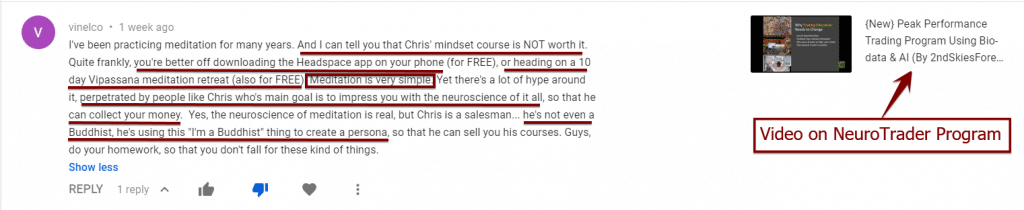
Doubts
Fears
Beliefs (positive, limiting or negative)
Impatience
Self-esteem
Laziness
Discipline
Focus
Awareness (both self, and in the moment)
Beating oneself up
Negative or Positive Language
Mental Toughness
Your mental capital is something (just like your risk capital) that has to be protected and built up brick by brick. However, there are no mathematical formulas to help you with this. The two things that affect your mental capital the most are 1) You and 2) Your environment.
building self image brick by brick 2ndskiesforex
Ways to Protect Your Mental Capital
There are many ways to protect your mental capital, of which, I’ll share a few simple techniques here;
1) When in a trading slump, go for smaller, more achievable goals 
We’ve all gone through losing periods, but the longer they go, the more potential they have to affect our mindset. Sometimes you just need to get a few winners to build your confidence back. If getting 2R on a trade just seems out of reach, try going for 1.5R, or 1R. Just nailing a few wins can do magic for your confidence and beliefs. Its an external confirmation to your mindset you can make good trades. When this belief comes back, you start to find yourself making better trades.
2) Avoid beating yourself up
This takes awareness in the moment, so anytime you catch yourself doing this, you have to stop the negative self-talk. Instead, think about things you do really well. Think about something which you’ve overcome in your life. By recognizing your strengths, you start to engage them more, while replacing the negative self-talk. It’s a more constructive thought process to engage in and helps to strengthen your trading mindset.
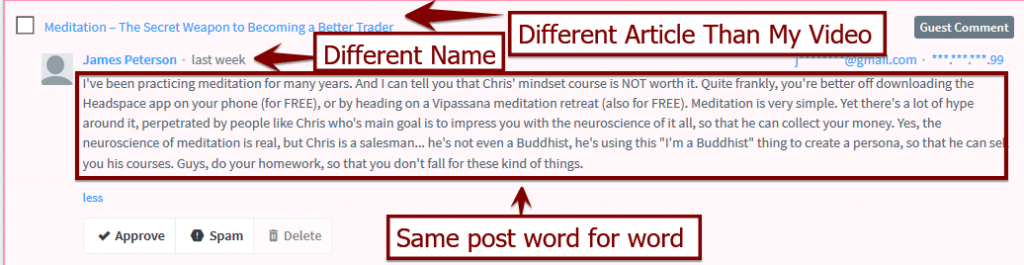
3) Take on less
Maybe you are trading 3-4 systems across several time frames and instruments. If you cannot perform consistently at this level, reduce what you take on. Trade less systems, instruments and time frames. Try doing a few things, or even just one system really well. When you start to perform well with that one system, winning more trades and making money, you start to create a positive belief you can do this. This leads to a confidence which you can then use taking on just a bit more, very much like lifting weights.
 
In Conclusion
These are just three simple ways to protect your mental capital, and there are many more developed methods, techniques and ways to do this. One example is ERT training, which helps to re-wire your brain and remove those limiting beliefs.
ert training to re-wire your brain 2ndskiesforex
Not protecting your mental capital will only lead to negative emotions, beliefs and habits. But protecting your mental capital will help you build constructive and positive trading habits that ultimately lead to better trades. There is nothing more powerful than someone who believes in themselves. All great performers have this. Your goal should be to become that person.