Tag Archive for: trading mindset

In 2009, Gary Kasparov, one of the world’s greatest chess players of all time (now retired from competitive chess), played what is a called a simul game exhibition. In this exhibition, he played 25 simultaneous games against some of the top local talent all that the same time.  The opposing players had as much time as they wanted to think about their moves while Gary had only about 5 seconds (max 30) per table to make his move.  Below are the results of this exhibition;
Gary Kasparov – 21 wins out of 25 matches, 4 draws, no losses.
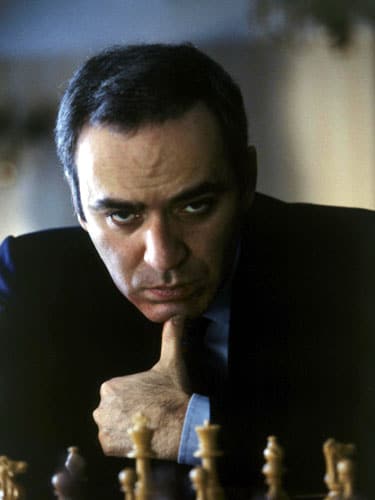
Chris Capre Kasparov Photo https://2ndskiestrading.com
Gary has actually participated in many Simultaneous exhibitions and contests with similar results, many of which he did speed or blitz style with him having very limited time (often under 30secs) to make a move.
The fact that he did this with only 5 seconds per table on average was quite impressive, but there is something here which is really unique.  His highest FIDE rating (a rating system for his skill and performance) ever in his career was 2851, and when he retired, he left with a 2812 rating.  Technically since he is no longer competing, his rating has been frozen.  But when he plays in exhibitions like these, they still give him a general rating based on performance, competition and play.  Herein lies the kicker.
During this exhibition they gave him a rating of about 2600.  This is only 212pts behind his retirement rating of 2812 (a 7.5% reduction) and 251pts behind his all time high of 2851 (an 8.8% reduction).
Translation;
In all those other games where he had loads of time, anywhere from 30mins up to an hour,  it only improved his performance and rating by a mere 7.5-8.8%.  This means the bulk of his analysis, reading, intuition and performance lies in the first few seconds he looks at the board.  All the extra time is to work out alternate scenarios and do deep calculations that amounted to an approximate 8% increase.

How Does This Relate to Trading?

Have you ever heard of the phrase ‘analysis paralysis‘?  Most likely you have and this topic points to how fruitless it is to spend massive amounts of time analyzing a situation to find the best trading opportunity and most precise entry.  Trading should not be a huge process where you go into some deep long think about;
a) whether there is a trading opportunity and
b) how you should trade it

chris capre overthinking in trading https://2ndskiestrading.com
Trading should be a natural endeavor, where you look at the market, quickly see if there are setups according to your trading system, your trading rules for entry and exit, then make the trades.  If you are spending a lot of time deciding if there is a trade, or if you should take it, your likely spending too much time thinking about it. It could also be that you are not dealing with the psychology of risk.  It also highlights the importance of Concentration and Trading, for if you are really focused and concentrated, you will not let any excess thinking to take you off track and get caught up in some thread of thinking that takes you off course.
Overall, all this extra thinking can bring in the bugaboos, causing doubt, playing off any lack of confidence you have, any recent bad trading experiences, etc., instead of you just trading your plan/system and making the trade.
Again, for an expert like Gary Kasparov, one of the greatest chess players of all time, all that extra think he had after 5-30secs amounted to a small 8% increase in performance.  For you and trading, that extra thinking could easily result in a missed opportunity, along with re-inforcing self-doubt, lack of confidence, over-thinking and allow the mind to paralyze you (hence the name ‘analysis paralysis’).

A Similar Experience

Back when I was trading for the hedge fund, we went through some internal training programs and one of them was to point this out exactly.  Here is how the exercise went down;
Our President had put the current 10 traders and 15 trainees in a room to look at some charts.  What he did in the beginning was show us a chart which we had 2mins to examine. We then had to decide from there if the next move was going to be bullish or bearish and put our answer down on a sheet of paper. We did this 10x and then turned in our answers.  I scored 70% accuracy on this.
Then, he would expose us to a chart, but we had only 3 seconds to look at the chart and then make a decision what the next move was. He did this 10x and of course we wrote our answers down, then turned them in. To some surprise, my score increased (to 90%) while everyone of us (save one) had all shown an increase in scores when compared to the decisions we made when we had 2mins per chart. Although I wasn’t totally surprised by this, it had a great impact on me and how I traded from there on out.

intelligent trading chris capre https://2ndskiestrading.com/
It really communicated to me how quickly we can process information, get the gestalt of the market, & through less thinking + intuition, we can make far better trading decisions. By taking less time, we short-circuit the minds ability to over-analyze a situation, along with not allowing any negative thinking patterns to enter into our trading decisions.  One thing to consider is having a rule-based system which will help streamline the thinking/trading process and thus eliminate the need to think about whether you have a trade or not.  But the next time you find yourself spending a lot of time thinking about it, go to another chart. This will get you thinking about another problem and get you out of the thread you were going on with the last trade. Then come back to the previous trade and see if you have a quick read on it and go with that as long as your rules for entry are there.
Please remember to leave your comments below and to ‘Like’ / ‘Tweet’ to share the article. 
For another great article on trading psychology, check out Trading Lessons from the Archery Range pt. 1.
When I am not trading, or preparing for trading, I spend a lot of my time watching professionals, particularly high-level professionals.  I find watching any high-level professional in any field gives me tremendous insight into being a professional, how to operate at a high level, and how I can improve my trading.
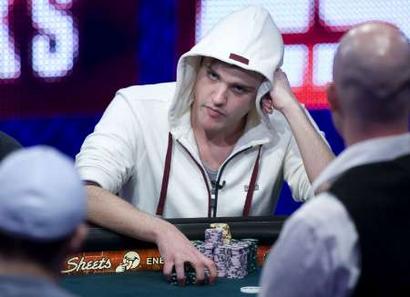
This week I had a buffet in studying professionals from various fields.  There were several people who influenced me in many ways, but one really stood out.  Pius Heinz.

Who is Pius Heinz?

pius
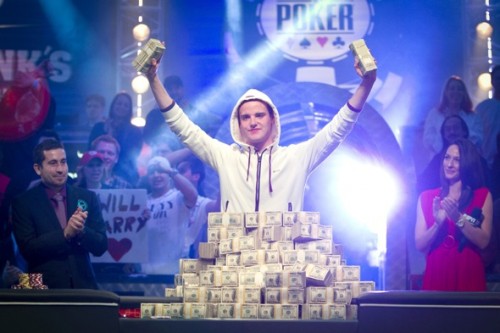
A 22-year old german who was the first to ever win the World Series of Poker just 4 days ago.  After 9 days, over 80+hrs of poker playing, going up against over 6500+ other people who wanted nothing more than to take his money, he prevailed. Something should be said about his story and his winning the greatest prize in the world of poker.
The Beginning

Pius first watched poker on german tv and was fascinated.  He played a few games and then decided it was a game of skill.  He then spent the next several months studying intensely the game of poker and immersed himself in learning it inside out.  He started off playing online poker and had some success, but felt unprepared for live play.
So what did he do?
He spent over a year learning live play and entered in several tournaments to gain experience in playing live as opposed to online.  After having mixed success, he was deciding whether he wanted to play poker full time.
But he stuck with it as he felt he could be successful, despite having mixed results.
Enter the 2011 WSOP tournament.
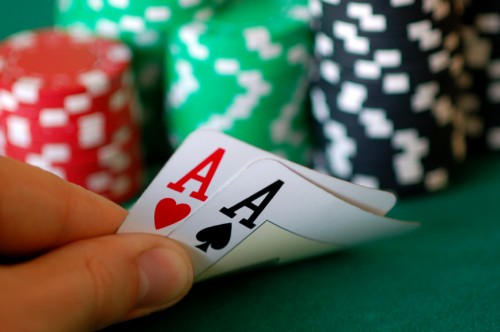
poker aces
The first day he had to play for over 10hrs with very few breaks.  He was playing against 6500+ contestants many with more experience then he.  Every day he won, meant another 10+hr day, making sure his reads were sharp, his math was on point, his patience never-ending and his concentration never wavering.
Imagine playing in the largest tournament in the world, playing against people who will do anything to make you lose. Imagine having someone stare at you with the most intense look possible while not having to give off any clues as to what your hand is?  Imagine playing with larger amounts of money than you have ever seen in your life, keeping your emotions in check and completely focused.  And every day he won, the energy got more intense, the stakes higher,  all while remaining patient, concentrated and focused.  All at the age of 22.
Going into the last few days, Pius was not the chip leader. In fact, he was not even in the top 10.  Did he get discouraged?  No, he kept completely focused on his task whether he just won a lot of money, or lost of ton of money.
Day 9

The final day of the tournament is called Day 9 where the final 9 players would play at the final table, all competing for an $8.7million prize.   Again, Pius was not the chip leader going into this.  He was in the middle of the pack against many more experienced players, including the 2011 player of the year Ben Lamb.
Playing for 7.5hrs, waiting for the right hands, paying attention to every detail, and maintaining his patience and discipline, he began to climb.  He was building his stack of chips and moving up the ladder.  While others were making mistakes, he was playing perfect poker.  After 7 were eliminated, it was Pius going heads up against the 35 year old Martin Staszko, a chess and mathematical wiz who used to work at an auto paint shop.  Now, they were competing for the WSOP bracelet and $8.7million for the winner.
In the final heads up play, they exchanged the lead 9x over 119 hands.  At one point, Staszko had a 4-1 chip advantage.  On remembering this part in the play, Heinz commented, “I tried not to lose my nerve.  At some point I was not making a hand. I was getting frustrated, honestly. I just tried to play my game.” Even after things not going his way, he kept to his discipline and his plan.  Eventually, he got his hands, made the right play, and won the tournament.  He was the first German player to ever win the WSOP, all at the age of 22.
Pius Heinz WSOP Champion
Poker, Concentration and Trading
After being introduced to poker by a friend of mine, I became addicted.  Not because of the money, but because of the similarities to trading.
Mathematics and Risk Management
In poker, you have to play the mathematics in your favor.  Yes, you have to read the players and that is a critical skill.  But, there is nothing more powerful then having the mathematics in your favor. The chances of winning when you have a dominated hand puts all the odds against you, and over time, they play out. You actually have to learn money-management and violating this only increases the chances you will lose your money which is your ammo.
Learning to play with smart money management is critical in poker and trading.  If you doubt the power of mathematics, why do you think casinos on average make over $1billion a year?  Because they know the mathematics to the tee and they put all of the numbers in their favor.  They play the math against people who do not know the numbers, and that is why they win.  If you cannot manage your money, it is like trying to fill up a bathtub with holes in it.  You will always find all your efforts spilling out from your account.  This is why it is essential to learn proper money management.
Concentration
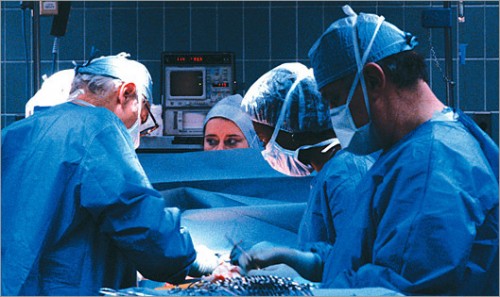
Poker players need immense concentration to play at a high level. They have to watch the reactions of all the other players, study every detail, remember what hands they had and how they played them. And while they are not watching others, they are being watched with the most intense scrutiny.  They need discipline not to give any clues and patience with every turn.  At one point in the tournament, a player waited 10minutes to read the other player.  Imagine being stared at for 10minutes while your competitor is watching every breath, move, inflection and gesture.  Amazingly, the player being watched never flinched, never took his eyes off his focus point, never changed his breathing and was perfectly stoic.  He showed immense skill, focus and concentration.
doctors concentrating
Traders need this razor sharp concentration as well.  Every detail offers information.  Every move you make either makes or loses you money.  While things are going against you, do you adjust your stop?  When you see the money draining out of your account, do you follow your plan?  When you are watching the markets, are you easily distracted, or like a sniper putting the cross hairs on the target?  Concentration is absolutely critical and every mistake could be disastrous.  All high level traders have immense concentration.
In Closing
Ask yourself how strong is your concentration when trading?  Are you taking calls, reading emails, scanning the web, or are you focused on nothing but the markets?  If this is lacking, work on building your concentration.  A simple technique before you start trading is to spend 15 minutes just watching your breath through the inhales and exhales.  Notice how quickly your mind gets distracted from doing something so simple.  Then imagine what it is like during trading which is far more complex. Continuing the meditation practice will be invaluable for your attention and concentration.
Along those lines, also ask yourself how strong is your money management. Do you know your risk of ruin?  And do you follow your rules diligently, or do you go off the reservation.  Make sure to put the mathematics in your favor as it will be a tremendous asset in your trading.
It also helps to understand your Equity Threshold and if you are there or not.  Pius definitely was playing with more money then he ever had in his entire life and bumped up against his equity threshold.  If it weren’t for his concentration, emotions would have dictated his play, and we would likely have another champion.
Lastly, how much have you dedicated yourself to studying a system or methodology?  Pius knew poker was a game of skill, and spent months end over end learning his craft.  He wasn’t in it for the quick money and wanted to do it well.
Ask yourself do you have a forex trading system and have you spent months studying it?  If not, have patience as you never know what could happen. You could be deciding one day to quit trading, and next day be on top of the world.  You could be working in an auto paint shop for years, and the next competing for an $8.7million dollar prize.  One day, you could be just like Pius, who after years of studying his craft, – be facing some big decisions at the highest level.
Congratulations to Pius.  Through hard work, study, patience, discipline and concentration, you were successful at the highest level.
As for you reading this article, what will be your story?
Remember to click on the ‘tweet’ and ‘like’ buttons below. Your comments are welcome so let us know your thoughts on this article.
For those of you wanting to learn a system, check out this article Understanding Price Action.

Yesterday was the most interesting class at the range in the last year and a half.  Not because it was the last class before I move to another country, but because of the exercise we practiced for an hour and a half. It required an absolute sense of awareness with one’s technique, feeling and positioning, but it required something else.  It required one to go against temptation.
The Exercise
After doing our usual warmup, we moved to our traditional 18m (60 ft.) distance, but had to shoot with a twist.  Normally when we shoot, we actually start off with our eyes closed.  We move through the first three steps of the position with our eyes completely closed so we direct all our attention to our positioning. Then we open our eyes to gather our aim on the target, and with the final pull of the cord, we release the arrow.
This time we did the same, except after we gathered our aim, instead of keeping our eyes open and focused on the target, we closed them again.  We would pull the cord (with eyes open) till the arrow was about 1-2cm from activating the clicker (which measures the distance of the arrow pulled so we have the exact same pulling distance).  This had to be done with complete feeling.  But once we got there, we closed our eyes, and continued with the pull until the clicker fell and it was time to release. Why?

photo of the beach 

The answer has to do with temptation.  When one is shooting, even though our eyes are normally closed for the first 3 out of 4 positions, once they open, and focus on the target, there is a natural temptation to relax our energy from the position/technique, and focus on the target.  This often causes us to lose awareness of our bodily alignment  that can have a tremendous impact on the release, flight and ultimately, the arrows impact on the target.
Remember, when shooting from 18m (60 ft.), any adjustments so much as a quarter of a cm could cause the arrow to move several inches off the target.  This could happen in the hand that is holding the bow, the hand which releases the arrow, the back elbow’s alignment with the front gripping hand, or a number of other subtleties in the archers posture.  In other words, any slight adjustment has huge implications.  This is why archery is a precision sport.
Why Does This Happen?
70% of all the data our central nervous system takes in is through our eyes.  This is the reason our maestro had us close our eyes for the first three segments of our positioning, so that our energy and focus, which often leaves our body when the eyes are open, stays completely centered in our body and alignment.
What also happens (and far more critical), is when we open our eyes, we tend to naturally focus on the target and loosen our awareness where it should be – not on the target, but right where we stand.
This exercise was completely designed to be a reminder of where our attention and awareness should always be.  With our eyes closed, instead of our energy following the arrow, and leaving our body at the moment of release, it stayed with us completely. It was monitoring our follow-through, the expansion of the arms, and the relaxing of the bow.  But far more importantly, it kept us focused instead of falling into the natural temptation of looking at the target.  The practice of archery is really not just one of precision, but one of going against temptation.
How Does This Relate to Trading?
In trading, there are more temptations then there is in archery.  The promise of working from home, having no boss, making more money than ever before, not having to follow a dress code, or show up when someone tells us, or work the way they want us to, go on vacation when we want, buy the things we never could before, to be financially free.  There are massive temptations in trading and the list is endless. Trading – like archery, is a practice of going against one’s temptations.
thinking of money1
There is another critical way archery and trading come together.  When we are trading, it is ever so easy to relax our focus on what we are doing, and become focused (almost enchanted) with the target.  With every new win, increased wealth is a possibility.  Push a few buttons of the mouse and we can be richer than we were before.
However, when we relax our focus and concentration, we increase the probability for errors and losses.
How?
Hopefully, if you are trading, you have a system which is rule-based so there is no confusion about what is a valid signal, when to get in, where to take profit and where to put your stop.  Assuming you do, then all you have to do is follow your rules.  But how many people do this?  How many people abandon their trading plan when executing or are in the middle of a trade?  Let me know if these examples sound familiar;
-You took a trade that was not a part of your system
-You did not use the proper risk management and over-leveraged
-You were watching your balance instead of what the market was doing
-You were thinking of what you can do with your profits instead of trading your system
-You adjusted your stop before you were supposed to
-You increased your stop when the trade went against you
-Assumed the success/failure of the trade by the first few pips movement after your entry
-You took profit before reaching your systems target
-You closed the trade in fear or emotion instead of what the charts were telling you
Do any of these things above sound familiar?  Have you ever done any of these things?  If so, do not worry, as these are the traditional mistakes of a developing trader and you are in large company.  But, if you have been doing these things and still are, it is pointing to something specific like the head of an arrow.
It is pointing to how you are losing focus before and during the trade.  It is pointing to how you are focused on the target and not following a technique.  It means your awareness has left you with the trade, like the arrow heading towards the target. Trading – like archery, is learning to go against one’s temptation. Trading – like archery, is a precision endeavor.
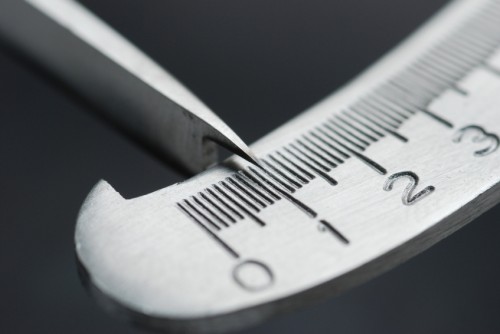
precision1
At all times, work to be focused on only three things; 1 ) trading your plan, 2) trading your system, and 3) keeping your eye on the markets, and not the targets (balance checking, profit checking, how close you are to your limit).  By doing this, you short-circuit the opportunities for your emotions to steer you off course. By doing this, you eliminate the moments temptation can affect your trading for the worse. By doing this, you build the habits of successful and professional traders. Trading takes discipline and it is a skill based endeavor.
Luckily, skill is a drill and something that can be learned.  Just make sure you are not drilling in the habits which take your focus, which keep the eye of your mind on the wrong target.  Follow the three things you should be focused on, and your trading will take flight.  You will become more disciplined, diligent, and build the right mentality.  You will make less mistakes, and find greater consistency.  When this happens, you will be well on your way to becoming a successful trader.
Remember to click on the ‘tweet’ and ‘like’ buttons below. Your comments are welcome so let us know your thoughts on this article.
Also, make sure to check out another great article on the topic called Willingness, Responsibility and Ownership in Trading.

Willingness
One of the key qualities you will find behind all successful people (across all fields of work and craft) is a ‘willingness‘.  A willingness to take full responsibility for their efforts, actions and results.  A willingness to take ownership of every step along the way from training, to the process, to daily actions and the results that come from them.
Remember, you are asking to be something only at best 1 in 4 will be profitable at, and from them, only 1 in 3 will make serious money.  To be in this small percentage of traders, you are going to have to work;
-work on being disciplined
-work on following your risk management to the tee
-understand how your mind helps and hurts your trading
-follow your trading plan
-break through personal obstacles
-go against your biology and emotions
-orient your life towards supporting your success instead of hampering it
willingness
To do this, you need willingness, a willingness to go forth after defeat, a willingness to break old habits, to work harder then you are now.  You also need to take responsibility for your trading process.  You need to take responsibility for your daily actions. And you need to take responsibility for your results.  In essence, you need to take ownership of the entire process at all stages, at all turning points, with each decision, and with each result (success or failure).
Responsibility
Many developing traders are willing to take responsibility for their winners, few are willing to take responsibility for the losers. Somehow when they win, there is no talk of the broker or market-maker, the market behaving strangely, the system, their risk management or mind affecting their trading.
However, during a loss, all of sudden these bugaboos appear at the frontline of their thinking. When things do not go your way, there is a tendency to look at someone other than yourself, the one who pushed the buttons.  Having a gut level responsibility makes no distinctions between winners and losers.  They are the same.  They all came from the common denominator in the situation – you!
Do you challenge yourself to learn from your mistakes or immediately look for excuses?  When you succeed, do you build up your ego or do you build on what you did right to accomplish more?
Trading is holding a mirror to oneself, seeing what needs work, and working on it, while seeing what is working and augmenting it. A failure to look in the mirror is to attach yourself to an invisible chain which binds you to your weakest skill.  And it is your weakest skill in trading which sets the height of your success and income.   Luckily, skill is a drill that can be easily molded to build the pillars of your success.
How Can We Take More Responsibility?
First, have a goal.  Have a goal that is clearly defined and a clear path from here to there.  If these are vague, your efforts will be uncoordinated to a cloudy future.  But if they are defined, we can make concrete steps to get there.  Once we have the steps, we can take massive action to getting there starting with the next step in front of us.  But along this entire journey, we have to take personal responsibility for getting from here to there.
When we fail to take personal responsibility for our results, we create holes in the tapestry of our work and trading process. Not taking responsibility cuts us off from our natural intelligence.
Ask yourself, what are the aspects of trading you most neglect, you enjoy the least, you pay the least attention to?  These are likely your weakest aspects of your trading and consequently the ones that need to be developed the most.  Take a long think about it, then make a list of them.  Meditate on this list as to how it has affected your trading in the past, and what you are going to do to develop this in the future. Remember, it is your weakest skill in trading which sets the height of your success and income.
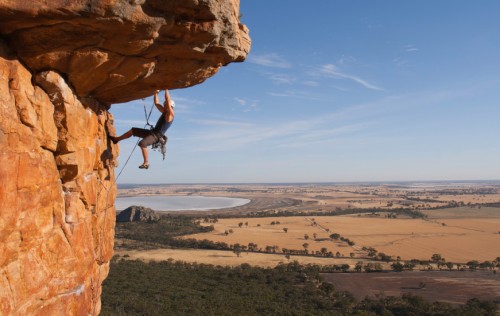
rock climber
If you really care about your work, you are willing to face not only the reality you have now, but whatever comes up through your efforts (success and failures).  And you will do what it takes to get the results which manifest in you reaching your goals. This comes from willingness and responsibility to make every action count and help you build your pyramid to success.  The base is the largest, and all higher levels come from the level of work and success you have built before.  It is critical to spend time becoming clear on what actions you take which truly bring you toward you goal, not just when you are in front of the charts, but when you are away from them.  If you are taking on this responsibility fully, it is not a burden, but an inner expression to own the outcome and development towards your goals.
Obstacles to Responsibility and Success
The only thing holding you back from success are your long-established habits, the ones you are unaware of, the unconscious patterns which manifest as the bugaboos to your success.  It could be being disciplined, being diligent, your thoughts around money, success and being wealthy.  It could be you have not developed the mindset of abundance.  It could be away from your trading desk or in front of it. Regardless, it is in you and your mind.  You are the common denominator.  These are the obstacles to taking full responsibility.  These are the obstacles to your success.
man standing before maze photo
Once we start to take responsibility for our training, process, path and actions, we will naturally discover that which is holding us back.  We will be watching every turn of the experience and seeing with a neutral mind what was part of our success or failure in those moments.  More than likely, you will have to work harder to reach your goals and that comes with working harder on your weaknesses, on discovering your long-established habits, on what steps will get you from here to there.  You will face problems and challenges, some that may have counter-intuitive solutions.  How you face these challenges will determine what obstacles you overcome.
Stepping Into Responsibility and Ownership
The moment we step into being fully responsible, we crystallize an energy which will feed you in your process.  You will engage your work more completely then ever.  You will take charge of every aspect of your training, trading and process.  This opens your mind and field of vision to what is going on.  This leads you to training and working everyday which leads to the decisions which build you as a trader.  This comes from stepping into responsibility and this leads to ownership of the process.
This ownership is the ship which will take you to the next port of call.  It is the fruit which comes from all the hard work you have put into the process.  It is the second level where challenges and obstacles are overcome, where we fight against our long-established habits and build the mentality of success.  It is being an architect of your trading process, where clear results and progress build confidence and take your trading to the next level.  It is going into the places that scare you, that you enjoy the least, of working with discomfort without being affected by it.  It is grounded, and comes from the mind and the heart working as one.  It is this ownership which will be the vehicle for your growth and the first goal you should be setting your eyes on, not a particular balance in your account.
Methods and Tactics to Build Willingness, Responsibility and Ownership
1) Ask yourself what reasons have you habitually used to take your process, training and trading to the next level?  Ask yourself what thoughts, feelings or emotions underlie these experiences and how you can relate to them differently.
2) Ask yourself what skill-sets are your weakest and require the most attention? Is it;
-Risk Management
-Trading Psychology
-Discipline
-Diligence
-Following a Trading Plan
Write them down on a list and ask yourself what you can do to work on these.  Then take action every day and week to work on these so they become pillars to your success instead of hindering it.
3) After quieting and relaxing your mind, think about an aspect of your trading which you are willing to take more responsibility for.  You can either start with your least favorite aspect or the one that affects you the most (often they are likely one and the same).  It will definitely be something which challenges you on an inner level.  Then picture yourself taking action to remedy this habit.  Do this until you understand all that you’d need to do to develop this skill, and how you will go about working on this.  Set a timeline for becoming competent in this area and hold yourself to it.  Review your progress periodically so you can adjust along the way.  Do this until you have come to the time allotted for it and assess your progress.
4) This last one is an exploration.  After relaxing your mind, think of some business or athlete or high level performer.  This should be someone which naturally comes to mind.  Imagine yourself as the owner of this business, as the athlete or high level performer.  Imagine that every decision you make sets your development, failure and success.  Imagine each step and success/failure and how it is a reflection of your inner vision, your willingness, your taking responsibility and becoming an owner of the process, effort and results.  As you bring these images to mind, what thoughts, emotions and feelings are evoked? What inside you gets provoked?
Note them all, particularly your negative reactions such as jealousy, resentment, fear, anger, frustration or worry.  This could be towards those individuals you think of what comes up when you think of yourself in this position.  Note what comes up as they will be beacons asking for your attention.  They will mark the path towards an inner understanding which liberates your actions and efforts.  They will be reflective of what long-established unconscious patterns are affecting your trading and ultimately, your success.
If you liked this article, then please make sure to ‘tweet’ and ‘like’ them via the buttons below.  Your comments are also welcome so please make sure to share.
And for those of you wanting to learn more about the Mindset of Abundance – make sure to register for my upcoming webinar by clicking on the link.

Yesterday was my first day back at the range in a week.  I had some problems with my shoulder so was resting it, but yesterday it felt better.  Even though I’ve been shooting for over a year now and won two competitions, there is still a lot of work to do.
I was shooting decently consistent to start off yesterday…scoring a 10 (perfect), a 9 (in the gold center) and an 8 (red – one level off from the gold center) for every 3 shots (round) from 18m which = 60ft.
My pulling shoulder which used to be out of alignment (too high) was now at the proper level, but my back elbow was not totally inline with my front gripping hand.  I started to make some adjustments but still the same result…10, 9, 8.   I began to wonder what am I doing that is off?
Just then the instructor Diego pulls me aside and tells me next round we’ll go back to 3m target as he wants me to work on something.  At first, it was discouraging to my ego being moved to the smaller target. But, I’m committed to learning the art of archery so instead of worrying about looking good shooting at the 18m, I was happy to go back and practice some basics.
Although most of my technique was correct, I was missing two things;
1) After my shot, I forgot the rhythm to close my eyes for 3 seconds while holding the bow
2) I had put too much of my energy on the target and not the process
target photo
The first one was relatively easy to change as it require a physical adjustment.  However, the second one needed an internal adjustment, one that was more subtle and had no outer reference for me to gauge.
After three rounds, I was keeping my eyes closed and back in the rhythm, but far more importantly, my energy was focused where it needed to be – on the process and not the target.
I went back to 18m and started shooting.  The whole time I was using my energy on the process and forgot about the target. After 3 arrows, I shot a 10, 9, 9.  Even though the result was a slight improvement, there was something else going on.  My awareness was where it needed to be.  I was totally focused on the process and not the result, and thus doing all the things I needed to make a good shot.
How Does This Relate to Trading?
In trading more so than archery, there is a temptation which can distract you from the process.  It is called money.  Most people learning to trade do not have all the money they need so the temptation to be distracted is enormous.  You look at your charts and see the EURUSD moving 150pips in the last few hours or the GBPUSD moving 400pips in the last two days, or all the flashing lights and what do you think?
Wow, I could have traded that and made $$$‘.  Or you think, ‘Whoa, that pair is moving, I should get in that‘.  Or, ‘Wow, if I had put 10 instead of 5 lots, I would have made double the money‘.
thinking of money
Sound familiar?   If it does, your not alone and most traders go through this process.  But herein lies the trick, which is the same in Archery.
It is easy to be more focused on the target and not the process (following your trade plan & rules, using proper risk management and being disciplined).  It is more convenient to not follow your trading plan and make some quick pips then to follow it completely no matter what is going on in the markets.
Everyday I have tons of traders like yourself that come to me saying ‘I want to do this for a living‘ but when it comes down to it, many do not follow the system, or the risk management rules, or the trading plan.   It is because they are so focused on the target and forget about the process.
Trading for a Bank
Speaking of trading for a living, do you know what it takes to trade for a bank?
4,000 trades.  Yep, that is right – 4,000.  Why?  Because banks want to make sure their traders are trading their system as is, and the best way to do it is drill it over and over again.  They have a lot of money on the line and they want to make sure before trading their money, you know what your doing to the point it is habit.  This can only be done if you are focused on the process in the beginning.
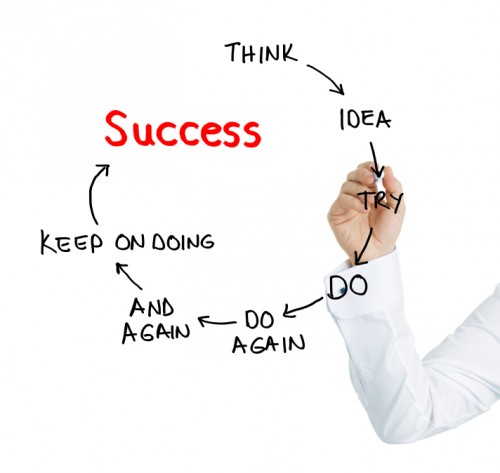
practice makes success process
Your Training as a Trader is not finding the best system out there, but in learning how to master the process.  How do you do that? By being fully focused on what you are doing every time you make a trade.  By doing this, your thinking or emotions never get a chance to interfere with your trading and decision making.
Have you ever had a great trade setup but didn’t take it out of fear (emotion)?  Or have you ever got in a really good trending move, only to exit early before your system because you ‘thought’ it was going to turn around?  Has this ever happened to you?  If so, it is a direct communication where your focus is (on the target, not on the process).  

As in Archery, so in Trading
When you are trading, ask yourself where is your focus?  On the target and money to be made?  Or on the process (using correct risk management, following your system, executing the technique).  Keep your focus on the process until it is drilled inside your head so deeply, there is nothing left but the discipline and you executing according to plan.  Skill is a drill and all highly successful traders have drilled their skills through the hammer of the training process.
Lastly, if something is not going right with your trading, do not feel it is a setback to go trade smaller lot sizes or go back to demo.  I often have to go back to the 3m distance to work on various aspects of my technique.  Once they are back in sync, I go back to the 18m. You can do the same with trading by going back to demo for a month or so, and once the results improve, go back to live trading.  Quit thinking about the money you have to make right now and focus on the process.  When you do, you will find you are hitting the target with more consistency then ever.
If you liked this article, then please make sure to ‘tweet’ and ‘like’ them via the buttons below.  Your comments are also welcome so please make sure to share.
For a really good article on Discipline and the mental aspects of trading, check out this great article on Trading Lessons from Jesse Livermore – the World’s Greatest Trader.
And for those looking to take their trading to the next level and work with me as your mentor, make sure to check out our Online Courses where you will learn the same systems I use daily along with having a chance to communicate directly with me to help you build your own trading plan.