Tag Archive for: trading mindset

Hello Traders,

I just wanted to share a brief excerpt about the trading mindset, and some of the things I share in the course. One of the things I focus on heavily is helping traders build a successful mindset. Here is an excerpt below about one of the most common pitfalls traders fall into that I hear all the time.
From 3 Guidelines for A Successful Mindset…
“You would not believe how many times a student posts a trade, loses the trade, and the first thing they say is ‘What have I done wrong?’
First off, why does losing a trade, in your mind = doing something wrong? Did you expect the system to work perfectly every time? I don’t think any of you really expected a system to work perfectly, so the question is indicative of something else…an idea in your mind that you did something wrong if it (the trade) did not work out.
Anytime you see or hear this, you have to be clued in immediately why you think you did something wrong because you lost a trade?
The answer lies in your self-image – the part of you that has an idea of what you are like (successful, hard working, enthusiastic, lazy, stupid, optimistic, pessimistic, abundant, poor, not fit to be a trader…etc). This is how you view your self – and this question ‘what did I do wrong’ is actually coming from this place – that part of you that believes you did something wrong because you lost.
There is an idea that if you only focus on your mistakes, you will become successful. Although it’s true you need to plug the leaks – you don’t get there by focusing on what you did incorrectly.
So a tool to combat this is to build the neural pathways to making better trades, and there are many ways to do this.”
trading mindest successful trader psychology 2ndskiestrading.com
This is just a brief excerpt in our courses from our trading mindset and performance enhancing section in the course, where I teach and offer tools, techniques, and methods to build a successful trading mindset.
I hope you enjoyed this small piece here, and will use this to look into your self-image, your trading mindset, and what you can do to build the neural pathways to trade successfully.
Kind Regards,
Chris Capre

Today I’m going to share an unconventional approach to creating a successful forex trading mindset I employ every day before I hit the buy/sell button. A small confession though – it actually took me a while to realize it was a major ingredient in my success.

The funny thing is, I never read it in any trading book, video or blog. Perhaps it should be – perhaps it needs to be talked about more often, because doing this one thing has changed my mindset in trading and life.

So what is this one unconventional approach I’ve used that’s help to build a successful trading mindset?

Read more

In my previous article Developing A Successful Forex Mindset Pt. 1, I discussed how your trading mindset is essentially a product of three things;

1) Your Neuro-Physiological Wiring

2) Your Mindset of Level of Mindfulness

3) Your Psychological Conditioning

I focused specifically on how your Neuro-Physiological Wiring, specifically how your mind and brain are integrated and help in your development as a forex trader.

developing a successful trading mindset pt 2 2ndskiestrading.com

I also talked about the three main fundamental functions of your brain (regulation, learning, selection) and how these mental functions are critical for building a successful forex trader mindset.

Today I’ll focus on number two from above – how your level of mindfulness helps to build your trading mindset – gearing it towards success or failure.


Your Level Of Mindfulness
As a general definition of mindfulness in trading, your mindfulness equates to the degree of awareness and attention to both your inner and outer worlds.  Although this is particularly critical during the trading process (including just before and after), it is also connected to your mental activity and thoughts separate from trading.

Why?

This is because there is no compartmentalized section of your brain just for forex trading.  We didn’t evolve to be forex traders sitting in front of a computer for our survival, so we are using skills and neurons from all portions of your brain.  Because the brain is an interconnected whole, our experiences in life around wealth, mindset of abundance, family, memory, fear, greed, confidence, and more, all effect our trading mindset, and thus – how we make trading decisions in the moment.

mindfulness in trading 2ndskiestrading.com

Particularly true for trading (but also in life), your brain learns primarily from what you attend to in the moment.  In an ode to Star Wars fans, Qui-Gon Jinn once stated, ‘your focus determines your reality‘. Thus, since your mind essentially learns from what you focus on in the moment, your level of mindfulness is the gateway to taking in helpful information (and avoiding non-useful info).  How you perceive information (internally and externally) via your level of mindfulness, is what facilitates your learning process and thus trading mindset.


30-80x a Second
I’m going to be sharing a few ways you can build your level of mindfulness to sharpen your mental faculties, but wanted to briefly mention the potency of mindfulness practice.

In a study in 2004 by Lutz et al., he examined various Tibetan meditators as they went deep into their meditation and he found something highly impressive.  Lutz noticed these meditators produced an uncommonly level of powerful and pervasive brainwaves, whereby unusually large regions of neural connections were pulsing in a ballet like synchrony.  These large regions of neural connections pulsed at 30-80x a second allowing them to unify large territories of the mind.

brain neural mindfulness techniques 2ndskiestrading.com

Part of Einstein’s incredible mental faculties were his ability to involve large regions of his brains to work together via the cerebral cortex.  His level of activity and connection (or higher) has also been found in those meditators who have build up their level of mindfulness via a sitting meditation practice.  So a genius level IQ or mental abilities, along with highly perceptive qualities are not reserved for people born with these gifts.

Like all things in the mind, they can be learned and developed, particularly through mindfulness practices.


Mindfulness & Wisdom in Trading
As a whole, trading wisdom and mindfulness is not your ability to spot price action patterns in the charts, or understand proper risk management.  Trading wisdom and mindfulness comes from a few steps;

1) Understanding what hurts and helps your trading process

2) Based on this understanding and experience, letting go of those habits which hurt your trading process

3) And strengthening those that help move your trading forward

As a whole, mindfulness and wisdom in trading are supported by the three basic functions I mentioned in the last article (regulation, learning and selection).  Your brain learns through forming new circuits, strengthening new ones and weakening others.  It selects through experience what is valuable and what is not.

Mindfulness in turn leads to new (and accelerated) learning, since your attention shapes what neural circuits are built.  Regulation is done through a combination of excitatory and inhibitory activity.  Thus, by learning to improve these three processes, you will improve your neural functions, and thus improve your trading mindset.


Two Methods For Building Mindfulness
Although there are dozens of methods to help you build mindfulness which will flood into your trading, I will talk about the two that I have practiced for over 12 years now; Yoga & Meditation

yoga and meditation chris capre 2ndskiestrading.com

Over a few thousand years old, Yoga has hundreds and hundreds of scientifically proven benefits, such as reducing fat, increasing muscle tone, improving digestion, enhancing your sex life, glandular function, and relaxing your central nervous system (or CNS).

Your CNS regulates an enormous amount of activity from motor to mental activity to breathing.  Are you mouth breathing rapidly?  If so, you are likely to be more excited, emotional and less relaxed/focused during trading.  Yoga is a great practice to help build both a relaxed CNS, but also to build awareness, both physical and mental.

To really do yoga well, you have to maintain awareness of your entire body, and control your internal energy.  Any inability to do this will manifest in your yoga practice.  Don’t believe me, try and do a balancing pose (like tree pose) and see how long you can hold it?  I’m willing to bet almost any experienced yoga instructor can hold it for much longer than you.  How so?  Through a greater ability to relax their body, mind while maintaining awareness.

Thus, Yoga is a fantastic option for building mindfulness as that is the root of all yoga practice.

Meditation is another alternative, particularly silent sitting, sometimes known as vipassana, shi-ne, zazen or many other names.  More than likely there is a center around you that offers a silent sitting practice, but those who engage this practice fully not only notice mindfulness benefits, but greater clarity, happiness and without a doubt – better neural functioning.

The general goal of any silent sitting practice is to build your mindfulness and awareness in the moment.

Many people wonder how I became a successful trader being self-taught. I am unlikely smarter than many of those I teach.  Nor did I take a single economics or business class in college.  But one edge I had for sure, was my yoga and meditation practice over the last 12 years.

successful trader chris capre 2ndskiestrading.com

This helped accelerate my learning curve as I figured out much quicker what to focus on, what price action setups were high probability, how to build my trading skills and trading mindset to be successful.  If there was one key edge between me and others, it would be this, and the benefits continue ad infinitum – probably the best investment and ROI I could have ever come across in my life.

Regardless, these are a few options for building a successful trading mindset and your mindfulness in trading.


In Closing
Your mindset, brain and mental activity is what forms your trading mindset, and thus – determines your level of success.  Mindfulness in trading equates to the degree of awareness and attention to both your inner and outer worlds.  This would mean your emotions, your level of relaxation or excitation, your ability to focus in the moment and detect the order flow in the market, along with how your mental activity is helping or hurting your trading decisions.

Mindfulness increases your learning process by focusing on what is beneficial and profitable for your trading process, while avoiding what sets you backward.

Two practices you can engage in to build your mindfulness are yoga and meditation, which will sharpen your focus and mental activity so you get more out of your brain and mind when trading.

This is part two of the three part series on Developing A Successful Trading Mindset, so stay tuned for the last edition soon.  But I hope this gives you some ideas of looking beyond the strategy to what may be keeping profits and success in trading just out of reach.

Kind Regards,
Chris Capre

Today’s lesson is just to give you some brief tips on how to develop a successful forex trading mindset. Without a profitable and successful trading mindset, you will be swimming upstream against your emotions/fears, thoughts and unconscious habits which undermine your success.  Perhaps you have noticed this already in your trading, almost as if you are being kept at arms length from trading profitably.

developing a successful trading mindset chris capre 2ndskiestrading.com, forex trading strategies

Your trading mindset is really a product of three things;
1) your neuro-physiological wiring

2) your mindset or level of mindfulness 

3) your psychological conditioning

Too many traders always seem to feel it is the system which is holding them back from being profitable. Yet I teach the same price action strategies to hundreds of people, and while many are profitable, others using the same systems are not.

What is the difference between the two?  Their Trading Mindset.

So I will briefly share some key points about the mind, the brain, and how you can help develop a successful trading mindset.  For today’s part 1 of the article, I will focus on the first point, and will cover the other two in the following articles.

Neuro-physiological Wiring (i.e. How Your Brain is Wired)
When your brain changes, so does your mind and vice versa.  They are integrated and help in your development as a forex trader.   Neurons that fire together wire together, and mental activity helps to create new neural structures (positive or negative ones).  Simple unrelated thoughts (about past, present or future) can having significant effects on your trading mindset.

trading mindset neurological programming 2ndskiestrading.com

It should be noted there is no compartmentalized portion of your brain just for forex trading.  Everything in your past conditioning and wiring can and will have an effect on your trading success.

The good thing about this is – your mind is neuroplastic and can be re-wired into a whole brain state.  Any subtle changes in brain chemistry, heart rate, etc. can and will alter your concentration, memory and emotions (all critical for trading successfully).

Fantastic ways to alter your neural programming and to build a whole brain state for better performance + a successful trading mindset are a) ERT training, b) a brain gym or using binaural beats c) right diet and lifestyle.

As a whole, your brain has three fundamental functions:

1) Regulation (physiological processes necessary for survival, perception, etc. through exciting or inhibiting neurons)

2) Learning (forming new synapses, pathways and circuits by strengthening or weakening current ones)

3) Selection (working with perception and experience moving towards what is valuable or not)

These three fundamental functions are critical for all mental activity – especially in forex trading.

Regulation
If you have not taught your brain and central nervous system to relax, to breathe slowly and more deeply, your trading will likely be more emotional, panicked and stressed.  You will miss details and make irrational decisions (not trading your strategy, trading with fear, risking too much).  But you can train your brain to regulate the physiological and mental activity through exercise, yoga and breathing practices.

learning to build a successful trading mindset chris capre 2ndskiestrading.com

Learning
The best ways to accelerate the learning process is to a) work with a trading mentor, b) practice, study and train to use rule based systems, and c) to train in the markets which provide a feedback loop for you.

Selection
In concert with the learning process, your experience in the markets will help provide a rich context and feedback to help you move towards what is beneficial and valuable for your trading.  This is done by discovering what works and consistently making profits, while moving away from what does not.

Your brain has survival strategies (physical/psychological) hard wired into its cells, and these can help or hurt your trading.  It should be noted, when a survival strategy runs into a high energy (or uncomfortable) situation, the brain will create alarm signals that can and will influence mental activity.

Some of these strategies are;

1) to look for stability/solidity in a constantly changing world
2) to divide what is connected creating a subject/object relationship
3) to avoid pain/threats and seek pleasure

negative emotions in trading developing a successful trading mindset 2ndskiestrading.com

Can you see how these strategies may effect/hurt your trading?  Any of the three stand out?

Food for thought, but perhaps you can explore how they have influenced your trading. This is the first step to building awareness around what makes you tick as a trader, and what you need to work on mentally. Overcoming and transforming these obstacles can (and likely will) mean the difference between making money and losing money.

Regardless, each of these three fundamental functions and strategies will play a critical role in building a successful trading mindset.  Additionally, how your brain is physically wired will either support (or hamper) your learning process.

The good thing is, you can completely train and re-program yourself to be hard wired for successful forex trading.  The only thing missing is working with a proper mentor, a training program, and the right effort.

developing a successful trading mindset trading profitably chris capre 2ndskiestrading.com

I hope this helps gives you insights into the mind and why developing a successful trader mindset is important.

I’ll explore more in part two of this article series, so stay tuned, and happy holidays to all!

Kind Regards,
Chris Capre

In one of my most recent webinars on FXStreet, I talked about a key method for detecting when a trend is over-extended, which is to look for a climax or exhaustion reversal bar.  I had mentioned how from an order flow perspective why these exhaustion and climax bars tend to represent a high probability reversal coming based on the various participants and how they tend to trade trends.

Before I get into today’s forex reversal pattern article which will be an expansion and amplification of this, to recap – the key things you want to be looking for in spotting these exhaustion and climax reversal bars are;

1) a bar that is much larger than the previous price action and ideally the largest bar in the move
2) it occurs at/near a key support or resistance level, or after breaking a key support/resistance level
3) it occurs after several bars have been trending in an impulsive fashion in one direction

Although there are other many subtle clues you can look for to amplify the possibility of these climax and exhaustion reversal bars, these are the three main ones you want to see in the price action to look for a trading opportunity.

The goal of this article will be to demonstrate a recent example of this, how you can trade these price action setups and what to look for from a price action perspective.

I will begin with an example of this in the DOW which gave a really good signal just the other day using this method.  Then I will get into the anatomy from a price action perspective all the key characteristics to identify these bars.  After this, I will discuss how you can trade these using price action with some simple rule based methods.

I will begin starting with the daily chart for the year in the DOW, the general uptrend, how it found a key resistance, and then look into the 4hr time frame to show how price action reacted after breaking the key level.

The DOW Hits Key Resistance

In the chart below, notice how price has a very stable relationship to the 20ema and dynamic support.  It rejects off of it three times before finally breaking below it.  But when it eventually does, it quickly jumps back above it, telling us buyers are still interested in driving this pair higher being happy to scoop this up on pullbacks.

Price action then forms a triple top just shy of 13300 which is the first time the entire year it needed three attempts to break a key level, suggesting there is possibly over-extension in the trend along with some sellers who are willing to hold a line the bulls cannot penetrate.

price action forex trading climax and exhaustion bars Dow 2ndskiestrading.com chart 1, price action forex

In the next chart below, starting with the top left of the chart, we can see how each pullback from the triple top (save the last one) created a pin bar off the 20ema (bars 1 and 2).  This was suggesting the buyers were happy to get back in on the pullback, but still could not break the key resistance just shy of 13300. Price then sold off aggressively for the first time all year, dropping over 500pts in about 6 days.

price action forex trading climax and exhaustion bars Dow 2ndskiestrading.com chart 2

After finding support at a prior pullback level, price resumed the uptrend.  Notice how as it came up to the resistance level that formed the triple top, it formed a doji and inside bar suggesting hesitation for two bars in a row.

If the inside bar had formed after a strong bull bar, it would have suggested a little more strength and possible breakout.  But the hesitation from the day before, combined with the inside bar communicated two days of hesitation and an inability of the bulls to take out a key level.

Now on the next day, price does break above the key level forming a new high. But this ends up failing intraday, then pulls back below the resistance level along with producing a range bar.

One should notice how the rejection to the topside is equal to the downside suggesting false break as a) price failed to hold the gains, and b) there is an equal balance between the buyers and sellers.  Ideally, we’d have a very strong imbalance between the buyers and sellers when looking for a breakout, but we are not seeing that in the chart below.

forex price action trading climax and exhaustion bars Dow 2ndskiestrading.com chart 3

Anatomy From a Price Action Perspective of Exhaustion/Climax Bars

Now that we have highlighted a potential area of contention, I am going to zoom into the 4hr chart to show the exhaustion or climax bar specifically, break down the anatomy of it from a price action perspective and then talk about how you can trade this setup.

Beginning with the next chart, the first bar to concentrate on (which should naturally stand out) is bar 1 – the breakout bar which is the largest bar in the entire series.  Up to this point, we can see consistent buying all the way up to the resistance level with the bulls dominating price action winning 25 out of the 36 candles (69% bull-bear ratio) up to the breakout bar which is bar 1.

forex price action trading climax and exhaustion bars Dow 2ndskiestrading.com chart 4

Now if you remember from the very beginning of the article, an exhaustion or climax bar will generally mark long or over-extended trends.  These bars should have the following characteristics;

a) the largest bar in the series
b) occur near key support/resistance level or on the break of one
c) occur after several bars have 

Why do these bars tend to be so large?  

When trends are over-extended, they have had a lot of time to attract various players into the market, with the institutional players being first, the more advanced players who sniff out the new trend second, and the retail traders third.  The retail traders tend to be last as a whole because they need the greatest confirmation to enter a trend (generally).

By the end of a trend, as the retail traders get in, you have the greatest imbalance between buyers and sellers.  Those who have not profited from the trend will often chase it feeling like they have to make money on this move by buying breakouts instead of pullbacks.  Additionally, the institutional players will try one last push to get as much out of the market as they can – thus producing a climax or exhaustion bar.

Sometimes, this has an additional purpose of not just squeezing out the most of the current trend, but trapping new traders long into the market so when they exit, they can also look at reversing the market using those trapped to fuel the upcoming sell-off.

This is why these bars tend to be larger than usual and the largest in the series.  They will also occur at key levels, especially on breakouts which helps to further trap traders who bought on the break.  So hopefully this explains the basic anatomy of these moves.

Now getting back to the chart,  if price action had maintained the breakout and held above the key resistance level, along with extending the gains, then it would communicate the breakout will continue.  But look at the next bar (bar 2) and how price action responded.  Notice how it immediately reversed back below the resistance level which was definitely a warning sign the breakout could not hold the gains.

In these circumstances, you have to ask yourself;
if the bulls were in control, how come they could not extend the gains?
Where did they go?
How come such a strong bar did not extend price further?
Why did sellers immediately push back?
Why did the resistance level not hold as a breakout pullback level?
 

All of these questions should have immediately come into mind because they held the key to whether this was a legitimate breakout or a false break.

But even if you did not ask all these questions, all the ingredients for the exhaustion or climax bar was in play telling you this was likely the end of the move.  Even after bar 2, notice how price then treated the resistance level not as support (continuation) but as resistance (false breakout).  Again, go back to the questions and the breakout just doesn’t add up.  So we have a textbook example of an exhaustion or climax bar.

How To Trade This Price Action Setup

Usually in an uptrend, I’ll look for a second attempt at the key level or a LH (lower high) before attempting to reverse a strong trend.  For those wanting a secondary entry, you’d look for a pin bar, engulfing bar or outside bar, then consider taking it in combination with the exhaustion or climax bar. But the price action should already show weakening ahead of the exhaustion before letting you know the offers will hold.

Most often with exhaustion moves, there will be a second failed attempt either at the key level, or producing the lower high giving you the final confirmation the exhaustion bar is in place and it is time to reverse.

Depending upon which of these situations will present itself will determine how I get in, but if I see any of them and they have all the ingredients, then I’m going to sell that looking for the market to reverse heavily since the trend has become over-extended.  Either it will retrace a good portion of the move, or it will consolidate before making a new leg (up or down).

Now looking at the chart below, although we had in bar 2 a solid bear bar, it barely took out 50% of the gains in the exhaustion bar.  Generally I’d want to see 60+% of the prior bars gains taken out before feeling like the bears are mounting a good attack and thus look for a reversal.  If I fail to see this minimum push-back, I will stand aside and wait for another trigger.

climax and exhaustion bars forex price action trading Dow 2ndskiestrading.com chart 5

Even though this threshold was absent, if you notice bars 3, 4 and 5, they all were being held in check by the level which was the key breakout level, suggesting the market was using this as resistance.  If it was a trap, price would not have made its way to the 20ema (so far away) nor kept producing small candles below this level (should have been above the level).  However, none of these were in place.

The most aggressive entry would be to sell after candle 3 or 4 closed.

Why?

They were weak candles after a strong selling candle just below resistance telling us the buyers were not pushing back with enthusiasm.  This would be one way to get in to this with a stop minimally above the highs of these candles and possible higher.

Another entry would have been to sell below the low of candle 3, or on a close below candle 3 with a stop above the high of candle 5 if it had made a break above the resistance level (which it did in this case, but will not always be the case).

The advantage of selling below the low of bar 4, or on a close below bar 4, is at this point, any traders who are trapped long are starting to exit their longs as the losses are starting to mount and increase since they are below their entry.  If candle 5 does not have a wick above the breakout level, then the stop has to go above the level minimally, but better to have it above bars 3-5 or possibly higher.

One conservative entry would be to wait for a breakout pullback to the 20ema treating it as resistance (not support) suggesting a new relationship to the 20ema.  There are also a few other methods to get into these reversal moves, but these are a few which should give you a good start to trade these setups on exhaustion or climax bars.

In Summary

The goal of this forex reversal pattern article was to demonstrate from a price action perspective how exhaustion or climax bars can and will often represent the end of a trend and what key characteristics you will want to find in these bars.  We went over a really good example of this in the DOW showing how all the ingredients were present, what to look for and how you could identify them.  Then we ended by giving you a few methods to trade these price action setups and find either an aggressive or conservative entry along with what to look for.

I hope you enjoyed this forex price action trading article and found it useful in helping to identify exhaustion and climax bars and how to trade them.

Please make sure to comment, along with sharing the article by liking and tweeting it to pass it on.

For those wanting to learn rule based price action systems and reversal bar trading techniques, access to the traders forum, lifetime membership & more, check out my Trading Masterclass Course.

Kind Regards,
Chris Capre
2ndskiestrading.com
Facebook; 2ndSkiesForex

Often times, we measure our success as a trader by our account value, whether it has grown, perhaps doubled in size, or whether we have lost and are under water.  Unfortunately, this is really a myopic way of measuring our success in trading.  If this was the true benchmark, then for my first 6 mos of trading, I must have been a rock star turning 3k into 83k.  How did I do it?  Over-leveraging to the hilt and having the most unbridled approach to the markets.  If you measured success by my account,then no doubt after the first 6 mos, I was a successful and mature trader.
But then, if you looked at the next 6 mos, I would have been the biggest failure of a trader in history, losing almost all of the 83k (save for 12k) in a period half that time.  What happened to that really mature, successful trader just a few months back.  Where did he go?  Which one was the true measure of me? Which one was the most accurate description of my success as a trader?
The answer is neither, and that is why I am writing this article which I think you will find informative about how your trading process is going, where you are at, and how you can gauge your development.  So here are 7 signs you know your maturing as a trader.
#1 First You Manage Risk, Then You Manage Reward
The entire 2008 financial crisis was built upon the opposite of this principle, seeing reward while missing the inherent risks of one’s actions.  Some people were smart and were able to see the upcoming cliff ahead – not by looking at what they can make, but by what they were risking by taking on such an investment.  Don’t fall into this trap.
So many traders in the beginning stages of their trading process decide whether to get in a trade because of the ‘potential‘ profit.  They think, ‘this trade has a huge profit potential and its going to win (optimism bias) so my risk doesn’t matter too much’.
The problem is when you see the end of the rainbow and chase after it, you often fail to see the cliff you are about to fall over.  It causes you to miss things in the chart which may be alarm bells or subtle details this trade is going to fail.  It causes you to have tunnel vision while crossing the street in rush hour traffic.  It can also cause you to take trades outside your trading plan and deviate from your discipline – all of these are disastrous to your account, and to building discipline which is the foundation of successful trading.
You will know you are maturing as a forex price action or ichimoku trader when you first look at all aspects of risk, (% equity, time risk, event risk, etc.), then start looking at your upside.

meditation
#2 You Are Completely Relaxed When Making Trades
Good trades, bad trades, mistakes, perfect entries, eventually they all blend into the same thing and become just another trade.  You don’t feel like it’s do or die with each trade.  You do not feel like your entire success or failure as a trader is bound up in this one trade.
If you made a really good trade, sure your happy, but it’s nothing special and your still relaxed, calm and focused on the market.
If you make a bad trade, your not berating yourself, not labeling or defining yourself as a failure of a trader, not thinking this is the end.
Make a trading mistake?  No worries since your as calm as a hindu cow and don’t panic at all – you’ve been there before.  You simply analyze the situation and find the best solution out of it.  Think of how an experienced war pilot would deal with challenges – they analyze the situation, assess the key difficulties, then find the best solution.  This is what you do and your relaxed regardless of the trade.
On the flip side, you don’t feel the need to brag or inflate your ego after making a good trade.  You don’t feel the need to show your friends, or make a video about it, you’ve been in the end zone before, and you know you’ll come back again.  Shortly after you’ve made a big winner, you get back to business because you have more work to do and know the next danger could be right around the corner (or the next opportunity).
#3 You Don’t Force or Chase Trades
If you miss a trade, so what, you know there will be another around the corner and your not thinking ‘this is the big one‘ like Redd Foxx in Sanford and Son.  You also don’t chase trades that you missed, getting a worse price.  No, you wait for your price, and you’re willing to miss a trade to do this.  This allows you to trade on your terms, not the market luring you into a position whereby you have to get a poorer entry or take on more risk just to get it.
You don’t force anything, and just wait for the trades that come to you.  The market will be there tomorrow, another great trade will be there in a few hours, or the next session.  You’re not feeling like you’ve lost the mother lode every time you miss a trade.  If you see something that comes on your radar screen, you jump on it and don’t let it pass you by.  If you happen to miss it for any reason, you let it go – your not a dog chasing a fire truck.
bungie jump
#4 Trading is Not Your Daily Adrenaline Fix or Entertainment
I cannot tell you how much I felt like a junkie every time I would trade the markets in my early days.  It’s understandable – such a new thing, you can work from home, you can make more money then you are now (a lot more), you don’t have to wear some stupid outfit or do what some mediocre boss tells you to do. You can trade on the beach (although your battery might run out soon), you can make money real fast, basically…you can do a lot of things never possible with some ordinary job.
The markets are not for your entertainment – casinos, movies and sports are, not trading.  The market is a very serious business and I guarantee you, your competitors who are making money day in day out are taking this very seriously.  Trading successfully, especially after thousands of trades will almost become boring.  Not that the markets don’t present a fresh challenge each time, it’s always something new, and always a puzzle.
But don’t make it your source of entertainment or adrenaline in life.  You know you are doing this when you feel a huge loss of energy when the markets close on Friday, as if your being cut off from a life force.  You know your doing this if making a trade with big lots feels like your jumping off a bridge.
Trading is an arena to make money, to face yourself in the mirror, to build a successful trading mentality, all while challenging your discipline and ability to find opportunities day in-day out.  That is all.  When you stop making it an emotional/adrenaline bungie-jump/daily entertainment, you’ve settled in the saddle.
#5 You Follow Your Trading Plan
Day in-day out, you follow your trading plan.  Whether you’ve had a series of losses, or had a massive series of wins, your discipline remains the same.  You trade like a sniper taking out one target after another.  You don’t count your chickens because you know nothing is certain in this market and the winds can change on a dime.  In as many situations as possible, you are patient, disciplined, and rely upon your trading plan.
Yes, your systems will not catch every opportunity out there – so what?  No system ever will, and that is now what you are trying to do.  You stay focused on your system, and learn how to leverage the edge and strengths of your system, like a driver that knows his race car – what are its limits, what are its weaknesses, and what are its strengths.  Every time your discipline wavers, you put your trading and account at its greatest risk.  Every time you follow your trading plan, you put a stone in the pillar of your success.
pillars of trading success 2ndskiesforex
#6 You’ve Stopped Looking For The Holy Grail
It’s convenient to think there is one solution to all your money problems, one solution to your inability to follow a trading plan, one solution to your inability to deal with the uncertainty of the markets.  How convenient, how rosy a world this would be.  I cannot tell you how many times I hear from prospective students, ‘I just need a system that has an edge, that makes money…if I had this one system, I would be fine.
Sound familiar?
Anytime I hear this, I realize this person doesn’t realize what trading is about.  So what do I do?  I give them the same systems I have to other people who have made money from it day in-day out, month in-month out.  And what do they do?  They lose money while my other traders are making money.
These people have tried everything, looking for the holy grail, looking for that one thing that will solve all their problems.  When you have spent as much time experimenting with systems as you have your own psychology, discipline, and trading plan, then you’ve matured as a trader, because you realize there is no holy grail.  You realize your edge more often lies in risk management (the risk of ruin tables you should know), and a successful trading mentality.  Once you’ve stopped looking for the easy way out, you start to do the real work.
#7 Your Worth as A Trader and Your Worth as A Person Are Two Separate Things
You know you have really matured as a trader when you realize your success or failure at trading has little to no reflection of your worth as a person.  You do not tie your worth by how much you have in your account, and you do not accept yourself only if you are successful, while berate yourself for any failures.  Trading will never be a reflection of who you are as a person, nor will the size of your bank account.  There are many people with bank accounts to last them lifetimes while being the most empty beings in the world, bereft of any sensibility, humanity and kindness.
Because you do not tie your worth as a person to your trading, you are free to embark upon the adventure whole-heartedly.  You’re willing to really risk free from all the psychological complications and emotions which bind you.  You’re willing to fail, and because you are willing to fail (and you will), you are willing to learn, to not take it personally.  When you stop making it personal, or are willing to fail, then you can really put all of you into the experience because nothing is holding you back.  Then your trading can truly take flight.
I hope you enjoyed this article on 7 signs of a expert forex trader and found it a useful reflection of where you are in your trading process, how to avoid the mirage on the horizon that disappears once you approach it, and how to keep your eyes on the target, constantly looking for growth and development as a trader.
I welcome your comments and feedback.
Kind Regards,
Chris Capre
Facebook; 2ndSkiesForex
In a constant effort to refine the trading and educational process in helping traders become profitable, I have put together this FX trading tip article which will give you four keys to improving your trading and particularly help with the learning process to becoming a successful trader.

Key #1:  The Zone of Proximal Development

This is the idea that learning works best when you the trader tackle something that is just beyond your current reach, but neither too hard, nor too easy.  Ideally, this is setup so you are achieving an 80% success rate at whatever you are practicing.  The reason for this is when something becomes too easy, you get bored, while when something becomes too hard, you get frustrated.  Neither are ideal for the learning process.  Video game manufacturers invest millions in testing just to make sure the level of challenge always lies in that sweet spot – neither too easy, nor too hard.

Since we are talking about trading, getting an 80% accuracy or success rate is not easy.  It takes years and hundreds, if not thousands of trades along with thousands of hours behind the charts.  But what if your still in the learning process and do not have hundreds of trades or thousands of hours behind the charts? What then?

This is where higher time frames come in, such as the 1hr, 4hr and daily time frames.  By starting off on these, you increase the probability of getting cleaner signals, while also not having to rush to make a decision as you would say in a 5min time frame.  In the beginning, things can seem overwhelming in terms of all the information you have to process, so overburdening yourself with a task too difficult can and often is frustrating which stunts the learning process and can affect one’s confidence.  So this is why I recommend starting with the higher time frames as you have more time to process the information, read the price action, all while making a relaxed decision.

accuracy in trading 2ndskiesforex

Statistically, I have tested now over three dozen price action patterns, systems,  formations, etc., and go figure, all of them perform much better with greater accuracy on these higher time frames whereas on a 5min chart they perform no better than a coin flip.  This does not mean you cannot trade them on those time frames, but they require more information, more moving parts and more things to amplify the signal. But on the higher time frames, they perform statistically better as is, which makes it easier to trade.

So to make sure you are in the Zone of Proximal Development with your trading, stick to the higher time frames to start, get your accuracy and confidence up which accelerates the learning process, then decide if you want to stay there or go to the lower time frames.  But nothing is more crucial in the beginning or developing stages then this.

Key #2:  Deliberate Practice

Many of you have heard me recently talk about Anders Ericsson, the famous Cognitive Psychologist (the expert on expertise) who is famous for the 10,000 hour rule.  Everyone has been talking about this lately, especially in trading, but not many of you have heard about his lesser known pre-requisite to the 10,000 hr rule and to becoming an expert.  This is the rule of ‘Deliberate Practice

What this describes is a constant sense of self-evaluation and consistent focus on one’s weaknesses rather than playing to one’s strengths.  In fact, the practice of targeting your specific weaknesses is known as….The Zone of Proximal Development.

Many people have something they are really good at, perhaps doing Sudoku puzzles, playing Tetris or various cognitive exercises.  But the problem is once you get really good at them, you’ve built up the neural connections to perform the task well so there is lesser growth in continually repeating these tasks.  But where you are weakest at is where you need to spend the most time as that is where all the growth is.

develop your weakest link in trading 2ndskiesforex

The height of your success is limited by your weakest link, so first is to find out what that is.  Perhaps its focus and concentration, or money management, or keeping a trading journal, or following your system. Whatever your weakest area is in trading, first find it, then spend most of your efforts trying to develop that as its most likely the one thing which is separating you from losing money/barely breaking even, to making money week in-week out.

Having a trading journal, filling this out constantly and reviewing it weekly is one way to make sure you are engaging in deliberate practice.

Key #3:  Believe in the Learning Process

Did you know that having a fixed mindset neurologically affects your intelligence and neural connections? Brains of people with fixed mindsets actually act differently than those with an open mindset.  If you believe you will not be able to trade successfully, then it is unlikely you will ever learn from your mistakes.  But if you believe in the ability to learn how to trade successfully, that you can do this, then your brain will actually wire itself differently from the mistakes you make.

The stronger the belief in your ability to learn, the more pronounced the brain activity lends itself to more adaptive responses to mistakes, both behaviorally, but also neurally.  Thus, if you really believe in the learning process, even after you have made a silly, ridiculous or just bad mistake, what will happen is your brain will produce a larger amplitude in the signals at that moment which reflects a conscious allocation of attention to mistakes.

strong neural signal in the learning process 2ndskiesforex

The larger the neural signal, the better the performance.  So its very critical to be relaxed and aware after you’ve made a mistake because how you think and feel energetically in that moment will determine how your brain and central nervous system wires itself in that moment.  It is also critical to remove any limiting or unconscious beliefs as they could actually be sabotaging your learning process and how your brain wires itself when trading.

So having an open mindset, not just in trading, but in life will actually help wire your brain to build better neural connections in the learning process.  Hence the great Hamlet quote and how insightful it was;

Why then ’tis none for you; for there is nothing either good or bad, but thinking makes it so.” – Hamlet

Our beliefs and construals can actually alter our reality. What we believe can, quite literally, be what becomes true.

Key #4:  Maintain a Healthy Brain

There are many ways to maintain an healthy brain, but we will limit it to 4 crucial things;
1) Get Proper Amounts of Sleep – one of the most damaging things to brain performance is not having enough sleep.  It actually reduces and affects your neurotransmitters which are crucial for brain signals completing their process and sending information from brain cell to brain cell. It can also make you more emotional which is the last thing you want to be during trading.

If your tired and did not sleep properly, don’t trade that day.  Your likely competing against people who have slept better, or even worse, a computer which does not need sleep and will execute just as good in the 8th hour of trading as in the 1st, so make sure your properly rested and if not – don’t trade.  There will be another day and another trade, the market isn’t going anywhere.

2) Have a Healthy Diet – drinking massive amounts of coffee overstimulates the adrenals and causes hyperactivity in the brain, which can cause increased emotional responses, too much analytical thinking and overstress the thinking process.  Drinking alcohol conversely surpresses the adrenals, then while you sleep, your body being dehydrated and having lesser adrenaline, will overcompensate by producing larger amounts then normal so if you’ve hit the pints or bottle too much the previous night, take a day off and get your mind right for trading.  It is likely dehydrated which is what actually causes the ‘hangover’ feeling.

Also, avoid eating wheat or sugar which affects both IQ, along with being toxic and damaging to the brain. Wheat has WGA (Wheat Germ Agglutinin) which is a neuro-toxin that passes through the blood-brain barrier, attaches itself to the myelin sheath (protective coating around neurons) which both injures the growth and affects the health of brain cells.  A 2011 study actually demonstrated how Japanese schoolchildren who ate wheat everyday had a lower IQ by 4pts on average than non-wheat eaters so lay off the pan (spanish for bread).

Sugar in higher levels has been known to damage the hippocampus (region largely responsible for memory and learning).  It is also considered to be as toxic, addictive and dangerous as tobacco and alcohol so lay off the krispy kreme’s.

Lastly, Omega-3 fatty acids in particular have shown to be associated with improved mood and cognition. You can find a lot of Omega-3 in grass-fed meat, eggs, fish, and nuts. Another important feature of a healthy diet is protective antioxidants, which can be found in many fruits, vegetables, and green tea. Blueberries and strawberries, for example, have shown to improve memory and cognition by cleaning out toxins in the brain that cause age-related memory loss and mental decline.

So have a healthy diet to give your brain every edge it can get when trading.

exercise improves brain health 2ndskiesforex

3) Exercise also really helps to lubricate the brain and help keep the brain fit, healthy and strong so exercising regularly is critical to maintaining a healthy brain.  It will help replenish oxygen levels to your brain along with stimulating the growth of new cells so step away from the charts at some point to get some exercise.

4) Challenge Your Brain – your brain needs exercise too and there are many ways to challenge your brain to build new connections, such as:

Learning a new hobby
Reading books
Yoga or Meditation
Using brain training programs such as Brain Workshop or Lumosity
Being more creative, such as playing music, painting, writing, or cooking
Solving puzzles, such as crosswords or Sudokus
Play strategy-based video games (my favorite 🙂
Learning a new language

All of these will build new connections and increase your grey matter in the brain which is critical for clear thinking, being creative, having a strong working memory along with good pattern recognition (key for traders).

So there you have it.  Those are 4 keys to help improve your trading process which will give you a natural edge as you learn to trade profitably.

Other Related Articles:
Your Brain, Trading and Finding ‘The Zone’
Building a Successful Trading Mentality
Trading the 4hr Charts

For those of you wanting to learn how to prepare for your trading day, along with rule based systems, and get a private follow up session with me, then feel free to check out our Forex Trading Courses where you get lifetime membership, learn rule-based systems, access to the traders forum and a private follow up session with me.

What It Takes to Become A Master
Ever heard of the name Anders Ericsson?  Perhaps not, but i’m guessing you heard of the name Malcolm Gladwell, author of the bestselling books Blink and Outliers.  Gladwell in his last book Outliers was trying to figure out what separates highly successful people from the rest in any field.  In it, he discussed the 10k hour rule, which was actually from the research of Anders Ericsson at Florida State University.
Anders conducted a critical research project whereby he found it normally takes 10,000 hours of practice at a skill to become an expert in any discipline.  During this time, your central nervous system will string together new circuits and connections that eventually give you the tools and abilities to execute your skill with mastery.  Ironically, he also found it was done without a conscious consideration of the action – the athlete or performer was just doing.

zen like concentration 2ndskiesforex

What he discovered in his research was a Zen-like intense concentration, whereby the experts completely focused on the activity.  It was in these moments that the experts in their field were achieving peak performance by entering a state called ‘the flow‘, originally characterized by Csikszentmihalyi in the 1970’s.
10,000hrs to Become an Expert Trader? 
I know, many of you are saying, ‘10,000 hours would take me years, perhaps a decade to get to that‘.  In response to that, I have a few questions;
-What if you could accelerate your learning curve and learn how to enter that state before 10,000 hours?
-What if you could enter that state every day while trading?
-What do you think this would do to your trading?
-Would you put in the effort to develop this?  
We are going to talk about what you can do to leap-frog the 10,000hr process in this article and take years of your learning curve.
Before we talk about what you need to do to enter the state of flow and effortless concentration, we are going to discuss the four key features that characterize the state of flow.  They are;
1) An intense and focused absorption that makes you lose all sense of time
2) Autotelicity – a sense that the activity you are engaging in is rewarding for its own sake
3) The ‘Sweet Spot’ – this is where the task at hand in relationship to your skills are perfectly matched
4) Automaticity – the ability to do something automatically
Let’s get into each one and see how we can relate them to trading.  Then we will talk about what you can do to shortcut this process and decrease the number of hours you need to be studying charts to become an expert in reading the charts.

intense absorbed concentration 2ndskiesforex

#1 An Intense and Focused Absorption

One would almost think this would be enough to enter that flow, but all four are required to enter this zen-like state in trading.  If you train in yoga and meditation consistently day in day out, then this will come a lot more naturally because you are already practicing the craft of focus and concentration.  But if you are not, many things will come into play and affect your concentration.
For example;
-Did you have an argument with your partner, spouse or child lately?
-Did you completely process everything from yesterday and are totally present with what you are doing today?
-Did you wake up and properly stimulate your central nervous system to be prepared for your trading day?
-Are you still focused on a recent loss or mistake?
-Did you drink coffee earlier that morning, or alcohol the night before?

-Are you taking phone calls or talking with others while trading?
-Are you checking email or watching TV during the trading session?  
If you answered yes to any of these, it’s highly likely your mind is not 100% absorbed in the markets as they will all inhibit your ability to concentrate.
But lets say you have not had any of these come up.  Do you really think you are totally focused and absorbed in concentration?  If so, then take a simple test:
Sit in a  chair with your spine upright, in a very relaxed and quiet room, no music or tv or anything going on, just you sitting in a chair with your eyes gently focused forward, and try to concentrate solely on your breath. Just follow the inhales and exhales completely.  Try and see if you can follow 20 breaths (one inhale and exhale = one breath) without having a single thought other than your breath.  Try and see if you can follow them so perfectly you are never once taken off the focus of your breath, that you are so immersed in the experience of your breath, nothing diverts your attention.
Go ahead and try and let me know how far you got (take a moment here).
Finished?  How did you do?
I would be willing to bet most of you did not get past 5 breaths.  Yep, 5 breaths without;
a thought about your experience
without moving to scratch an itch
or have a question about whether you are doing it right
about whether you can do it or not
without hearing that song in your head
or thinking about the one thing that person said which bothered you
or that one thing you got to do later today
or that bill you have to pay
or the money you need
or whatever…
In fact, I’d be willing to bet many of you did not even make it to 20 without losing count, let alone make it to 5 breaths, perhaps even 2 or 3.
Remember, all you were asked to do is focus on your breath (inhales and exhales) solely for 20 breaths.
Now ask yourself the following questions;
-If you cannot focus on your breath while sitting in a quiet room by yourself with no noise or stimulation going on, how can you be absorbed or concentrated on the markets?
-How could you be totally focused and not let those emotions interfere with your trading?  
-If you could not stop the radio of your mind and its constant stream of thinking while sitting still trying to do one task, how could you spot the subtleties in the price action communicating to you the market is going to turn or make a big move?  
Of all the 4 characteristics, the first one is the hardest.  The most common misconception of the whole 10,000hr rule is not just to absorb enough information so you become a master.  It’s to develop the concentration needed, along with the repetition of a task that leads to confidence and allows one to relax their mind.  All of this is to develop that zen-like absorption and penetrating concentration to achieve peak performance.
But what if you practiced something which solely focused on developing that concentration?  What if you practiced yoga, meditation, or any activity which developed this skill set?  Wouldn’t that cut down the time you needed since your concentration and awareness would be sharper?

axe chopping wood 2ndskiesforex

Someone recently shared a great Abraham Lincoln quote where he said, ‘If I have 8hrs to chop down a tree, I’m spending 6hrs sharpening my axe‘.
If the markets are a tree, your mind is the axe, so sharpening this tool will help you reach your goal faster than anything else.  In fact, awareness, focus and concentration are the three things which will accelerate any skill, task or endeavor you engage in.  They will reveal information faster to you, help you take in more, focus on the key things and yield insight more naturally.  To learn a few techniques which can help you with this, click on my article Building A Successful Trading Mentality.
#2 Autotelicity
This refers to doing something for its intrinsic value, and not so much for the external rewards it may provide.  For example, do you play football so you can become a multi-millionaire, or do you play the game because you love it so much, you’d play it for free if you had all you needed to make a living?  Simply put, if one pursues an action for intrinsic reasons, then one’s actions are intrinsically valuable because one is motivated to pursue the action as its own means to an end, or for its own enjoyment – not for what it brings.
To put this in a question – do you trade because you absolutely love it, that you really want to learn it inside and out?  Or do you trade to become financially abundant and independent – who doesn’t?  Therefore, the latter is an inferior motivation since it is something you’d want naturally (financial independence).  Are you really wanting to be a professional trader, or are you trying to escape your financial situation and state of existence?  The former is ideal, the later is less helpful, but still can be used.
Doing it for the latter reasons will translate into the experience, that when you run into obstacles or excuses why you did (or did not do something), you will accept those excuses as reality instead of doing something to change them.
It will mean your motivation for doing something is not the love of it, but hating (or disliking) something in your life you want to change, avoid or make sure doesn’t happen.
Ask yourself which of these two is why you are wanting to trade.  Are you doing it because you really believe deep down inside you can do this, that you have to do this, regardless if you are successful or not?  Think about which of the two you will put more focus, effort and attention to?  Then ask yourself which of the two you are.  Nothing will be more important than being honest with yourself here.  If you find in all honesty the latter is your answer, you can still become successful, but either a) you will have to trade with that intention in your mind (via aversion to your current financial state) or b) your motivation will have to evolve into an more subtle appreciation for trading.
#3 The ‘Sweet Spot’
This comes out of the work by Csikszentmihalyi where he discovered a person was most likely to enter this state of ‘flow’ and masterful play if the task at hand was challenging enough in direct relation to their abilities.  So, if the task is too hard for your current level, then it will be mentally frustrating and you will get emotional during the experience.  If it is too easy, you will get bored and not stimulate your brain and potential fully.

flow sweet spot trading 2ndskiesforex

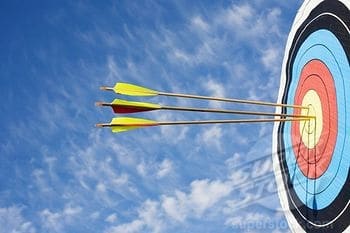
This is actually critical in terms of your trading.  If you are an absolute beginner, I do not recommend live trading, nor trading ultra short time frames (less than 15mins).  Why?  Because you will need to read subtle price action clues with very little time, make decisions really fast, have precision in your execution, while having little or no room for error.  Sound like something a beginner should start with in any field or craft?  I didn’t think so.  Do you start learning how to be a professional archer by shooting at 18meters, 70meters, or 3? With that being said, I recommend starting at the 1hr, 4hr and daily time frames to hone your skill-set.
First things first – build your skillset, learn how to read price action, get hundreds of trades under your belt, then decide what type of trading you want to do.  If you challenge yourself too hard in the beginning beyond your abilities, you will likely incur some big losses, or many in a row, then get frustrated, and be unable to enter any ‘sweet spot’.  You want to be able to stretch yourself, but only in a controlled growth fashion.  This will allow you to enter that flow as your concentration will be challenged, yet you will have the ability to do the task successfully.
#4 Automaticity
This is the ability to do something automatically, to the point where it requires none of your mental resources (or so little) that you can use the rest of your mind for finding the best trading opportunities.  Your brain is like a computer processor, and if you are using resources for one or two other tasks, then you will have less processing speed for the task at hand.  That is why multi-tasking is the worst thing you can do when trading as it actually reduces your overall IQ.
So shut off the email, turn off the cell-phone, unplug the landline, close your email program, and just focus on the markets when trading.  Give all your energy and focus to that so you can have your full natural intelligence dedicated to trading.  This will help you spot the best trading opportunities and make the best trading decisions.
What Else Can I Do?
If you have all four of these characteristics present, then you can more naturally enter the ‘zone’ or zen-like concentration.  But there are some additional things which will help you get there.
While studying experts, Csikszentmihalyi found something unique in their brain activity.  First, he noticed less activity in their pre-frontal cortex.  This is the part of the brain typically associated with higher cognitive processes such as working memory and verbalization.
Although that may seem like something you want highly active, what it really pointed out was during their states of zen-like concentration, the experts across all fields were able to silence their self-critical thoughts which allowed automaticity to take hold and thus have more resources dedicated to their craft.
As traders, we have actually had this direct experience.  Ever had the experience of  ‘analysis paralysis‘? This is your pre-frontal cortex working overtime – criticizing every idea and thought to the point it paralyzes you.  Ever had a perfect trade come up, but your mind came up with all kinds of ‘reasons‘ and ‘excuses‘ or ‘ideas from other experts‘ about how the market was going the other way?  This is exactly that kind of pre-frontal activity which actually inhibits your trading.
brain waves 2ndskiesforex
Complimentary to this, Chris Berka looked at the brain-waves of olympic archers and professional golfers.  What they noticed was a few seconds before the archer released the arrow, or the golfer hit the ball, they observed a small spike in the ‘Alpha Band‘ = 8-12hz frequencies, and ‘Theta Band‘ = 3-7hz frequencies.
Alpha band frequencies are linked to a lower heart rate and a greater sense of calmness and relaxation, while Theta band frequencies are associated with deeper levels of concentration, meditative absorption, a heightened awareness of the sensory field, and a shift in the relationship to thoughts, feelings and the experience of self.
As Berka noticed in her studies, the spike in the alpha waves represented more focused attention on the activity, while other sensory inputs are suppressed, accompanied by a slower breathing and lower pulse rate, all leading to greater concentration.
To compliment this, Gabriele Wulf (a kinesiologist at UNLV) examined the way athletes move.  She noticed that if swimmers focused on an external stimuli, like how the water moves around them, instead of how their limbs are moving, their performance, speed and technique increased because the conscious thought of the pre-frontal cortex was turned down or off, and thus didn’t interfere with the process.
It allowed the automaticity to take over what it could so one could have more resources to doing the task with grace, effortlessness and creativity.  It should be noted, that it takes time to produce consistent alpha waves in the brain.  How much time?  A lot less than the 10,000hours needed to achieve a sense of mastery and flow of your craft.
In fact, if you can learn how to develop consistently stable alpha waves, you simply short-circuit the need to have 10,000hrs of chart time.  This is because your focus, concentration and awareness will all be sharper than usual.  You will spot more details in the price action, find better opportunities out there, and be less inhibited by emotions and critical thoughts.
In other words, you are removing all the obstacles for having the same mindset as an expert in any field does, thus shortening your learning curve to successful, effortless and masterful trading.  It is spending the first 6hrs sharpening your axe to chop down the tree in two hours, instead of hacking away at the tree for all eight.  Which path do you think requires more effort? Which path helps you cut down the obstacles to your success faster and will lead to more successful trading?
I look forward to hearing your comments and reflections on this.
Kind Regards,
Chris Capre
If you enjoyed this article or what we do, please make sure to share/like/tweet this article, and click the ‘Like’ button for 2ndSkiesForex at the top of this article.

Related Articles;
Building a Successful Trading Mentality
Awareness, Negative Habits and Concentration
Poker, Concentration and Trading
 

This is the second part to our last article on Awareness, Negative Habits and Concentration in Trading.  It is designed to help you remove any limiting/negative beliefs which may be holding you back, while building a successful trading mentality.


Remembering Back

In the beginning of our trading ventures, we become aware of the new possibilities that await us:

Working for ourselves
Working from home
Not having to go to a Job
Not dressing the way someone else tells us
Not getting paid what someone else thinks we should or when they want to
Working when we want to
and of course the big one that gets almost everyone – being financially abundant

Trading Psychology Your Purpose Awaits 2ndSkiesForex

These are all real possibilities that become available to us through the market.  This new found awareness of other possibilities for our life and starting fresh energizes us.  Our enthusiasm is strong, determination high and focus is penetrating.  We feel a sense of purpose in an activity which is both engaging, challenging and rewarding.

But, something happens.  Either we hit a losing streak, a big loss, an obstacle, or an inability to read the market.  Something happens, and if we lose concentration while engaging emotional reactions, or stories to what is happening, our awareness begins to weaken.  This causes concentration to dim, enthusiasm lessens, and we tend to lose energy by becoming involved in emotional or negative mental patterns.

This reduces our ability to trade successfully and will directly interfere with our desire and goals to trade successfully.  It is this moment where we begin to hand over the keys, allowing our mind to manipulate us from being successful and getting past our hurdles.

This may manifest into the following scenarios:
-Trying to ‘get’ our wins back
-Over-leveraging beyond our normal limits
-Not following our trading plan and taking trades we normally wouldn’t
-Doubting our ability to make a good trade
-Hesitating to pull the trigger when our system gives us an entry
-Becoming unsure we can become a successful trader
-Unwilling to fill out our trade journal or review our trade performance
-Gotten impatient with the market or irritated by how it is playing
-Had fear about taking a trade
-Blamed your broker, or the market or the ‘gameplay’ going on
-Made excuses for why we lost on a trade or didn’t do things correctly

Has any of these things happened to you?  Have you ever slipped into these mental stories or negative beliefs?

If so, it is likely you have developed a negative habit or limiting belief around trading.  Nothing could be more dis-empowering to your trading to have these beliefs.  It is possible these beliefs already existed in your sub or unconscious mind and are just playing themselves out through your trading experience.

Mirror of Markets Trading Psychology 2ndSkiesForex

Whether you know it or not, the markets are like a mirror that reflects your mind.  It does this without bias or care of who you are.  It reflects back to you beliefs about yourself, about being successful, about having lots of money or none at all, about being confident or having a lack thereof.   Like a mirror, it has no attachment to what it reflects, it just does it automatically.

When you engage these limiting beliefs, perhaps such as (i’m not good enough, smart enough, don’t have a degree in finance, don’t have enough money, am not mathematically inclined, am not good with numbers, i’ll never be rich or successful, or whatever…) you are letting the mind deceive you into forgetting your natural state.

This is to be clear, vibrant, energetic and healthy.  Engaging these energies will lead you to trading successfully.  But accepting any limiting beliefs robs you of your natural intelligence and separates you from your inner strengths.  They are not the path to successful trading, or being successful at anything.  It is in the vice grip of these mental patterns we take away the chance to be a successful trader.

Regardless of this reflection the markets offer us, it is highly likely you came to the world of trading with some of these limiting beliefs.  If so, they will be there, like a bugaboo hiding in the forest of your mind. Only until you recognize and transform them will they go away.  This is when your trading take flight.

In fact, those obstacles which may be confronting you now will become mechanisms for your growth and success in trading.  Ironically, that which inhibits you now will become your fuel for growth.  It is our past mistakes and missed opportunities that become an invitation to a new way to trade.


What Breaks Through These Limiting Beliefs?

Awareness and recognition.  By taking moments to build our awareness, then applying it to our trading experience, we can see how these limiting beliefs have played out in our trading.  It is this recognition which will point us to how unhelpful they have been, and how we need to turn our compass in another direction.

Trading Psychology Staying in the Saddle 2ndSkiesForex

Trading is like riding a horse – it can be bumpy and we may feel like we are riding a powerful beast (the markets).  If you learn to stay in the saddle and apply your knowledge, then the markets become a riding ground for your own enjoyment and success.

It is through awareness and concentration we can learn from our trading experiences.  These two together applied to our daily trading  routine build up an inner strength as we witness our progress.  This leads to an increase in our trading skills, whether in reading price action, having less hesitation to take a trade, finding good opportunities or challenging ourselves by being really disciplined.


Methods for Eliminating Negative Habits and Building a Successful Trading Mentality

These are methods I do every day and have been for over a decade which can help raise your clarity, energy and awareness, which ultimately, enhance your trading experience.


1) Posture Check

First thing before trading, along with several points throughout the trading day, take a moment to check your physical posture.  Are you sitting upright with a straight spine, or are you slouching with your neck bent forward (or backward)?  Your posture affects not only your breathing, but your thinking as well.  A straight spine allows the energy to move freely up and down from head to heart and keeps your thinking more clear.  Also a neck bent forward (or backward) cuts off the free flow of energy down your spine while trapping it in your head.  This can literally keep you ‘stuck in your head‘ so make sure to keep your posture and neck upright.


2) Increasing Focus

For the next few weeks, try and be more focused while trading.  Perhaps meditating before you start your day, turn off the TV, close your internet browser, turn off your cell phone and stop checking email.  Just focus on the markets and what you are wanting to trade for that day.  After you have tried this out for a few days, check to see how much more focus you had and if this changed your trading experience.


3) Energy Check

Along those lines, ask yourself before you sit down for trading, or at several points in the day, what is your overall energy level?  I am constantly feeling this to see if its strong and vibrant or sluggish and weak.  I try to rate it on a scale between 1 and 10 with 10 being optimal, and 1 being, well…dead.

If your energy is weak, the cause could be physical or mental, so I quickly shift my posture and feel into my body to see if anything is going on.  If it’s mental, then I apply awareness to see if I am engaging in any negative patterns of thought.  If so, I take a moment to clear my head via a short meditation technique, then get back to trading.

This can be done not only at several key moments throughout your trading day, but also be a constant monitor.  Ever notice your energy drops when eating?  It’s likely you ate too much, or something that does not agree with you.  That drop in energy is your body telling you it’s needing to use other resources just to digest your food or compensate for how it’s not feeding you properly.

As a general rule I use, anything below an 8 or 8.5 and I do not trade.  Why trade when I have a lesser edge or ability to make good decisions?  Why would I want to trade on any other state then feeling energetic, clear and sharp?  Give yourself every advantage you can when trading.


4) Choosing Positive Thoughts

The moment we see how we’ve been interfering with our success, it is time to apply the remedy. Choosing positive actions will inspire you and build confidence in your experience.  This will make your vision more panoramic, create stability in your trading experience, enhance your determination, and deepen your understanding of the markets.  This positive energy will build from a puddle into a reservoir which will manifest in an increased confidence to trade successfully day in day out, month in month out. You will refuse to engage in excuses, emotions, or procrastinate doing what you need to.  You will plug all the leaks and settle into the saddle.

Trading and the markets are the proving ground for our actions and our positive attitudes. So to build these, pick a time each day, ideally before you start trading.  Tell yourself mentally, ‘I will not submit to laziness, hesitation, emotionality’ and will turn towards the positive.  Begin saying mentally to yourself, ‘I can trade successfully, I can be financially wealthy, I can make great trading decisions every day’.  Do this for the next two weeks and see how your focus and concentration changes.


5) The 5% Rule

For the next day, or week, resolve to give just 5% more energy to your trading.  Ask yourself what areas you need to develop in most, and dedicate an extra 5% to strengthening that.  As you do this for several days or a couple of weeks, see if you notice any difference in your trading, mindset or results.  As soon as you feel stable in this new effort, bring it up a notch and add another 5%.


Evaluation and Closing Thoughts

By evaluating the results of these new habits above you have applied, notice what you have done differently, what you have achieved, how your trading experience felt different.  Take notice of what you have accomplished and then use that experience as motivation to continue developing your skill set and forex trader mindset.  This will become a self-reinforcing process which allows you to become your own teacher.  It is that moment you will have turned the trend sharply upwards in terms of your trading growth.

I want to end by providing a list of different patterns of thinking which can either inhibit or help your trading. Take a look at the list below and see which you engage in.  I will list them side by side so you can see the unhealthy and healthy side of such mental experiences.

The Unhealthy Players: Constructive Ways of Thinking:
Complaining about the markets Acceptance of what is happening
Making excuses why you didn’t do something Taking responsibility for your trading decisions
Having fantasies of driving a ferrari in a year Being present taking things step by step
Hesitating making a trade Acting on your system
Doubt about your abilities Being open-minded nothing is fixed about your trading
Being harsh or critical to yourself Being humble about your developmental process
Uninspired to develop your trading skillset Being creative and motivated to take things to the next level
Stuck thinking about past losses Recognizing past does not equal your future
Stuck thinking about what just happened Understanding how to do things differently the next time
Caught up in your emotions Being clear-headed and not identifying with your emotions


Look at this, study it well, and see which of these you engage in.  Then apply the 5 methods I have listed above and see how you transform these experiences and how your trading changes.

I look forward to hearing your comments and reflections on this.

If you enjoyed this forex successful trader mindset article or what we do, please make sure to click the ‘Like‘ button for 2ndSkiesForex at the top of this article.

Feel free to check out the companion article to this on Awareness, Negative Habits and Concentration in Trading.

The markets are our testing ground, and trading is the vehicle through which can clearly see the results of our work, our discipline (or lack thereof) and our concentration.  It is through these two (the markets and trading) we have the live opportunity to see habitual patterns that either help us move forward, or hold us back from achieving our goals and trading profitably day in day out.
Because this process is so informative, the fertile experience is rich with information about whether our compass is on the right course, or pointing south when we want to go north.  Whether we avail ourselves of this information and mine it like a precious resource is up to nobody but you.  As traders, we have to constantly be on the prowl, and asking questions at key moments, such as;
-How did we react mentally or emotionally when we experienced a series of losses?
-The same has to be asked when we have a long run of winners or bump into our Equity Threshold?
-What happens after we’ve been unprofitable for so long, that after trying a new system, we start to make some solid gains?
-How do we react when being told or asked to fill in the trading journal?
-Do we use proper money-management, or do we step outside the mathematics and do what we ‘feel’ like?
-What happens when we encounter a ‘big’ loss?
-What do we do to prepare for the trading day?
-How do we train and learn from our experiences?
All of these questions and experiences are beacons in the fog of confusion as to where we are in our process.  They are part of a feedback loop we are either aware of or not.
beacon of information 2ndskiesforex
One of the most common responses to;
a) why we do not prepare for our trading day
b) why we did not take the trade that met all our rules
c) why we took a big loss
d) why we do not fill out our trading journal
or
e) why we did not use proper money-management comes in the form of excuses.
It does not matter if you are strongly motivated to become a profitable trader.  To want to be successful as a trader, to make loads of money, to work from home is not enough.   That is just desire and you following a puppet master.
What happens during the small moments where you make excuses (perhaps for the situations mentioned above) is what will define your path and trading experience.  This is why it is critical to be aware of the moments when you do make excuses, so you can change course immediately.
Excuses are essentially negative habits that start off as an undertow, and eventually become the current if left unchecked or not dealt with.  They start off as whispers, but without applying awareness and action to them, eventually become equal to your driving thoughts in critical moments of your trading.
Perhaps you have said the following to yourself in certain moments of your trading day;
“I don’t want to fill out my trading journal right now, i’m busy trading”
“I’ll use proper money-management later, this is a cherry of a trade here”
“This trade meets all my rules, but i’m not certain about it so i’ll wait for the next one”
“I don’t need to prepare mentally and physically for trading, a cup of coffee will get me going”
“I don’t have to review my trading performance, my balance will tell me if I am trading well or improperly”
Convincing yourself to put things off is to lose the opportunity to move forward by falling victim to excuses. It will seduce you into an un-empowered trading experience.
Perhaps you think of ‘discipline‘ as something negative, like being disciplined by some 5th grade teacher you hated.  Having negative views to being disciplined in your life merely bonds your ideas and energy around discipline to this negative view. It saps you of your ability to break through the obstacles to your trading growth and success while climbing the Pyramid of Trading. It hides your best qualities and that which would take your trading to the next level.
These negative views and excuses will lead to weaving a tapestry of explanations and justifications for why you are not making money trading.  It will be the same reasons why you did not fill out your journal, or hesitate on that trade which would have made you money, or prepare yourself for the day, or use proper money-management. If acted upon enough, this becomes a pattern of thinking for you. When it does, it manifests as a wall or obstacle to you trading successfully and begins to imprison you.
imprisoning thoughts
Ask yourself if you feel like time is being wasted, or trading opportunities (ones that your system generated) are passing you by?  I’m not talking about things outside of your trading plan and rule-based systems, but one’s that you had in your crosshairs and let go by.
If you feel like this, and have witnessed many times how you should have been in a trade, but were paralyzed by your thoughts/emotions, then you need to make changes now.  If you feel sub-consciously you ‘should’ be reviewing your trade performance, or filling out your trade journal, or using proper money-management, but are not – then it is critical you take action now.  The longer you wait, the more corrosive these excuses to inaction become.  They eat at and diminish your initial commitment, excitement and enthusiasm to become a successful trader which reduces inspiration and drive when you need it
Remember the clock is marching on whether you want it to or not, and there is no extra time to be bought by excuses.  Your time spent postponing things is the noose which separates you from trading success or failure.  Postponing things and excuses become the barriers which imprison us.  They slowly close the doors to inspiration and our natural intelligence.
Yet we all subconsciously feel how we can be more empowered by doing all the things we need to trade successfully. Only until we make a commitment to moving forward in our trading, followed up by action, will we cease to cover up our natural strengths and intelligence.  Time to stop sacrificing your vision, goals and inspiration on the altar of excuses.
If you find yourself hesitating when your system gives you a trade setup, or using improper money-management, or making excuses for filling out your trade journal,  or over-reacting to a large loss (or a series of wins), the remedy out of this is a simple two-fold process of;
1) applying awareness, and
2) taking action
Both of which I am going to give some steps to help you with during trading.
Applying Awareness
As many of you who have read my bio know, I have been practicing yoga/meditation now for over 11 years. I have been long wanting to share the practices which I use everyday to build focus, concentration and awareness for my day (especially trading).  They are tools, like the stone which sharpens the blade to cut with greater and greater precision, and they have been invaluable for my trading.
samurai sword chris capre 2ndskiesforex
I am going to give one simple technique all of you can apply either before your trading day begins (ideal) or when you are in the more challenging moments during trading where your mind seems to fail you.
Oftentimes, energy can become constricted in your dome (head) if we focus our energy too tightly. Perhaps you have felt it, but when it occurs, it is like having blinders on.  In these moments our awareness is dull and often foggy at best.  Even sounds become less vivid as we listen too much on the ‘sounds in our head’.  We are cut off from our natural intelligence in these moments so it is important to apply a remedy.
The Technique
Either before your trading day (not too long before the start, but after you have showered and perhaps eaten), or in the middle of your trading day, relax your eyes and focus them on the space in front of you. NOT the objects in front of you, but the space in front of you (different quality).  Breath through your nose only and begin to slow your breath.  While keeping your head stationary, slowly, gently and with little effort, move your eyes slowly up and down, and side to side.  Relax your effort to focus the eyes allowing the movement to be slow and gentle.  Do this for about 30 seconds to a minute without any thoughts about what its doing or whether you are doing it right.
Then, begin to bring a gentle awareness to your throat to where the awareness of your throat and breath begin to merge.  It will almost seem like you are breathing directly into your throat.  As you do, feel a sense of light building there.   Do this for a few minutes till you feel the area relax a bit.  As this builds, visualize it expanding down into your heart and upward into your brain.  You will likely feel this relaxing both areas as you do this, keeping your breath calm and steady.  Lastly, as these areas begin to relax, let the awareness in your heart settle down into your belly, while the awareness in your head/brain move towards the space between your eyes.  Be gentle with your awareness and breath as you do this, again, not worrying if you are doing it correctly.  You can do this for about 5-10 minutes each day, either before you start trading or when your mind feels constricted.
What Does This Do For You?
More than anything trading is done mostly with our mind/brain and it is very easy during all the analysis and thinking we do, for the energy to become constricted.  By doing this exercise, relaxing your breath helps to calm your mind and actually shift your brainwaves to a more relaxed state.  This opens the doors for awareness to come into our thinking.  It is where we begin to notice the emotions, thoughts and excuses which cause us to hesitate, to not fill out our journal, or do the things we know will help us move forward.
We then shift the awareness to our throats, because it is the gateway between our heart and mind.  This helps us balance the energy between the two, which in turn allows our goals, intention and vision to manifest in our actions.  It connects our intelligence with our intention, and short-circuits any excuses or hesitation from coming into play.
By expanding this to our gut, this allows us to connect with our intuition (ever heard the phrase, ‘I felt it in my gut’?).   This helps us spot opportunities we may normally miss while strengthening all the patterns and time we have spent studying the charts.
And lastly, by extending this to the spot between our eyes, we sharpen our concentration and bring a more lively awareness to our trading.  It gives us a more refined sense of what is happening in the charts as we are reading the price action.  It allows us to see not just a pattern, but what is behind that which is creating the pattern.  It allows us to reflect the price action in market naturally without any bias or thought of profit, thus seeing it clearly, allowing us to spot the opportunities and making good trades.
This is part one of a series on awareness, breaking through negative habits and developing concentration in your trading.
I thank you for reading this article and welcome your comments and feedback.
Kind Regards,
Chris Capre
2ndskiestrading.com
Twitter; 2ndSkiesForex