
The World Cup ended a few days ago with Germany hoisting the trophy. Some are speculating this Germany may be the best national team ever.

Such a statement will be argued across bar tables and countries for years to come. Regardless, below are a few amazing facts about Die Mannschaft winning the World Cup;
1) No European team in 6 prior attempts had won the WC in Latin America
2) Their goal differential (difference between goals scored vs. goals allowed) was tied for the best ever at +14, scoring 18 goals, allowing only 4 in 7 games.
3) They finished the WC with the highest ELO rating for a WC champion ever (source: Nate Silver)
There is more, but they won without having any major superstars like Messi, Ronaldo, or Neymar.
How did they do it?
The answer is a method known as The Aggregation of Marginal Gains. This is a strategy for improving performance in any sport, skill or performance based endeavor (i.e. trading). This method is the offspring of Dave Brailsford, the General Manager for Team Sky (Great Britain’s professional cycling team), who has helped British cycling become dominant since 2010.
The idea is simple – find and improve as many areas of your discipline as possible by 1%. If you add up those small gains, it will lead to a dramatic improvement in performance.
How did the Germans utilize this method to win the 2014 World Cup? They employed 40 sports scientists to look at every aspect of the game. Their mission was clear – find the smallest advantages wherever they existed. Putting this into context, while they had 40 sport scientists, Brasil had 2. Below are just some of the 1% marginal gains they produced.
1) Climate Trends – they analyzed various tropical climate trends in relationship to player performance and reduce the risk of injuries.
2) Alpine Training – before the WC, they had a 10 day preparation camp in an isolated village in the Italian Alps, 1,000 meters above sea level. Training at this altitude helps to increase the production of oxygen-carrying red blood cells – thus increasing stamina.
3) Base in Porto Seguro – 1 year before the WC started, they build a 60 room base helping them adjust to the tropical conditions more easily. The German climate is far from anything resembling ‘tropical’. Most teams booked hotels in the south of Brasil where it was much cooler, thus making it harder to adapt.
There is more, but you get the key point – they prepared in every way possible giving them the edge available.
If I’m correct, many teams and nations will be studying their methods to improve their respective programs.
An Edge in Trading
In trading, most tend to think of their ‘edge‘ housed only in their strategy. That would be a rookie mistake.
Your trading mindset is an edge, your risk management is an edge, your trade management is an edge, your training method is an edge, your preparation is an edge, your trading plan is an edge, your spreads are an edge, etc. There are certainly more, but create a 1% increase in any or all of these, and the aggregation adds up to a huge shift in performance. That difference could be the gap or cleft between you losing money like you are now, and making money consistently.
The Slightest of Edges
In trading, the difference between losing and being flat is often marginal. Sometimes just a few small shifts in your trading can bridge the gap. The same goes for moving from break-even to profitability. Just increasing your accuracy alone by a few % can mean the difference between having no edge, and making money consistently.
Just even using the fixed % model vs. the fixed dollar amount will improve performance as we’ve demonstrated before. Below is a great chart just showing one of the ways the fixed % model is superior in performance.
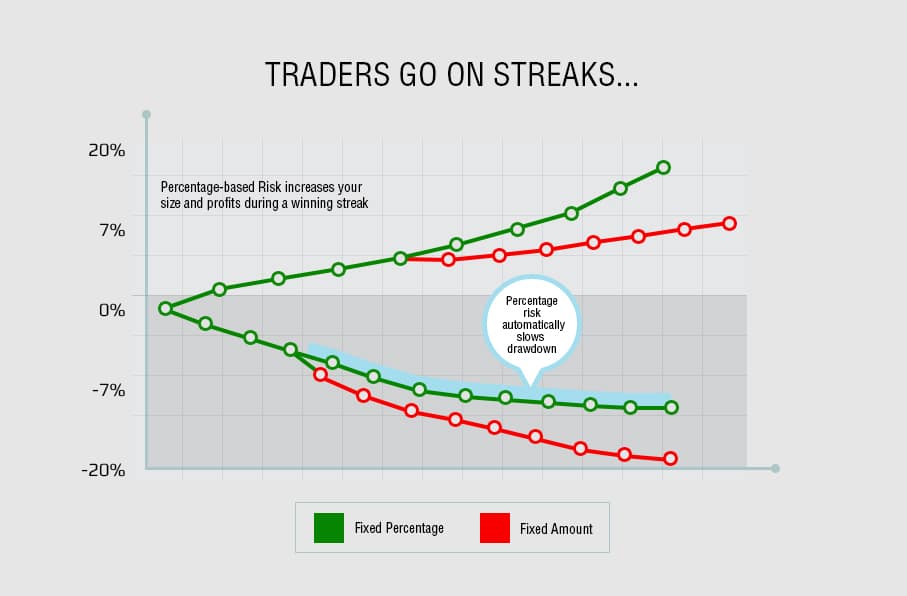
Another great example is housed in your risk management. Using the risk of ruin formula, imagine you are a trader who can consistently get a 1:1 reward to risk ratio with your price action strategy. If you are 50% accurate with this R:R ratio, you are losing money. Increase your accuracy to 55%, and now your system makes money (assuming you have a manageable spread).
NOTE: I have a FREE Risk of Ruin Calculator which you can use by clicking on the link.
Edge In the Spread
Coming back to the spread, if your current markup on the GBPUSD pair is 1.5 pips, and you can reduce that to just 1.4 pips, a .1 pip decrease in your spread may not look like much, but take a long view and see what happens.
I have been trading for 14+ years now. Let’s use a low number assuming I make 20 trades per month trading 11 months per year.
14 years x 11 months = 154 months of trading
At 20 trades per month, I would have executed 3080 trades
A .1 pip increase = a +308 pip gain
At 10 standard lots per trade, we are talking $100 per pip
At $100 per pip, we are talking a difference of $30,800 profit, all from a .1 pip improvement in my spread!
Can you see the power of how one small gain leads to a big increase in performance?
Now imagine making 5, 10 or 100 of such gains. By using the aggregation of marginal gains method, you can create small gains which lead to huge improvements in performance. Such gains can be the difference from losing money, to breaking even. or breaking even to making money month after month.
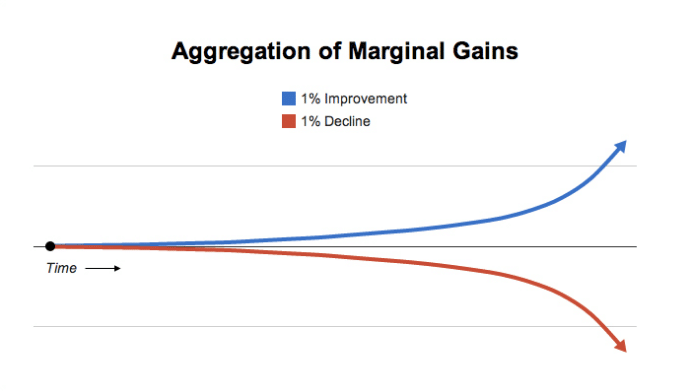
Below is a fantastic graphic how a 1% increase in performance over time will affect your outcome (source: Jeff Olsen).
Edges To Be Found in Trading
In trading, every edge counts, which is why you have to take time to really dig into your trading system and method. Such analysis can turn a barely profitable trader into a highly successful one. My top students have all dug deep into every aspect of their trading, and this is why many of them would outperform 95% of all traders on the planet.
Below is a list of some possible edges you can find in your trading:
1) Improving your entries – Are you using optimal entries, or sub-optimal?
2) Decreasing Stop Size – Take a trade setup with an 80 pip stop & 120 pip target (1.5 R:R). Now reduce the stop by 10 pips. Your R:R increases from +1.5R to +1.85R (23% increase), all from tightening your stop by 10 pips.
3) Trade Management – is a trailing stop kicking your out too early, or helping you lock in the maximum amount of gains?
4) Time Stops – are you holding your trade for days, maybe weeks on end for a simple 1R gain? Or could your capital, time and mind be used for trades with higher R and a quicker return?
5) The instrument you are trading – Perhaps you can make a little money with one pair, but testing the system on another pair shows a big increase in performance.
6) Reducing your spread – perhaps you can get equal performance in terms of accuracy and R:R ratios in a lower spread instrument.
7) Time of Day – Are you trading intra-day? Perhaps trading during more ideal times for your system could increase profitability.
8) Risk of Ruin – do you even know your risk of ruin, or the mathematical probability you will make (or lose) money? Knowing your RoR can mean the difference between losing and making money every month.
9) Your Trading Mindset – maybe your strategy makes money consistently, but you use it improperly, or don’t pull the trigger when you get a prime setup. Your trading mindset could either keep you focused on process, or constantly worrying about that big loss you just took. Ask yourself what edge do you have in your mindset, and how do you work to improve this.
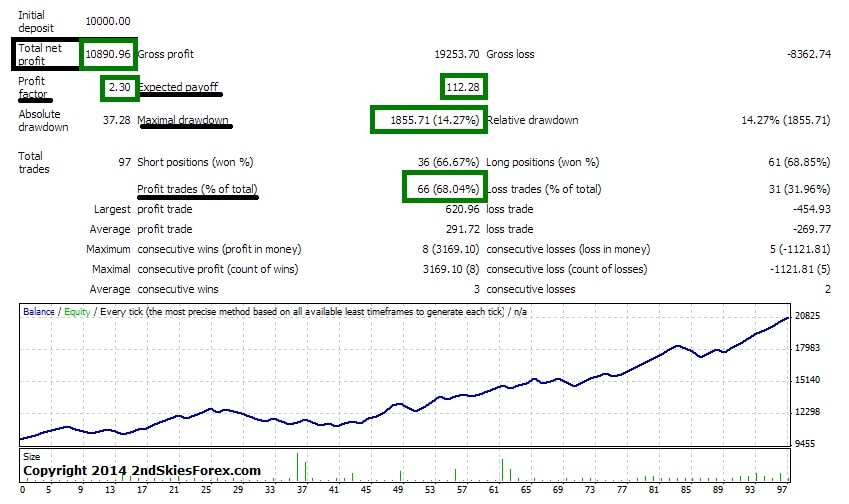
10) Trading Strategy – does your trading strategy have an edge? Below is a strategy from our Price Action Course on just one pair and one time frame, including the performance data gaining +108% over 97 trades risking only 2% per trade.
In Closing
The aggregation of marginal gains is a powerful method that can be applied to trading, sport or any skill based endeavor. The training in the alps did not win Germany the World Cup. Nor did the base they built in Porto Seguro. Nor did the analysis on climate trends and player performance. But adding them all together, alongside with their futbol system, training, teamwork, and a focus on the details, it all added up to a winning advantage, setting records and making history.
Now that you’ve seen the power of making small gains in your trading and how it can affect performance, ask yourself what can you look at to give yourself a better edge? Where can you make small gains, and what details are you missing?
Along those lines, what other edges do you think could be useful to improve trader performance?
Please make sure to share your ideas, comments and suggestions, and what you have used to increase your performance.
Tag Archive for: trading mindset
Why do some traders you know seem to profit consistently, while those green trading days elude you? Why do you find yourself consistently making the same mistakes over and over again?
Traders who are successful month in-month out, handle losses in stride. They are comfortable with losing periods, while maintaining discipline. And most certainly, they do not accept under-performance, constantly training to improve their game.

The good news is – you can be a successful trader who profits month in-month out. Nobody is born to be a successful trader. These traits and characteristics can be learned.
Many of my profitable students, were not trained in any related field of finance. Yet they consistently make money.
Trading profitably is certainly possible for you, no matter where you are in your learning curve. But you have to work at it, and likely make a few adjustments from what you are already doing.
Here are 4 ways to drastically improve your forex trading.
1. Maintaining Commitment, Even During Challenging Periods
Throughout your learning curve in forex trading, the actions needed to get you there will not always be fun.
You have to love the process, and enjoy working towards your goals every day, regardless of the daily results.
If you were not being paid to trade, would you still love it, and enjoy the challenge? If so, you will maintain the commitment necessary to succeed.
2. Get Comfortable With Losses, and Losing Periods
How many emails have I received requesting a system with a high win rate? Enough to fill your inbox for a year.
By itself, the win rate does not guarantee profitability. Your risk of ruin does!
But I’m going to make a controversial statement here. That is:
Most un-successful traders who want a high win rate, are really asking for ‘compensation’.
What are they wanting compensation for? A lack of confidence. It is wanting something solid, yet virtually nothing is solid about trading.
Obsessing over a high winning percentage is short sighted. Directing your focus to continually getting better (i.e. on the process), is seeing the forest from the trees.
3. Intentions Must Be Consistent With Actions & Beliefs
If your goals, intentions & efforts in trading haven’t produced consistent results, there is likely one cause. You!
It is one thing to say or think, ‘I want to be a successful & consistent trader‘. But if the moment comes to fill in your trading journal, and you balk, then there is inconsistency between your conscious and unconscious mind.
Just like you may conceptually say ‘I want to be wealthy‘, but if you look around your house, and feel poor, you are not going to create wealth for yourself.
This is called ‘thinking in one way, and feeling another‘. Only when these two (thinking and feeling) come together in your mindset, do you produce results that match your intentions.

4. Ban Under-performance in Trading
What is one thing which without fail promotes under-performance? Excuses. Have you ever used excuses for your results in trading? If so, you are making it more probable you will under-perform.
The best way to ban under-performance in trading, is to ban excuses. Adopt a ‘no-excuses‘ approach to trading. Better yet – burn the following mantra in your brain:
I am responsible
You may not be in control of everything that happens in the market, but you are responsible for your performance.
In Closing
Ask yourself, how of the aforementioned forex trading tips and advice suggestions would help you in your trading performance? If you were to adopt the above suggestions, would they change your mindset and approach to trading?
Have you ever said this to yourself in trading? Most of us have, present trader included back in the day.
You don’t know it, but this statement is a trap. Unconsciously you believe you are a victim of cause and effect.
What you have to see is that you can ‘cause an effect’, particularly the ones you want.
A better question to ask yourself would be;
“How can I change my thinking, feelings and actions to produce the effect and results I am wanting?”
Doing this keeps you focused on the process first. This is how you accelerate your learning curve in forex trading.
This is employing a successful trading mindset.
I was listening intently to an interview of a professional athlete, talking about playing against one of the best teams in their league. Instead of being intimidated by the prospect of playing such a highly dominant team, they had the following to say;
“These are the games you really look for. They force you to test yourself, to find out what you are doing well, and what you need to work on.”
If there is a mindset or quality I’d like to install in every trader, it would be what this athlete was conveying. They looked forward to the challenge they were up against.
They weren’t worried so much about making mistakes, or not being able to handle the more dominant team.
If they couldn’t, it meant they had things to work on.
Frustration Leads to Learning
Developing traders need to build this type of successful mindset. Losses will happen, you will be frustrated at times, and the market will not always make sense. These experiences can last for hours, days, weeks, perhaps months.
How you respond to each and every trade matters more than you can imagine.
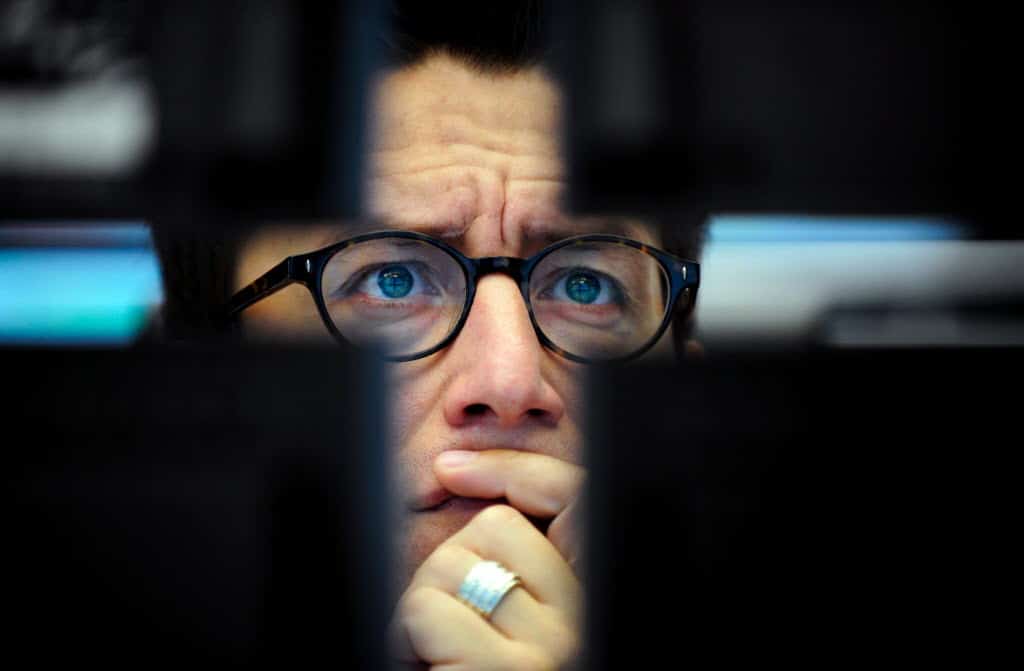
If you as a trader are going through, or have recently gone through a frustrating period – you have to let that ‘feeling’ of frustration be temporary. It is ok to experience stress in trading, but it is not constructive to define yourself by your frustration.
Frustration must lead to learning.
Better to have the approach that any losses, mistakes, or frustrations are learning experiences. That you actively seek out the challenges inherent in the markets.
Approaching every single trade as a learning experience, will help you see the bigger picture and build confidence in your trading.
Opportunities to Learn
Each trade and moment behind the charts is an opportunity to learn.
Are you really trading like a sniper, or just sitting on your hands waiting for some perfect setup? Are you trading to be right, or are you actively focusing on improving your skills? Are you working to accelerate your learning curve, or are you letting your emotions define your experience?
Frustration must lead to learning – in fact all trades must lead to learning. You either win, lose, or learn from each trade. The first two you cannot control entirely, but you can with the last. And which do you think leads to your development as a trader?
The best athletes, professionals, and successful traders learn from each trade, and maximize every chance to learn. This is part of building a successful mindset, which is essential and required for trading successfully.
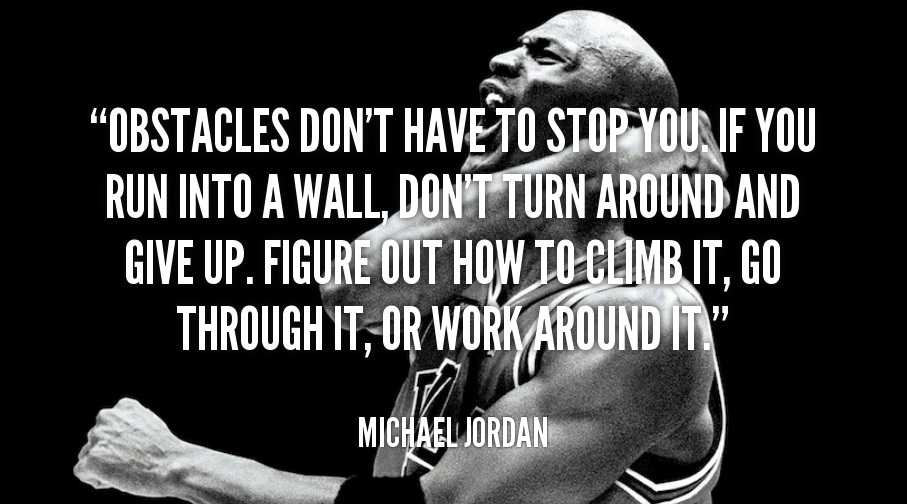
Ask yourself, how would your trading experience and mindset differ if you looked forward to the challenges, and the frustrating moments, learning from each? How would this change your daily approach and thoughts when engaging the markets each day?
What parts of the above can you work on, and what have you noticed about yourself after reading this article?
Please make sure to comment, share your current experiences, and what you thought about these suggestions.
Last week in a free private webinar for my course members, I asked a key question about what builds confidence in trading.
Trading is without a doubt, an endeavor you need confidence in. Having a confidence that you can do this will be a fuel when you need it, clear obstacles when you face them, and provide a focus on what is essential. Confidence will accelerate your learning curve.
On the flip side, lacking confidence can be one of the most destructive traits for a traders mindset. When losses come, how will you re-bound and focus? What happens if you start your day with two, three, or four losses? Will you doubt your system, trading plan or skill set?
All eyes can see, lacking confidence is destructive, while having confidence gives us a greater chance for success. Although we know this conceptually, or intellectually, often times our actions tell a different story.
So how do we build confidence in trading? What can we do create an unshakable belief in our abilities? If we engage specific things, will they help us form a foundation to profit consistently?
The answer is yes, you can, without a doubt build confidence in yourself and your abilities. In this article, I am going to share a method to help you build confidence. Will it be enough? I don’t know, but it’s a great place to start.
Successful Endeavors
I am very proactive in protecting my mental capital and self-image. Having a strong self-image and a healthy reserve of mental capital will lead to increased performance.
With that being said, what do you think it does to remember your past successful endeavors? Do you think it builds up your confidence, or brings it down? The question is rhetorical, but I want you to begin thinking about this more deeply.

I’ve worked with thousands of traders over the years, and one common trait among most of them, is they are all good at something. Chess, poker, math, sports, finance – you name it, they are likely good at something.
In our courses, we have well over 50 doctors, many of them surgeons. We have poker pro’s and tournament champions who are wanting to transition into trading. I have a few traders on the NYSE or for some large prop desk while others are high profile trial lawyers. Engineers, programmers, IT specialists….we have them all and the list goes on.
As a whole, most students who want to learn forex trading are intelligent, probably successful in their current field, and likely good at some skill. So how do we leverage this to build confidence?
A Method
One simple method you can use is to think about what you are already good at. Think about what you went through to get there, the obstacles you overcame, the doubts you faced, the hurdles you passed, how many times you weren’t sure you could be good at it. Yet in spite of all that, you became highly skilled at it.
Notice the confidence you feel to perform that skill or endeavor. Did you always feel that same way as you did now, particularly in the beginning? Unlikely. But you got there, and now have a competent level of skill in it, whether it be a skill, sport, job, martial art, musical instrument, work or endeavor. This current experience and skill can (and should) be used for our trading process.
Hence, take some time to think about deeply what skills or traits you can do well. Think about it till it brings up a feeling of confidence to engage that activity and do it well. Remember this feeling and apply this towards trading.
Climbing Mountains
It is important to remember, all of you at some point in your lives have broken through obstacles, difficulties, and gone past your doubts. Maybe these were small, or maybe they were mountains, but every one of them we’ve climbed reminds us of how far we’ve come, and what we’ve overcome along the way.
As I said, before, ‘Overcoming is the Currency of Success.‘

Remembering this, and having contact with our past successful experiences will help you build confidence in yourself. This is another method for protecting your mental capital and keeping a strong self-image.
Hence, take some time to remember all the obstacles you’ve overcome along the way. This should give you a feeling that you can overcome your inner obstacles to trading successfully.
In Summary
Having confidence and a strong self-image are two of the most essential weapons for a successful trading mindset. Most, if not all of you, have had to overcome something in your life. And equally most are already good at some skill, sport or work.
Think about your developed skill set in any particular field, and what you can do with those skills. Think about what obstacles you had to overcome throughout your life. Notice how it makes you feel about yourself when you think of what you can do, and what you’ve grown past along the way.
Sometimes, we need to just remember our strengths, inner resources, and wisdom we’ve acquired along the way. Sometimes just noticing those things will remind us of our capacity, and our potential. This is just one method you can use to build up confidence in trading.
It should be noted, there are other crucial methods you can be engaging daily to build an unbreakable bedrock of confidence. Take some time to ask yourself what builds confidence in trading for you.
Please make sure to share your ideas on this, how it helps, and any comments you have regarding this article.
By now many of you are in full swing with the new year, and at least 6 days removed from creating your new year resolutions. Below are some interesting statistics about new years resolutions, some of which I think will not shock you.
1) About 8% of people are successful in achieving their new years resolutions (not far off from trading)
2) 25% of those who make them don’t even make it past the first week
3) 34% of those resolutions are related to money
Source: Betterment.com
Do these numbers above surprise you? My guess is if I surveyed 1000 people, the majority would not be surprised.
We’ve all made resolutions and failed to keep them (including yours truly).
Have you ever asked yourself why is that? I certainly did.

Why do so many people consistently make new years resolutions, yet fail to really nail them? Made a resolution to always fill out your trading journal each day without fail, only to a few weeks/months later finding yourself not filling it out? Why?
The reason you did not fill out your journal, or consistently risk a fixed % of equity per trade, or whatever resolution you made is the same underpinning reason all resolutions fail.
In this article, I will briefly share a far better method for making consistent change, then ask the critical question as to why most fail.

A Far Better Model For Consistent Change
One of my yoga students Mark Gonzales eventually went on to become a great yoga teacher himself. In 2012 he was given the Yoga Journal’s Talent Search Winner Award, and has one of the most influential power yoga channels on youtube. He still humors me in letting me know my classes were some of his hardest ever. I appreciate that sentiment as I wanted him to push his body and mind to become more than what he thought he could do.
One brilliant insight Mark recently shared captures a far better model to consistent change. Here is what he said below;
“New Years Resolutions are for those who didn’t work hard enough or look after themselves the year before. Self improvement can start now, all year round, from this moment forward.”
Indeed, for those who are constantly working on themselves all year round, there is no need for a new year resolution. It is far easier to work on yourself month-in-month-out then to rev up the change engine once a year. If you have not been working on removing your limiting beliefs throughout the year, then a new year’s resolution is most likely to fail.
It is like not running all year, then all of sudden taking yourself out for a long run when your lungs and legs are not ready for the task. You are most likely to fail, and then imprint negatively on your self-image ‘it is not like me to make the changes I need/want to‘.
This only hinders your confidence and decreases your likelihood of making lasting change in the future. Every negative imprint from failing to keep a commitment or resolution only adds on to the difficulty of changing your trading mindset in the future.
Daily affirmations by themselves will not make lasting change, especially since most are done improperly. Their is an underlying flaw in daily affirmations most fail to see. Also making those trading resolutions at the beginning of the year creates the idea you can only change once a year. This is also a fateful idea.
It is far easier to work on smaller goals throughout the year, that eventually build up your self-image and confidence to make the big changes. When you have seen yourself do the work earlier, it becomes more ‘like you‘ to do the work later. This is a far superior model for consistent improvement and hitting your target.

Why Do Most Resolutions Fail?
Understanding this one thing would help unlock many of the critical reasons why you make the same trading mistakes, why you have a streak of winners and lose them all in one trade. It is the same reason why you follow your trading plan for a few weeks/months, but then go off the reservation.
The reason why a trader fails to make consistent change and build a successful trading mindset is the same reason why most resolutions fail.
With that being said, before I share the answer – why do you think most traders make the same mistakes over and over again? Why do you think you fail to keep your risk management? Why do you think you succumb to the same emotions you know are toxic to your trading?
Many of you are smart people and can certainly figure out most of what you are doing isn’t helpful. Yet you still do it anyways. Why do you think you continue to do things which you know will only hurt your trading performance?
Please make sure to share and comment below. Your answers will be incredibly revealing as to where you are in your trading process, how much you understand about the trading mindset, and what you have to build mentally to become a successful trader.
One of the greatest ‘myths‘ out there (or mis-information) is price action on the lower time frames (below 1hr charts) is just ‘noise‘. This is a highly confused notion of price action trading and nothing could be further from the truth.
Prop traders are often trading below the 1hr time frames every day, oftentimes on the 1m, 3m or 5m charts. Bank traders will often be highly active, also trading on the lower TFs. They do this while also building up large swing positions they hold for weeks, perhaps months to trade with the trend. Same goes for desk traders and institutional ones alike.
The bottom line is, professional traders are trading off all time frames. There is no ‘holy grail’ of time frames. There is no bastion of good signals that only exist on the higher TFs (daily and 4hr charts) while anything below the 1hr chart is just ‘noise’ or garbage. High quality signals exist on all time frames, and traders are making money on virtually every time frame you can imagine. The ‘noise’ idea you’ve been told is a myth.
Sorry to kill the sacred cow – but those espousing the freshman idea only good signals exist on the daily/4hr charts clearly do not understand price action.
The idea of noise existing on a particular time frame comes down to the lack of one thing – training. I will use an analogy to demonstrate this point.
Foreign Tongues & Cryptography
If I am walking down a street in my home country, I will understand what people are saying. Why? Because I speak the language. I have been trained to.
Now put me on a busy street in Finland or Mongolia, and I will have no idea what they are saying. Their conversations will sound like noise to me. In fact almost any language that is unrecognizable to me will sound like ‘noise’.
Why? Training.
But give me six months to a year learning that language, and what before sounded like ‘noise’, will now sound like a conversation. It will have information, meaning and a familiarity to it. I will be able to understand and recognize what they are saying. The only difference between the two scenarios, is training.
Same goes for cryptographers (those who translate coded communications). What may sound like noise to me and you, is actually a hidden message or code for them. Again – the only difference between us and them is training.
It Comes Down To This
If you have been only trading the higher TFs, then for a little bit, the lower TFs will look like ‘noise’ to you. You will not understand the differences, the rhythms, and how the information is expressed a little differently. But through training, practice and experience, you will start to understand the code.
What you will find are great intra-day signals, key levels, and how the intra-day price action flows. You will spot opportunities and see patterns. With a little effort, practice and training, the ‘noise’ of those time frames will start to become clear and trades will start to pop out to you. With proper training comes an improved trading mindset.
That is not to say you should or have to. I always recommend finding what is most natural to you, your availability, and inclinations. That could be only on lower TFs, higher ones, or a mix of both. Everyone will have a sweet-spot. It is up to you to find that.
To be clear, I am not saying this comes easily, but nothing in trading ever does. It takes patience, work, practice and training, but it certainly can be done.
Hence do not believe the confused freshman ideas there are boogeymen down there. I have many students trading the intra-day charts successfully several times a day while maintaining accuracy and profitability. There is no reason why you cannot do the same.
In 99% of the cases, when hearing about ‘protecting your capital’, what’s being discussed is your financial capital, or money in the account. But when do you hear about protecting your mental capital?
Unfortunately there is very little discussion about protecting your mental capital. And yet, it can often be more important than protecting your actual capital (i.e. money).

What is Mental Capital?
Your mental capital is very much like an account balance reflecting the strength (or weakness) in your self-image and trading mindset. A good example is confidence, or lack thereof. Some other ingredients which affect/are part of your mental capital are;
Doubts
Fears
Beliefs (positive, limiting or negative)
Impatience
Self-esteem
Laziness
Discipline
Focus
Awareness (both self, and in the moment)
Beating oneself up
Negative or Positive Language
Mental Toughness
Your mental capital is something (just like your risk capital) that has to be protected and built up brick by brick. However, there are no mathematical formulas to help you with this. The two things that affect your mental capital the most are 1) You and 2) Your environment.

Ways to Protect Your Mental Capital
There are many ways to protect your mental capital, of which, I’ll share a few simple techniques here;
1) When in a trading slump, go for smaller, more achievable goals
We’ve all gone through losing periods, but the longer they go, the more potential they have to affect our mindset. Sometimes you just need to get a few winners to build your confidence back. If getting 2R on a trade just seems out of reach, try going for 1.5R, or 1R. Just nailing a few wins can do magic for your confidence and beliefs. Its an external confirmation to your mindset you can make good trades. When this belief comes back, you start to find yourself making better trades.
2) Avoid beating yourself up
This takes awareness in the moment, so anytime you catch yourself doing this, you have to stop the negative self-talk. Instead, think about things you do really well. Think about something which you’ve overcome in your life. By recognizing your strengths, you start to engage them more, while replacing the negative self-talk. It’s a more constructive thought process to engage in and helps to strengthen your trading mindset.
3) Take on less
Maybe you are trading 3-4 systems across several time frames and instruments. If you cannot perform consistently at this level, reduce what you take on. Trade less systems, instruments and time frames. Try doing a few things, or even just one system really well. When you start to perform well with that one system, winning more trades and making money, you start to create a positive belief you can do this. This leads to a confidence which you can then use taking on just a bit more, very much like lifting weights.
In Conclusion
These are just three simple ways to protect your mental capital, and there are many more developed methods, techniques and ways to do this. One example is ERT training, which helps to re-wire your brain and remove those limiting beliefs.

Not protecting your mental capital will only lead to negative emotions, beliefs and habits. But protecting your mental capital will help you build constructive and positive trading habits that ultimately lead to better trades. There is nothing more powerful than someone who believes in themselves. All great performers have this. Your goal should be to become that person.
About a week ago, I took a training (not related to trading) which was a tremendous learning experience. It was a deliberately small group of highly successful people so we could get more personalized training.
In the group were the following professionals;
1) Aerospace Engineer for Test Pilots/Mission Control (ya know ‘Houston, we have a problem‘…he is a part of that team)
2) High Profile Trial Lawyer – Billion dollar cases vs. multi-national corporations, music artists, murderers, you know…the easy stuff
3) Three gun national champion (pistol, shotgun and rifle) – working towards a world championship.
4) And me – y’all know my story.
All of us were there for one reason; to either go from good to great, or great to dominant. Ironically, we all had the same Achilles heel. Keep in mind we all came from different backgrounds, fields, training, etc. Yet, we all were standing in front of the same mountain.

This training sparked all kinds of things in me about trading, my students, and how to increase both trading performance and one’s learning curve.
I’m already building this material for students, but wanted to ask a series of questions which I think would be highly revealing as to where you are in your trading process, and how you could increase your learning curve in trading.
Here are the trading mindset questions below. Read them all, think about the answer, and then share your answers in a format of 1: answer, 2: answer, 3: answer…
You get zero benefit for not participating, yet there is only upside for answering these trading mindset questions, so the best R:R trade you can embark upon.
Question #1: For each trade, I either win or ______________________?
Question #2: I control _________ % of what I think about during each trade?
Question #3: I have a daily, weekly or monthly goal in terms of how much profit I make (yes/no)? Which one?
Question #4: I train to _____________________?
Question #5: How much of the time am I thinking about the outcome (profit/result – win/loss) of my trades in % terms?
Question #6: How do I label each trade, such as a win, loss and break-even trade? Use the same language that pops in your mind when experiencing a win, a loss, and a break-even trade.
Question #7: For every 10 trades I take, how many do I go back and forth on my decision?
Question #8: I have a goal in trading which is related to making x% or x$ in profit (yes/no)?
Questions #9: The most harmful thing for my trading is _____________________?
If these 9 questions for traders have provoked something on the inside, how you look at yourself and trading, then that is a really good thing. If it provoked no reaction in you at all, then either a) you’ve mastered trading, b) you have to develop your level of self-reflective awareness, or c) you are not engaging the markets enough.
But I look forward to seeing your answers as they will reveal a ton of information about your trading mindset, your psychology of money, and how you relate to your learning process in trading.
Looking forward to your responses.
Tell me if this trading situation below has happened to you before.
You’ve just had your largest loss ever (or big one), and you are feeling incredibly risk averse, almost to the point where nothing looks good to trade. With each new setup that comes, you find yourself still recalling that big loss and hesitate, or fail to pull the trigger.
This common experience amongst traders has a biological root, and most often creates a negative psychological effect on you. These biological and psychological causes can have a tremendous impact on your trading mindset, perhaps writing the future history for your trading career. The good thing is, your brain and trading future can be changed.
Biological Reactions to Stress in Trading
Losses no doubt can have an effect on your trader psychology, but also your biology and brain. Cumulative losses can create a huge increase in cortisol in your system. Too much cortisol over a long enough period can cause neurons to fire, where you can no longer concentrate effectively to make a good trading decision.
But take a huge loss, and now your brain is likely re-wired for more losses – minimally in a poor state for trading.
What Happens When You Take A Huge Loss?
There are two regions of the brain that work together in remembering stressful events. They are the ‘hippocampus‘ and ‘amygdala‘. We’ve actually talked about the amygdala and how it impacts your trading which you can read about here.
To clarify between the two, the hippocampus will record the factual details of the big trading loss, while the amygdala will encode the emotional significance of it. Both of these are affected by stress, which releases stress hormones that can heavily affect brain performance.
Now as stress and cortisol levels rise, with continued exposure, our tendency to recall any trading events stored during this neurological state increases.
For a really good graph about performance and a stress curve, see the graph below.
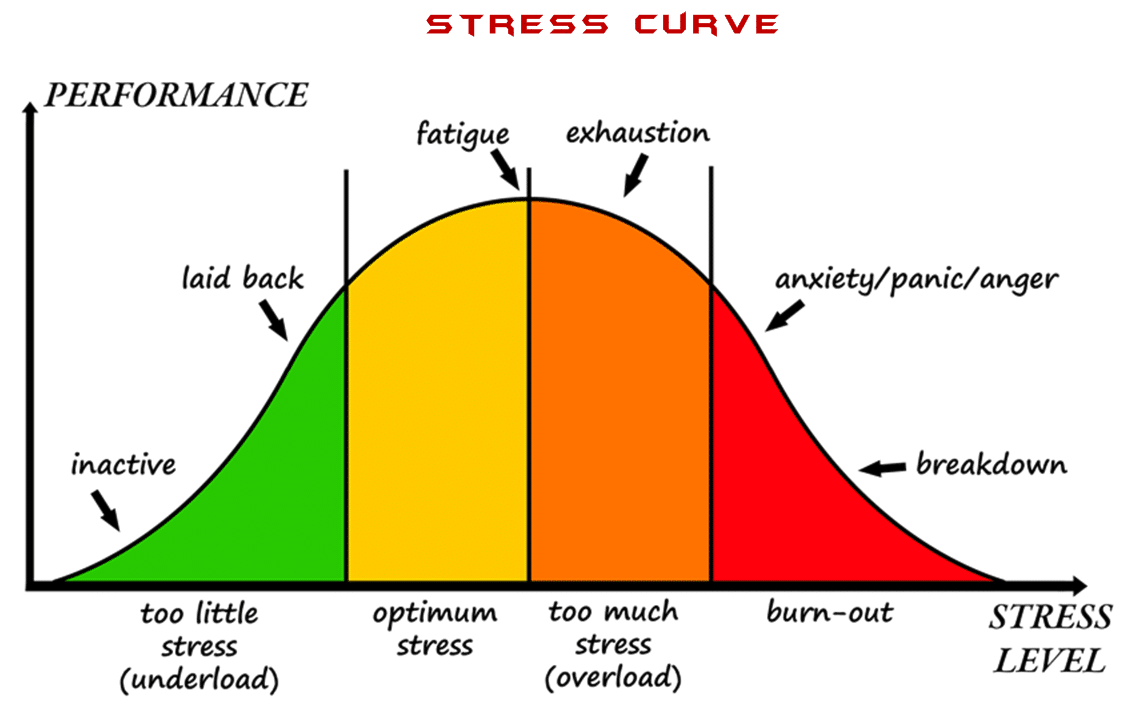
Getting back to the big loss, the experience becomes quite intense emotionally, almost as if it was burned into your brain. This is because of the intensity of those hormones present during this loss. This imprinting in your mind becomes corrosive to your trading, particularly your mindset.
You start to remember negative experiences, that may or may not have anything to do with trading. Just recalling these memories will affect your performance, but there are additional consequences.
Anytime you are analyzing the price action in real time and a new setup forms, you will with greater intensity, draw upon those negative feelings and memories, one of them being the big loss itself. This only makes you increasingly risk averse and afraid to lose, almost to an irrational level. This could happen despite a high-quality signal being right in front of you. In essence, you become paralyzed by this risk aversion, unable to pull the trigger.
Another scenario could be that you are ‘shell-shocked‘ from the trading loss, yet still are able to make a trade. Unfortunately, your trading decisions are totally off kilt. You think you see setups, and start making trades, only later to realize there was no price action setup at all. While reviewing your trades, you actually see now there was no pattern at all.
This is from a biological reaction to the stress you experienced. In some traders, without the proper tools, it becomes so damaging, that it affects them for weeks, months, perhaps even years. Some traders may never even recover from this. Even though that huge loss was ions ago, you still remember it vividly and often recall it when trading. Has this ever happened to you before?

If so, do not worry, as most have had this experience.
Can You Change This?
The good thing is you can re-wire your brain, almost like re-writing your hard drive on a computer. Neural connections can be rebuilt and tuned for success. You can also build new connections which overpower this experience, to regain your confidence and make great trades.
One Way to Change Your Brain for Success
One of the best ways to re-wire your brain for success, and erase these negative trading experiences is to enter a ‘Whole-Brain State‘. This is where your brain operates in an integrated balance. Your left and right hemispheres are working well together. You are not pumping unnecessary stress hormones into your system. You avoid entering a ‘fight or flight‘ response, or being overly emotional, or too intellectual.

In essence, your brain operates in a balance which the Whole Brain State induces. When you think about it, which state would you want to be in for trading? A fight or flight state? Being too intellectual or emotional? Having massive amounts of stress hormones pumping through your brain? Or be in a balanced whole brain state?
Yoga and meditation are notorious for helping to put you into a whole brain state, while tuning your central nervous system.
Another powerful method is ERT Training, which we’ve specifically built for traders. If you’ve had similar experiences to the ones I listed above, and still keep recalling negative trading experiences even today, then you’re likely not in a whole brain state. But if you want to learn how to be in a whole brain state while trading, then you definitely have a tool to build a successful trading mindset.