Tag Archive for: price action course

Want to Increase Your Profitability? Try this powerful approach

If you want to find high probability trades, and skip those with a low probability of working out, you’ll need to develop a core skill. Does this sound interesting? Then keep on reading. What is this skill you ask?

I am talking about trading with price action context.

Good Trading Decisions Are Based Upon Context

First, let’s define the word ‘context’. Context = understanding and approaching a situation based upon the ‘context’ (or environmental variables) around it.

In price action, the ‘context’ is a way of describing the overall environment, and using that to help you trade with the underlying order flow. We have 3 filters to understand the price action context in our Trading Masterclass Course. For the purposes of this article, we’ll talk about impulsive and corrective moves.

Impulsive and Corrective Moves

Now I’ve already done many videos and articles on impulsive and corrective moves. For a more in-depth study, you can watch this video on impulsive and corrective price action, or this article on impulsive and corrective moves. But to sum them up briefly:

Impulsive moves = large bars + majority of bars 1 color + closes towards the highs/lows

Corrective moves = smaller bars + mix of colors + closes towards the middle

An example of an impulsive move is below:

Impulsive move 2ndskiesforex

And an example of a corrective move is below:

Corrective move 2ndskiesforex

As a whole, impulsive and corrective moves communicate a lot about the price action context, such as the underlying order flow behind it.

During impulsive moves, the order flow is relatively ‘imbalanced’, meaning it’s dominant towards one side (buying/selling) which causes strong directional moves.

During corrective moves, the order flow is relatively ‘balanced’, meaning there is no strong winner between the buyers/sellers, hence the market goes mostly sideways.

Using Impulsive and Corrective Moves to Discover the Price Action Context

Now that we understand the basics of impulsive and corrective moves, we can use them to discover the price action context of the market.

As a general rule, an impulsive move (the majority of the time) is followed by a corrective move. If the impulsive move is with trend, then the next move after the corrective move will more often be an impulsive move in the same direction.

Two good examples of this are below:

Example 1: Impulsive and Corrective Moves

Impulsive & Corrective moves 2ndskiesforex

Example 2: Impulsive and Corrective Moves

Impulsive & Corrective moves 2ndskiesforex

Now what do impulsive and corrective moves teach us about price action context?

They give us an underlying sense of what the dominant order flow is. If you see a potential trend in place, along with a good series of impulsive and corrective moves, then you can feel confident the overall price action context is bullish, and thus you should be looking to buy more often than sell.

Now instead of waiting for a pin bar, fakey or some other 1-2 bar confirmation price action signal, look at the impulsive and corrective moves for trade opportunities as they will often offer you many.

You don’t need a 1-2 bar candlestick pattern to know if the market is bullish – just determine the overall ‘context’, and trade with the impulsive and corrective structure as much as possible.

NOTE: If you want to learn how to find high probability trade setups using impulsive and corrective moves, check out our Trading Masterclass course.

The bottom line is – many of those 1-2 bar candlestick patterns (pin bars, fakey’s, inside bars, etc) don’t form that often. Yet if there is a strong trend in place, why are you waiting for a pattern that may never materialize, when the overall order flow is already bullish?

Get into that trend and make some money. Just make sure the price action context is in your favor. A great way to determine this is to make sure you can read the impulsive and corrective moves.

The most favorable situation is when you are trading in the direction of the impulsive moves (not against them) because you’re trading with the dominant order flow in the market. It also means you can make money faster because impulsive moves travel farther and faster than corrective moves.

Hopefully you can now see how price action context, particularly spotting the impulsive and corrective moves, can give help you find better trade setups.

Want To Learn More About Price Action Context?

While impulsive and corrective moves are a crucial part to determining price action context, they are not the whole. We have two other key factors to determining price action context and what the dominant order flow is in the market.

To learn more about these two, check out our Trading Masterclass Course where we teach you higher, lower and multiple time frame context with clear rules to understanding them. In fact, our entire 1st section of lessons is dedicated specifically towards understanding price action context.

To get access to these lessons within minutes, click here. Inside the course, you’ll also learn how to read other critical (or more advanced) price action structures and find more trade setups.

Keep in mind, trading with price action context is a skill that works on any instrument, time frame or environment. If you’re learning a price action strategy or approach that only works on specific time frames, then it’s a limited strategy that doesn’t really understand price action or PA context.

Until then – I look forward to your comments and feedback.

What’s inside today’s trading article?

  • How to find the strongest support and resistance levels
  • What variables should I be looking for when picking my key support and resistance levels
  • How do I know how strong a major support and resistance level is?

Being able to find high probability key support and resistance levels is an important skill you’ll need to build to become a profitable trader. There is no way around this. If you’re wanting to trade price action, you’ll have to learn how to identify and trade key support and resistance levels.

One of the more common questions I get from struggling traders is “how do I find the strongest support and resistance levels?”

In this week’s trading article, we’ll answer this question, along with what variables you need to look for in finding key support and resistance levels, and how to identify the overall strength of that level.

Let’s jump in…

The Mindset Around Key Support & Resistance Levels

First off, it’s important to understand you need a particular mindset and understanding about support and resistance levels. What I’m particularly referring to here is that you have to view S/R levels ‘probabilistically‘. You cannot think of them as black or white, good or bad, going to hold, or not going to hold.

Trading doesn’t work like that, nor does price action, nor does S/R levels. You have to trade and think in probabilities. There is no way around this!

summary 1024x673 1

Just want to get this out of the way.

Also, it’s important to think of S/R levels more as ‘zones‘ and not fixed lines in the sand. This means you realize there isn’t one price where the support or resistance is broken. So you cannot think of it like “if the EURUSD breaks 1.1350, I’m bullish, but if it’s at 1.1349, I can’t be bullish“.

Order flow doesn’t work like this, nor are all large institutional players and hedge funds parking their buy/sell orders at the same price. They will often ‘cluster‘ their orders around specific prices. And it is this small cluster (or range of prices) which constitutes the ‘zone‘.

So avoid the trap of relating to support and resistance as a single price or line in the sand. Think of them as ‘zones‘ of important order flow.

How To Find The Strongest Support And Resistance Levels (in all financial markets)

The strongest support or resistance levels will more often than not be with trend. What this means is, if we are in a bull trend, pullback levels to support will more often than not be ‘stronger‘ than resistance levels above. This is because the underlying order flow in a bull trend is more dominantly on the buy side. Holding multiple tests of a with trend level usually is a good indicator of it’s level of strength.

Until the trend changes, hedge funds and large institutional players will be looking to buy more than sell, so the order flow on those pullback levels will often be ‘stronger‘ than resistance levels, which will often fold faster.

Below are a couple examples.

strong-support-levels-in-forex-holding-multiple-tests-2ndskiesforex

In this chart on the USDMXN (daily chart), notice how the resistance levels only survive a few touches before breaking, while the key support levels survive multiple touches before creating a new leg higher? This should tell you where the dominant order flow is (on the bull side) and that until you see this structure and order flow changing, you want to be trading with trend as much as possible.

NOTE: If you want to see a good example of me trading with the trend using key support and resistance levels, click on that link to watch a video of me profiting +300 pips trading S/R levels.

Another example of how a with trend support level held multiple touches is in the USDJPY (daily chart).

strongest-support-levels-in-forex-2ndskiesforex

Notice how the support levels held multiple touches in the middle. The ability to withstand multiple touches tells you the more dominant order flow is on the bull side as they’re able to handle multiple tests while holding the line.

Also notice how the last support level (~105.38) was just barely touched before producing a super strong bull move? Quick reactions that take out prior swing highs often denote impulsiveness and a strong amount of order flow present to hold the level for 1-2 candles before rocketing higher 1500 pips. So make sure to note these variables as demonstrating strength in a particular level:

  1. holding the line after multiple touches
  2. strong/short reactions from a key S/R level
  3. with trend levels will often be stronger than counter-trend levels

Now that you have a few variables to look for, make sure you build your skills in identifying these variables till they become sub-conscious.

What Other Variables Should I Be Looking For When Picking My Key Support And Resistance Levels?

Besides looking for with trend levels, another good variable to look for are corrective structures with multiple touches on both sides of the market.

A really good example of this lately has been the AUDJPY which we’ve talked about in our market commentary recently.

corrective-structures-offering-good-support-and-resistance-levels-audjpy-2ndskiesforex

Looking at the 4hr chart, you can see in the box how the price action has had multiple touches on the top and bottom of this corrective structure. What this communicates from an order flow perspective is that both sides of the market are in a state of balance, so neither side is dominant and ready to take over yet.

When you have corrective structures like this, it’s important to be trading both sides of the market until the structure breaks. This will give you a lot of trading opportunities with small stop losses (i.e. above/below the structure) while targeting the other side of the corrective structure.

In most cases, this structure would have offered several +3-4R trade setups. It is something we talked about with our members ahead of time, so congratulations to those students who profited from these trades.

NOTE: You can watch a live trade video of me profiting +160 pips trading off a key support level here.

Moving forward, you can see another example of these corrective structures on the ASX 200 1hr chart.

day-trading-setups-asx-200-2ndskiesforex

Although the levels are not as ‘clean‘ as the AUDJPY chart, the overall corrective structure is there and with a little more buffer, has offered multiple day trading setups for about +2R.

Hence learn to identify corrective structures with multiple touches on both sides of the market and look to trade both sides until the structure is broken.

In Summary

There are many tools and variables you’ll need to identify in the price action which can help you find strong support and resistance levels. Keep in mind, this is a skill that takes time to learn, so don’t expect to read an article and be a pro. You’ll have to build your skills in this over time. If you do this right, you’ll find yourself identifying and trading stronger support and resistance levels.

In our Trading Masterclass course we cover many other variables you’ll need to learn to find the best support and resistance levels. On top of the many lessons we have on S/R levels, we also have market commentary and trade ideas for our members 4x per week where we are identifying the most important support and resistance levels, so you can continually improve your skills.

To learn more about becoming a member and getting access to these lessons + market commentary, click here.

Until then, I hope you enjoyed this article on finding the strongest support/resistance levels, and make sure to leave a comment below.

Additional Articles/Videos To Study:
1) Live Forex Trading +480 Pips on EURUSD
2) Confirmation Around Key Support & Resistance Levels
3) Live Price Action Trade – Pullback To Support Level For +7R

What’s Inside?

  • What is the xStation5 platform?
  • What are the key features of this forex and multi-asset class trading platform?
  • How does the charting, feature and technical analysis of the xStation5 compare to other platforms?

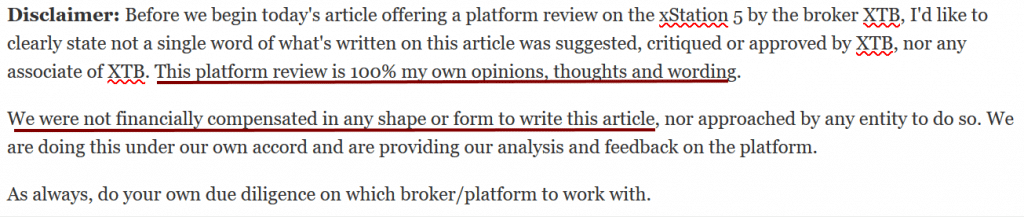
xtb disclaimer full by 2ndskiesforex

xStation 5 Platform Intro

Late last year, I was starting the process of looking for a new broker and platform to trade with. While I’ve been trading with SaxoBank’s platform (SaxoTrader Go & SaxoTrader Pro) during the last 3 years, I felt there were certain features that were missing which (IMO) were necessary for my trading operations.

I eventually stumbled upon the xStation 5 platform, and from the first few moments of using it, I realized it was one of the best platforms I have worked with over the years.

When I’m trading on any platform, there are two main areas I am evaluating every platform on. They are:

  1. Functionality – does the platform offer the functions/functionality I need to perform my trading operations on a daily basis? This could range from the simple aspects of trading/execution, to charting to analysis/statistics on my performance, etc.
  2. UX (User Experience) – what is the user experience when I start working with the charts? Are they intuitive/easy to use? Or are they bulky and confusing? Do I have to do several clicks for a simple operation that should/could be done in 1 click? And is it easy to switch from task to task?

If the above two criteria are met with my requirements for any trading platform, then I engage in a further process of experimentation and discovery with the platform using it for several months before I park my money with any broker.

I don’t want to be learning how to drive a sports car on the race track. The same goes for trading.

After working with the xStation 5 platform, I can honestly say this is a platform I’d want to trade $1MM+ of funds with and feel it can satisfy 99% of everything I’d need/want to do with trading.

FYI, the platform is available in many languages, such as:

English
Polish
Czech
German
Spanish
French
Hungarian
Italian
Portuguese
Romanian
Slovenian
Turkish
Chinese
Japanese

And you can trade the following instruments/asset classes on the xStation 5 platform:

Forex
Global Indices
Commodities
Stock CFD’s
ETF CFD’s
Crypto Currencies

xStation 5 Platform UX/Functionality

Now that I’ve shared my personal take on using the xStation 5 platform over the last 6 months, it’s time to get into the UX, functionality, along with the pros/cons of it.

The xStation 5 platform is a web based trading platform, which IMO is where platform technology is moving.

This is the xStation 5 platform when you login.

xstation-5-base-platform-image-2

From the moment I opened the xStation 5 platform, I was super impressed by how easy it was to use and navigate. I didn’t watch a single video, nor read one tutorial on how to use it, yet I was able to do 90+% of everything I wanted to within minutes.

The main color themes it comes in are black and white (I prefer white).

Below is what they call the ‘Market Watch‘ screen which is one of the ways you can place a trade.

xstation-market-watch

It is fully customizable by instrument and asset class which you can seamlessly change through. You can also search directly in this market watch section for any of the 2000 instruments available.

I also like how they group the different sub-categories within each asset class. So for trading forex pairs, they have it broken down into major forex pairs, minors, and EM (emerging market) pairs.

Stock traders will also love this as they have the stock selections separated by country (see below).

xstation-stock-market-watch

The easiest way to describe the market watch UX and functionality is simply ‘user-friendly‘.

xStation 5 Charting

Next is the charting features which are either embedded within the platform, or can be detached so you can put your charts on a separate monitor.

I prefer this setup because I trade with several monitors (3) and like to have my platform on one monitor, and my charting on another.

You can open several tabs/charts which can be viewed individually (full screen) like the one below:

xstation-individual-chart

…or have them in a grid of your choosing.

xstation-grid-chart-image

Do you noticed that ‘+‘ sign in the bottom left of the chart? That is what you click on to add a chart.

The charts are flexible, customizable and easy to learn. Any newcomer to the xStation platform should be able to figure out most charting operations within minutes.

I won’t go into all the charting features available, but by and large, I’ve yet to see a chart feature I need on a day to day basis that this platform doesn’t offer.

Open Positions & Pending Orders

Your open positions tab is pretty straight forward and customizable so you can add/delete certain data points at your discretion.

xstation open-positions-tab

NOTE: Those are a couple of my open trades. You’ll notice both are in profit 😉

xStation 5 News/Calendar/Analysis/Education

Rounding off some of the standard features in most platforms today are the news/calendar/analysis/education features.

They provide up to date news in the global markets so you can stay apprised of any market moving announcements or data coming out.

xstation news feature

The calendar is simple, intuitive and will give you all the economic announcements per country, time, currency its most related to, along with the forecast, previous numbers and actual posted numbers.

Market Sentiment

Market Sentiment is a really interesting feature as it displays the overall open position status for all of XTB’s clients.

xstation-market-sentiment

Top Movers

Top Movers shows you which instruments had the biggest moves % wise per day/week/month which I find to be a very helpful feature to spot where volatility is increasing and thus providing potential trade setups.

xstation-stock-trading-analysis

Stock Trading Analysis

Stock traders will love the stock scanner which shows the instruments of your choice by country/industries, and allows you to narrow down what you’re watching based upon market cap, EPS, P/E values, dividends, ROE and BETA.

xstation-stock-scanner

The heat map is just an extension of the top movers in a different graphical form.

There is also a small amount of educational videos and a trade history showing all your closed trades. The education section is somewhat limited, but the history tab is easy to understand and you can export your data to an excel/CSV file.

Trading Statistics

Lastly, the platform offers you some trading statistics, such as:

  • Overall profit/loss
  • Broken down by instrument
  • % Accuracy (all/buy only/sell only)
  • Avg. Trade Duration
  • Avg./Max consecutive winning/losing trades
  • Avg./Max profit/loss on winning/losing trades

While I would like any platform to offer more trading statistics than this, I find it sufficient for any beginning/intermediate trader to work with.

In Summary

Overall I find the xStation 5 platform to be one of the most user-friendly platforms available today whether you are a retail or professional trader. All but the institutional trader will find this platform with one can need/use/want.

You can seamlessly navigate between the different panels which makes your every day user functions and experience feel effortless. I feel they could improve their offerings for automatic trading and back testing strategies, but the overall UX/functionality makes this platform a must try for all but the most algorithmic heavy traders.

xstation base platform image 11

Hence if you haven’t tried the xStation 5 platform, I’d highly recommend you give it a go and see what your experience is using it. Compared to MT4/5, I find this to be a superior platform for everyone but algo/EA traders.

If you’d like to sign up for a free demo account, you can click on any of the two links below:

For UK/EU Clients, click here
For Non-UK/EU Clients, click here

BONUS OFFERING: If you’d like to get my price action course for FREE, you can do so by clicking on this link to learn more about the requirements.

Full Disclosure: 2ndSkiesForex does not receive any fees/commissions/remunerations based upon your trading activity with XTB. We may receive a 1x fee for referring any new clients who open up an account with XTB and fulfill certain requirements.

With that being said, please make sure to leave a comment along with your feedback from using this platform below.

Until then – I sincerely wish you real growth and success in your trading.

This is part 3 of a 4 part series. Listen to the last one here: Don’t Fight or Trade Like This, or if you missed the previous one, checkout The Blind Entry (How It Will Leave You Trading Blind)

I’ve shown over the last few content pieces how the idea of confirmation in price action is an illusion. This video demonstrates that when retail traders are getting in the market, professional traders are already in profit.

Here’s the transcript for the video:

“Hello, traders here.

Chris Capre, 2ndskiestrading.com.

So I’ve recently shown over the last few content pieces how the idea of confirmation in price action is an illusion and it’s not what professional traders are looking to enter the market.

I’ve also shown how entering on a 50% retrace tweak entry on a pin bar is a sub-optimal or retail entry.

I think it can be easily said that when retail traders are getting in the market, professional traders are already in profit.

This video further demonstrates this about the pin bar entries, such as the 50% retrace entry, or the sell on break being also a retail or sub-optimal entry.

Now, I’m going to use an example here from a live trade I’m in right now and this is one that I’ve discussed in my members trade setups commentary in the price action course.

So, I sold right at this resistance level.

I felt like we’re still in a range type structure and that if the market protruded up to this resistance right over here, that sellers or offers would enter the market and push the pair back down.

And that is exactly what happened. So I got in at 1.4975 and literally it was about 6 pips off the intraday high.

And so I put a stop just above these little wicks right over here, particularly this one here, which left me with a 30 pip stop.

Now, I’d like to compare this entry versus the 50% retrace entry or sell on break so that you can see the differences.

Now, going to another chart here, first off using the 50% pullback entry here, you would’ve missed this trade completely.

So according to the faux authorities on price action, particularly Nial Fuller, the next entry would be the sell on a break of the lows here.

In fact, pretty much every other person who teaches the cut and paste or carbon copy version of price action that you see out there, especially around the pin bar, would all say you either sell on a retrace or you sell on a break of the lows.

Now, this gives you a much worse entry, and about as late or a retail entry as you could possibly get. So that puts you in at about 1.4943, roughly.

Now, assuming in most cases we’re going to have the same stop, just above this here, most of the time we’re gonna have the same stop on the same type of entry.

You are going to need a 70 pip stop compared to my 30 pip stop which is at 1.5003. So you need 70 pips, I have 30.

Now, just from a risk to reward perspective, when you are hitting +70 pips or +1R which would put you at 1.4863, that’s right about… that’s actually below the intraday lows.

So this right here is your intraday, that would be your +70 pips or your +1R.

When you are hitting your first +1R, my entry at 1.4975 is up already 112 pips, is at +4R. So now the moment you’re getting your first R, I’m already up 4 times that.

In fact, by the time your entry in the market right here at 1.4933 which is a pretty razor sharp entry if you’re selling on break, I’m already up +40 pips from my 1.4975 entry. Or in this case, +1.33R.

Again, coming back to the perspective that it is

“more often a professional is already in profit when a retail trader is entering the market”

you can see the differences quite clear here between the two entries.

But let’s play a little fantasy here. Let’s say that the market pulled back magically to your 50% level perfectly.

Let’s say you got the absolute highest uptick on the pullback. The best possible entry in the trade. It just happened to go there. That would be 1.4958.

Now, again, assuming most of the time we will have the same stop loss placement, your stop loss is 47 pips if you put it at 1.5003 whereas mine is still 30.

So when you are hitting your first +1R at 1.4910 which is right about here, there, so when you’re hitting your first +1R, at 1.4910, I’m already up 65 pips or +2.16R.

So, with that being said, it should be very clear, especially with all the other content I’ve posted before this, it should be very very clear the differences between a professional trader’s entry and a retail entry, especially being offered by the faux authorities on price action.

If you want to continue to have sub-optimal retail entries, then you can use the 50% retrace entry.

But if you want an entry location that gives you better accuracy and a higher +R per trade, many times double the +R available, then you’ll want to adjust your entry method.

And this is what I teach in my price action course, particularly how to get plus high R trades like this.

Now, if you found this video lesson useful, please make sure to like, share and tweet it below, and I’d love to hear from you what “a-ha” moments you have from this video.

So please come over to see this video on my website as well at 2ndskiestrading.com where all the discussion is happening and leave your comments there.

But thank you for watching this video, again my name is Chris Capre at 2ndskiestrading.com, where I teach you how to increase the way you trade, think and perform.”

Now that you’ve seen the video and had a chance to analyze the two methods and how they perform differently, which one wins?

What do you think? Please share and comment below.

This is part 3 of a 4 part series. Listen to the next one here: Don’t Fight or Trade Like This, or if you missed the last one, checkout The Blind Entry (How It Will Leave You Trading Blind)

Earlier this week I had a private skype call with a profitable student of mine (we’ll call him ‘Joe‘ for the purposes of privacy & this article). One of the major benefits of becoming a member of our price action course is you get a free skype call with me whereby I analyze your trading performance across a baseline of trades, and give you direct feedback across 20+ metrics to find leaks, patterns of your behavior that are hurting/helping your performance, and how we can refine your trading plan to make more money.

I recently highlighted one profitable student (Sam) who made +11% profit over 2 months using exceptional risk management (see image below):

sam-profitable-student-2ndskiesforex

Now if you look at the performance and equity graph above, Sam was a consistently break even trader until we did our skype call analyzing his performance and giving concrete recommendations for how to improve his trading. Two months later, he had a breakout performance with his most profitable months of trading to date.

Meet Joe Black – The Profitable Trader

Joe, whom we talked about earlier, is also a profitable student of mine who had performed exceptionally well from mid-September till the end of the year, making +22% profit over 4 months, even while having a 10% draw-down!

Here is a snapshot of his equity graph during that time period.

joe-profitable-trader-2ndskiesforex-equity-graph

Now before we analyze his performance since then, I’d like to point out the stats and highlights:

Total Profit/Loss: +22.25% (shown above in equity graph)
Avg. +R Per Trade: +3.23 (image below)
Total # of Trades: 149 trades (image below)
NOTE: 149 trades over 4 mos = 37 trades per month – try getting that many trades and feedback trading pin bars and confirmation price action signals)
% Accuracy: 33.6% (image below)
Profit Factor: 1.63 (image below)

joe-profitable-trader-2ndskiesforex-avg-r-per-trade
Risk of Ruin: ZERO (image below) NOTE: If you do not understand what the risk of ruin statistic means, click here.

joe-profitable-trader-2ndskiesforex-risk-of-ruin

Instrument Performance: Total of 5 instruments that gained +2-5% profit, while only 1 instrument with a 2% dd (image below)

joe-profitable-trader-2ndskiesforex-instrument-summary

Risk Management:  .5% risk per trade (which showed excellent discipline here)
Total Return: +44R!

Summarizing Joe’s Trading Performance

When you examine the above statistics, Joe performed exceptionally well and had a fantastic quarter to end the year. In fact, his +22% gain over this time period would have beaten out most hedge funds yearly performance, so kudos to Joe.

And Then…The Drawdown

While Joe beat out most hedge funds last year, this year has started on a different note. Since Jan. 17th, he’s down about 11% (see below).

joe losing performance equity graph

While some things in Joe’s life has changed, and had some negative effects upon his trading mindset and performance, something else seemed amiss behind the night and day change. Joe reached out to me to see if we could do another Skype session and analyze his performance, so we dug into the numbers.

Now tell me what seems out of whack below with the stats:

joe losing performance avg r down

Total Profit/Loss: -11.45%
Accuracy: 13.9% (image below)
Avg. +R Per Trade: .99R (image below)
Profit Factor: .16


As you can see, all the stats are down, but which ones stand out the most? The accuracy being down isn’t helpful, but what is more damaging is his Avg. +R per trade went from +3.23 to .99! That is a drastic difference.

Regardless, accuracy is always in flux when it comes to performance. % accuracy usually operates within a range for traders. It never stays fixed from year to year. So if you’re 54% accurate in one year, the chances of you ending up 54% accurate in the next year is slim to none – don’t bet on it happening!

losing money trading

When I saw Joe’s Avg.+R per trade was down, I immediately started to wonder ‘why‘? If accuracy goes down (it happens) it will obviously affect your overall performance. But why would Joe’s Avg. +R per trade go down? Why would a trader be getting less per trade then their past 149 trades?

There could be many reasons ‘why‘, but to name a few:

1) you’re taking profit too early/earlier than you were before
2) you’re not feeling confident, and thus trying to close any trade for profit instead of letting it run

I could honestly list a litany of reasons, but the summary tab (which analyzes performance per instrument) was the most revealing (see below):

joe losing performance instrument summary

First off, his biggest losing instrument was the NZDCAD which accounted for 40% of his total losses! It’s important to note Joe wasn’t even trading the NZDCAD in the prior 4 months. So he was including a new trading instrument into his trading plan.

Upon further questioning, I uncovered another ‘reason‘ why his performance had slipped so much. Joe had developed a bias on the CAD as a whole. He felt the CAD was about to move into a place of strength, so was bearish on any XXX/CAD pair across the board, including the NZDCAD.

Despite losing every trade on the NZDCAD (10 total), and the price action charts continually ranging or climbing, he held onto his bias and was continually shorting. This obviously had a negative affect upon his performance (holding onto a bias, regardless of what the charts are communicating rarely ever works).

not enough capital to trade

Accuracy Gaining/Declining Shouldn’t Affect +R

Accuracy going down shouldn’t translate into you to going for much smaller targets. Your overall +R per trades should remain stable regardless of you performing well or not. If you consistently go for +2R, winning and losing shouldn’t change this.

Now there were a lot of other metrics Joe and I went through on our private skype call, but two things that became evidently clear were:

1) Joe had made some major changes to how he traded, and

2) Joe needed to have that skype call with me.

This is why I cannot over-state the importance of having a trading mentor. And it’s not just about having a trading mentor, but about having one who can look at your individual performance, and help you see what you’re missing that’s causing you to not get the maximum profit out of your skills and price action trading.

This feedback model I have with my students has been a game changer. I’ve turned break even traders to become profitable traders. I’ve turned losing traders into winning traders. I’ve helped students like Joe spot major issues during a draw-down, and help them correct course. If Joe hadn’t reached out to me, he could have easily kept trading and losing more money.

trading mentors 2ndskiesforex

Hence you have to look at what is the feedback model you’re getting from your trading mentor, and how much can that change your performance. If you’re not getting any analysis and feedback from them, then your trading mentor is just an information dispenser. And without analytical feedback, how would you ever know what mistakes you’re making, and how to correct them?

Thus ask yourself – how valuable would such feedback be for your trading to have an analytical session with your trading mentor digging into your performance, and finding patterns in your trading and numbers you didn’t even know existed?

Is that worth a few hundred dollars, let alone being taught the skills and trading strategies to make money?

In Closing

With that being said, if you’d like to learn how to become a member of our price action course, where you’ll get this type of feedback, along with access to our members market commentary & trade ideas, members trade setups forum, and over 60 hours of trading videos and lessons, click here.

Please make sure to leave a comment and share this with anyone you think will benefit from this.

Until then, I hope you’re seeing real change in your trading performance and mindset.

What You’ll Learn In This Article:

-why most online trading courses fail to give you enough data
-how we use quantitative data to improve your trading
-where we see technology being used to give you more quantitative data for your trading

When you survey most online trading courses and mentors out there today, about 97-99% of them fail to give you an essential component for your trading success. They fail to give you quantitative data to improve your trading performance.

The majority of courses just give you ‘information‘, so they give you lessons, pdf’s, videos, etc. But almost none of them actually require you to compile and build quantitative data around your trading performance to analyze it, then give recommendations based upon statistics and proper data.

To be clear, when we say ‘quantitative data‘, we are not talking about robots, quant trading, etc. We’re talking about hard data that can be taken from your trading and trading performance, which can be analyzed and utilized to identify your weak points/strengths, then make adjustments to your trading plan based upon the data.

Why Most Online Trading Courses Fail To Give You Enough Data

In my online trading courses, such as my price action course, we offer all members a free ‘Trading Analytics‘ session whereby I analyze 20+ metrics on a students trading performance to spot leaks, weaknesses, strengths, how close they are to becoming profitable, and what changes they need to make this happen. I then do a private skype session with this student and share my findings, recommendations, and what they need to change to become a profitable trader.

However, even I myself can find weaknesses in this model. This is because trading is a skill based endeavor which requires a proper trading feedback loop.

A feedback loop is a process whereby you perform an action (trade demo/live), your actions produce results (profits/losses/accuracy/risk, etc), and those results are analyzed and turned into feedback which is given back to the student.

feedback model 1

Professional athletes have proper feedback loops, and its one of the biggest reasons they are so successful. This is because they’re getting constant feedback backed by data on how they’re performing, and how they can improve. You can see this below from the Tom vs Time series.

Tom Brady of the New England Patriots is considered to be one of the greatest quarterbacks of all time. He’s won the most Super Bowls of any quarterback (5), and is still playing at an elite level at the age of 41.

In the 2nd episode called The Mental Game, Tom is getting feedback on his throwing arm about 2 minutes in.

Keep in mind, he has one of the most accurate arms in the game, and still throws the ball like he did 10 years ago. Yet he’s getting continual feedback on his throwing mechanics to continually improve them. This is a proper feedback model, and it’s something all professional athletes get and know they need to stay at the top of their game.

tom brady getting feedback on throwing arm

With that being said, why should trading be any different?

Now while my feedback loop through the trading analytics session, and analyzing students trades, questions, etc. is good, it needs to go to the next level.

All professional grade feedback loops have the following characteristics:

1) quantified
2) automatic
3) ongoing
4) responsive
5) continually updating

When I analyze my feedback loop and process for my members, I realize its not automatic, is quantified, is voluntary, is ongoing, and is continually updating.

So I’m missing the automatic and non-voluntary aspects to my trading course and feedback model.

Granted, I cannot force students to give me their data, hence making it tough to be non-voluntary. And I cannot (as of yet), make this process automatic. Hence, even my courses and feedback models have their limitations.

Regardless, if you want to become a peak performing trader, you’ll need the above 5 characteristics of a professional grade feedback loop.

How We Use Quantitative Data to Improve Your Trading Performance

One of the most critical aspects of our online trading courses is the Trading Analytics session I do with my students. It’s the first time I can look at their trading over a period of time, and analyze their risk mgmt, Avg. +$ per trade, % accuracy, risk of ruin (RoR), and many more metrics about their trading.

The majority of my students trade on platforms that connect with myfxbook, so I have them connect their accounts to myfxbook which provides me the data.

Just from looking at the data, I can see their habits, level of discipline (or lack thereof), whether they are following their trading plan, entry locations, stop loss placement, trading with trend (or counter-trend) and more.

The data alone allows me to peer into your trading performance, habits and trading mindset, all via the numbers. The great thing about it is I can tell how close someone is to breaking through and being profitable.

Hence we use quantitative data to improve your trading performance. One simple data point I often examine is their ‘summary‘ tab (image below).

summary tab myfxbook 2ndskiesforex

And below this is the student’s performance since the beginning of this year on a live account (over +10% profit).

profitable traders myfxbook 2ndskiesforex

Now, when you look at the summary tab, you’ll see this traders entire performance by instrument since the beginning of this year. If you examine it closely, you should find something really useful.

This trader and student did incredibly poorly on the GBPUSD. They made a total of 8 trades (not a huge baseline by any means), and didn’t win a single trade. On top of it, their total losses for this pair alone (-$83.12) is larger than their next biggest losing pair by almost double the amount (EURJPY -$48.33).

The thing is, if you just look at the equity curve, you’d think everything was fine and there wasn’t much to change. But analyzing the data can reveal these things.

Now considering this account started at around $3000, if they had not traded this pair at all, they would be up another +5.4%, so almost a 50% increase from their +10% performance thus far. Add in the EURJPY pair, and now we’re talking an additional +8.8% added to their bottom line. That’s a huge shift in performance (+80% better return) which can make you a lot of money over time.

saving money trading 2ndskiesforex

Most traders don’t even know this tab exists, let alone analyze it to see if there are some real under-performing instruments affecting their account. You can also take the flip side of this and trade the pairs/instruments you are most profitable with, thus maximizing your edge.

The great thing about this is it helps me find weak points and strengths within any particular trading plan, and make adjustments accordingly.

I usually follow up with my students every 3 mos and re-analyze their myfxbook accounts so I can see how their performance is changing over time as we make new recommendations.

If your trading performance is up from my recommendations, then I know we’re on the right track and can continue refining your trading plan over time. If we take a step back, then we can analyze individual variables to see which may be causing the under-performance, and make adjustments.

This is just one of 20+ metrics I analyze on all my students so we can use quantitative data to improve your trading performance.

Now ask yourself this:

If you’ve taken multiple trading courses from various forex trading mentors, how many of them are doing this type of analysis and quantitative data to isolate areas where you’re under-performing, and help you make adjustments? My guess is your answer will be close to zero, and maybe 1-2 at best.

I feel this is just a small way we continue to separate ourselves from other trading mentors, because we use actual data to analyze your performance over time, and help you make the adjustments needed to become a profitable trader.

How Technology Can Be Used To Get You Quantitative Data For Your Trading

using technology for trading

While I think myfxbook is a fantastic tool, it is by no means sufficient. In fact, out of all the trading technological tools out there I’ve seen, I feel they are all limited in their application and what they can tell you about your trading performance, and what you need to change to make money trading.

When I look into the next evolution of trading education and online trading courses, I feel we’re just scratching the surface of how we can use technology to improve your trading performance.

What if we were to use technology to specifically test your price action trading skills over time, and demonstrate what parts of the price action you’re analyzing correctly, and missing completely?

What if we could tell you the optimal number of instruments you can trade to become profitable, and how many is too little, or too many?

What if we could tell you how you react to the price action of different instruments, and could recommend specifically which types of instruments you are most likely to make money trading (or lose money on)?

Would those be valuable tools for you to invest in? Would that be worth spending money on? My guess is yes, and we’re just scratching the surface of what technology can do to help you become a profitable trader.

My sentiments are that the future of trading education will no longer be about pdf’s, videos, and webinars, but about how we can use technology to improve your trading performance and turn you into a profitable trader.

Now Your Turn

How much quantitative data are you analyzing about your trading performance to make adjustments? Is your trading mentor even looking at your trading statistics, and giving you specific feedback based upon actual data? What ways can you see technology improving your trading performance?

Make sure to leave a comment below because I’m always looking for new ways to help more traders become profitable.

What you’ll learn in this forex trade plan article:

-How do you build a successful forex trading plan?
-How do you evaluate whether your trading plan is working?
-Why you need a forex mentor to help with your trading plan

One of the more common questions I get from traders is “how can I build a successful forex trading plan?” If you’ve had this question before, or feel your trading plan is not sufficient, confusing, or not working, then pay attention because this article will answer your questions directly.

From my experience, you will need (at a minimum) these 5 major components to be in any successful forex trading plan you make. Let’s go through them.

#1 Your Why

From my experience, you need a ‘why‘ as to why you’re doing this. It should be the ‘core‘ reason and inspiration behind why you’re trying to become a successful trader.

For most traders, the why is simple:

“To build financial independence while working from home, having more time to spend with your friends, family, while determining your value and income, and having no limit to the upside you can make.”

Would this pretty much encapture the main reasons why you want to become a successful trader?

Now there is certainly a deeper discussion we can have about your ‘why‘ and what you think it will give you, but for now, my guess is almost all of you fall into the above reasons why you’re wanting to become a professional trader.

your why

The reason why I suggest getting really clear about your why is it will remind you (no pun intended) why you are doing this, but more specifically, why you should work hard to achieve your goals. This is helpful when things are going wrong as that is when you need a boost in motivation and connection to your why.

By having a personal and emotional connection to your why, you’re more likely to stay focused and keep going when things are challenging.

#2 Daily Preparation

Ever watch a professional sports game, particularly before the game starts? What do you notice if you turn on a football game a few hours before it starts? You’ll see the same thing across pretty much every sport on the planet.

All professional athletes start hours before the actual game/contest doing one thing: Preparation!

They are preparing their body and mindset to get ready for the game ahead. Take a look at this 30 second video of Odell Beckham Jr. (American Football Player) getting ready before his game.

What do you see him doing? Rehearsing the exact same things he’ll be doing in the game (running routes, making cuts, catching passes). Keep in mind, this is after he’s done his stretching and exercise routine to get his body warmed up for this.

Now I have one simple question for you: “Do you think trading should be any different when it comes to preparation?” 

The question is mostly rhetorical, however when I quiz most struggling traders about their pre-trading routine, its usually very minimal at best.

Now I know many of you have full time jobs and lead busy lives, and perhaps only have 1-2 hours per day to trade. If that is the case, then I’d suggest spending at least 15 minutes preparing mentally for your trading day. This should be finely crafted into a very specific routine you execute day in, day out.

What should you be doing during this preparation phase of trading? At a minimum:

1) getting your mind (and ideally body) in an optimal state for trading
2) mentally rehearsing everything you need to do during your trading day
3) after you’ve done the above, then starting your pre-trade routine

The above is what I would call a ‘sufficient‘ and ‘expedient‘ way to prepare for your trading day and get you in a mindset + state to make money trading.

#3 Core Trading Mechanics

Now that you’ve 1) connected with our ‘why‘, and 2) mentally prepared for your trading day, it’s time to sit down in the chair and start trading your edge. However, you need to clearly lay out what you are trading, and how. These are your core trading mechanics and a blueprint of what you’re trading.

mechanics blueprint

In this part of the forex trade plan, you need to cover the following:

1) markets/instruments you are trading (should be fixed in the beginning until you’re at least stable or consistently profitable)
2) what strategies are you trading (these should be very clear what you are trading, along with the parameters/conditions for each strategy and setup, such as entry, SL and TP conditions)
3) what time frames you are analyzing the price action context and making your trading decisions from

In the beginning, I recommend trading no more than 5-10 instruments (less is usually better in the beginning) so you can learn their price action, volatility and order flow patterns by watching the same instruments day in, day out.

Gaining familiarity will allow you to find more trading opportunities in those instruments over time, and thus profit more.

You’ll also need to know exactly what trading strategies you are using day in, day out so you’re very clear about what setups you should be focusing on, and what you should let go of.

Forex Trading Tip: Once you know what strategies you are using, make sure you have screenshots of those setups (ideally you trading them successfully live) so you can imprint these patterns and charts into your brain. This way when that same pattern in the price action shows up, your brain will (sub-consciously) tell you “Hey, that’s a good trade, you need to jump on this.

#4 Risk Profile

This part of your trading plan is all about risk, and risk is all about the numbers (mathematics). It’s a confluence of the risk required to make a maximum amount for each trade, your risk tolerance and risk capacity.

risk profile 2ndskiesforex

There are several things which will help determine your risk profile in your trading plan, such as:

1) % risk per trade
2) max risk per day
3) max risk per month

NOTE: If you want to learn why we recommend a % risk based model, click here.

Regardless, you’ll need to know exactly what you’re risking per trade and it should be consistent. This is because you could be varying your position size, but if you increase size on your losing trades, and decrease size on your winning trades, you’re leaking your edge (losing money where you shouldn’t be).

Since you don’t know whether your next trade will be a win or a loss, you need to be risking a fixed % per trade.

I also recommend having a max risk per day so you can shut things down if you’re off for that day. This will minimize your downside when not on your game.

In terms of your max risk per month, this is the same concept as above.

Trading Tip: If you want to avoid having major draw-downs you’re unlikely to recover from, we recommend having a max risk per month <10%. For every month you have a 10%+ drawdown, you decrease your chances exponentially you won’t recover your losses by year end.

Also in your risk profile, you should be aware of your risk of ruin, which tells you mathematically a) whether your account will blow up, or b) whether you’ll mathematically make money. So critical you understand your risk of ruin.

risk of ruin table 2ndskiesforex

If you want to learn more about the risk of ruin for trading, click here.

#5 Analytics & Review

Every successful trader reviews their trading for the day. Just like an athlete reviews film from their past games to see what they could improve upon, you have to have a process for reviewing your trades each day/week/month.

A simple way to relate to this is:

“You cannot change what you cannot measure.”

(Pro football players reviewing film below)

pro football players reviewing film

If you don’t measure and review your trading performance in detail, you’ll continue making the same mistakes over and over again. Have you had this experience? If so, most likely you’re not reviewing and analyzing your trades and trading performance properly.

I recommend the following:

1) spend at least 15mins each day reviewing your trades for the day
2) spend at least 1hr per week reviewing your performance and execution for the week
3) spend at least 1hr per month reviewing your overall stats

What should you be reviewing?

1) charts for each and every trade, showing the price action context before the trade, along with your trades entry, SL, TP, & the result
2) how well did you execute your trading plan (were you over-trading?)
3) what was your performance (stats) for the month and how does that compare to your baseline?

By having a time to analyze and review your performance, you’re teaching your brain to spot the habits and actions which led to making successful trades, which further reinforces good trading habits.

In Closing

These are the 5 major components you’ll need for any trading plan you create. There is a lot more that could be said on the subject, but this should give you a solid framework to build your own trading plan.

In the beginning, you’ll need to do some experimenting to tease out what feels more natural for you. I recommend doing this in 3 month chunks so you don’t change your plan too often, and give it enough time to play out.

Eventually, you’ll likely need some feedback on fine tuning your forex trading business plan. This is where a forex mentor really helps, because they can see things you’ll likely be missing, and can give you actionable insights on  how to increase your profits, accuracy and performance.

Below is one of my students first quarter performance for this year whom I’m constantly helping with their trading plan.

trading analytics 2ndskiesforex profitable traders

If you’d like to learn more about our Trading Masterclass course and how we can help you build a successful trading plan, click here.

Now Your Turn

Did you learn something from this trading plan article? Notice anything lacking in your current forex trading business plan? Feel like you have a more clear idea how to build a successful forex trading plan?

Make sure to leave a comment below, and share this article on social media.

Until then, I’ll look forward to hearing from you.

Additional Resources: What if your trading plan is costing you money?

I wanted to write a brief trading mindset lesson for today as I’ve been ‘out of pocket‘ for days now. I recently caught a nasty flu virus that has taken the piss out of me.
Fever, sneezing 100x per day, congestion, phlegm, cold shakes, trouble breathing, you name it, I’ve had it for the last several days. Luckily my girlfriend has been awesome in taking care of me, so a big shout out to her (if she actually reads this :-o).
Speaking of which, my girlfriend actually inspired this short trading mindset lesson.
The other day, the fever really set in. To me, this is a bad situation and experience. Who thinks getting a fever is a good thing?
However my girlfriend said something which got me thinking about trading. She said, “Oh, the fever is a good thing. It means your immunity is really kicking in to fight off the virus.
Immune System
And that got my mind thinking about my process of making money trading, and those who struggle to make money trading (perhaps you are one of them?).
If you are struggling to make money trading, you’re probably experiencing ‘symptoms’.
These could be:

and more…

Have you experienced any of these trading mistakes or symptoms?

Most likely you have, and I did just like you do now.
There is a reason you experience these trading symptoms.
Your brain right now has a 99% chance it isn’t wired to make money trading. This has to do with our brains evovled and development over time.
Evolution
Right now, you have many components and neural structures in your brain. Some of them are new, such as the pre-frontal cortex, which allows you to make analytical decisions (i.e. reading the price action context in the chart).
Some of these structures on the other hand are very old, like millions of years old. One of them is the amygdala, and it is one of the most frequent actors to cause you to trade poorly.
Amygdala
Why? Because for most of our human existence, we experienced life threatening situations as a daily occurrence.

Think about this fact:

1 in every 8 lads died from protecting our families and resources 10,000 years ago.
In the 20th century, that number is 1 in 100 (I’ve written another extensive article on this subject which you can find here).
Fight or flight

Why does this matter to you as a forex trader?

Because of this experience, parts of our brain (such as the amygdala) are heavily wired as if we’re dying at a ratio of 1 in 8. This wiring causes us to experience things today, even though it’s not reflective of our current reality.
So you today right now in front of the charts are trading with old parts that aren’t accurate, nor wired to make money trading.
Your amygdala has several functions, such as:

  • Having a primary role in the process of memories
  • Decision making
  • Emotional responses (more negative than positive)
  • Along with affecting your reward systems

Now think about the above 4 things for a moment.
Let’s say you have an emotional response to trading, such as opening a trade, and the market instantly goes against you. What’s the first thing you’ll likely experience? Doubt, fear, worried about a loss, etc.?

Do you struggle with these emotions while trading?

That’s your old amygdala and wiring affecting your trading performance now.
In fact, your amygdala can get so easily triggered, that every pip the market moves against you is experienced way more intensely than every pip it goes for you.
Have you experienced this before? If so, you’re experiencing the ‘symptoms’ of your old neurological wiring.
Now circling back to being sick and having symptoms, when you experience FOMO, revenge trading, start over-trading, get worried about a profitable trade starting to go against you, etc…you’re experiencing the ‘symptoms’ of your brains wiring, which by and large, isn’t currently wired to make money trading.

When my girlfriend told me the fever is a good thing, my initial reaction was:
“What? Why the heck is feeling like I’m burning alive a good thing?”

But this was simply my immune system kicking in and trying to fight off the virus.
And that is very much how your trading symptoms are. You see, you and your brain want to make money trading. You want to experience less negative emotions, you want to avoid over-trading, you want to be able to trade without being worried of missing out.
You experiencing these things is your brains way of telling you ‘something is wrong, I think this is a bad situation’ but in actuality, it’s not.
You and your brain want to evolve, fix your trading mistakes, and make money trading.
But you can’t until you start to change how your brain is wired.
Brain
The good thing is, you can wire your brain to make money trading, but currently, you’re experiencing these ‘symptoms’, and you’ll need to make adjustments to get better.
If you want to learn how to make money trading and rewire your brain for trading success, then check out my advanced price action course where we teach you how to fix your trading mistakes and make money trading.
And if you’re really hard core about changing your brain and wiring it for success in trading (and life), then check out my advanced traders mindset course, where the entire focus is on changing the way you think, trade and perform so you no longer over-trade, you no longer experience FOMO, you no longer revenge trade, and no longer get derailed by your negative emotions in trading.
traders mindset course 2ndskiesforex
I hope you enjoyed this brief article on the trading mindset and how to fix your trading mistakes.
Also a big shout out to my apprentice ‘Sascha‘ who helped me finish this while being under the weather.
Make sure to comment, along with sharing it with others as sharing is caring so that others don’t have to make the same mistakes you and I have in trading.
Time to wire your brain to make money trading.

What’s Inside?

-Tell me about your instruments
-When not to trade breakouts
-Let’s look at where you take profit

In the world of forex trading, if you’re not making money now (over a decent period of time), most likely you have to make some changes. To make money with forex, you will probably have to change the way you think, the way you trade, and the way you perform.

In today’s article, I’m going to share with you 3 things that will make you more money trading. If you want to improve your trading performance and make money on forex, consider making these 3 changes to your trading now.

#1: What Kind of Instruments Do You Play?

As of today, I’ve seen over 10000+ myfxbook accounts. Now I have an important question for you.

Out of all the students who’ve given me a myfxbook account for their first time, how many of them were trading only instruments they profited with?

Any guesses?

If you said ‘zero‘, you were correct.

Think about that for a moment…the first time you use myfxbook and start tracking your trading stats, the chances you’ll profit on every instrument you trade is likely zero!

In other words, you’re trading forex pairs and instruments you are not profiting from, and most likely won’t.

Below is a screenshot of a live myfxbook account for one of my students ‘Ahmed‘ (who’s well in profit).

instrument performance myfxbook

Notice anything? He’s lost every trade on the AUDJPY.

Now as long as you have a decent amount of trades for an instrument, if that instrument you’re trading has all losses, you should remove it from your trading plan and not trade it again for at least one year.

By taking off the instruments you have the most losses with (from my experience), can add between +3-10% of profit towards your bottom line per year.

That can be the difference between losing money and making money trading. It can also be the difference between making decent money, making great money with forex.

Hence look at your trading instruments by clicking on the ‘symbol‘ tab under your myfxbook trades and isolate the ones you lost the most money on.

Make sure to a) record the number of trades per pair, b) total accuracy %, and c) total profit/loss {in %} for each forex pair. Those 3 metrics alone will likely tell you which pairs and instruments you need to stop trading.

Oh and Ahmed whose trading stats you’ve been looking at?

He made a +300% profit in the last 6 mos (see below).

ahmed 300 percent 2ndskiesforex

NOTE: Do you want to learn how to make money trading price action? Find out more by seeing our price action course.

#2: When Not To Trade Breakouts

I have many different trading strategies, but I definitely trade breakouts. And I’ve shown I make money in forex trading.

I have a unique approach towards trading breakouts which you can learn about here.

But there is a key time to trade breakouts, and places on your chart you should not trade breakouts. Today I’m going to talk about two places you should not trade breakouts from.

1. Don’t trade breakouts in the middle of a corrective structure (range)

If you think about the order flow behind a corrective structure (see image below), you can see there is a balance between the buyers and sellers.

corrective structures support and resistance levels 2ndskiesforex

There is a ‘balance‘ because both sides relatively agree on where the price (or value) of a forex pair (or instrument) should be.

The bulls say the floor of the corrective structure is where they see the most value, and bears see this at the top. That is why the range persists, because both sides are participating at clear levels and zones.

This means their no directional winner in the order flow (bulls/bears). And this is what we mean when we say a corrective structure is ‘balanced‘.

In the middle of any range or corrective structure, there is the least profitability available for trading a  particular direction (i.e. trading breakouts) because there is an approximate 50% chance the market will go up or down in the middle of any range.

So avoid the middle of the corrective structure and range for trading breakouts.

2. Don’t trade breakouts just before a major support or resistance level

Looking at the chart below, you see the top line is a major resistance level, and just below it is a breakout formation.

breakout failures

These often form to create the illusion the market will keep going higher through the major resistance level. It can also form by bulls encountering the first layer of a resistance zone which is why the market kept pausing just below the level.

Whichever the reason (or both), I do not recommend trading breakouts just below/above a key level.

Better to wait till the price action is just below/above the actual support or resistance level. If you have less experience with this, we recommend taking a breakout pullback setup (see below).

breakout setups

#3: Let’s look at where you take profit

There are many components to your trades you’ll need to study, analyze and refine. One of those is where you take profit, or your TP.

Now I’d like you to do a little experiment with your own trading account (demo or live):

I’d like you to look at every trade you made money on. Now look at the data in myfxbook, and see how many of those that a) closed at your TP, b) closed manually before your TP.

Record how many trades you made of each (close manually/hit TP), and see which one made more money.

If it’s ‘a‘, then you likely have a solid grasp of finding good targets you can hit consistently. So no need to close them early.

This is what is called set and forget trading.

If it’s ‘b‘, that means you have a good grasp of when your profitable trades are going to turn around, and should continue manually closing your trades.

One last final metric is to look only at the ones you closed manually before they hit their TP, and see if they would have hit your TP anyways before hitting your stop loss (SL).

If that is true, then you’re missing a lot of profit (losing money) by not holding them to their full take profit and should stop manually closing your trades.

losing money trading

In Summary

We covered 3 main points in this article. They were:

1) Analyze your performance for each forex pair and trading instrument

2) When not to trade breakouts

3) Examine your take profit targets

Now that you know why you need these 3 things to make money trading, it’s time to do the work and find leaks in your game, while increasing how much money you make per trade.

Do you want to learn several more ways to increase your profits and how much money you make per trade?

Then check out my Price Action Course where you get life-time membership, access to the members trade setup forum, market commentary and a free skype session with me, so quite a lot.

To learn more about making money with forex, click here.

Now make sure to tell me what you thought about this article and if these 3 things will help you make money trading.

successful traders 2ndskiesforex

Without a doubt, this was a successful year at 2ndSkiesForex. As a team – our staff grew, we got smarter and accomplished many goals.

While this type of success is ‘satiating’, what really floated my boat was the students and traders. Many this year after hard work and lots of practice + training broke through.

One student got funded $100,000. Another finally broke through to profitability after blowing up several accounts. And one student did +25% over a 6 month period.

There are many more successful trader stories like this at 2ndSkiesForex. While I’d like to share all our forex success stories, we’ll share a few to start the year on a good note and hopefully inspire you.

Getting Funded $100K after 8 Months

Harkanwalpreet Singh joined 2ndskiesforex in December 2014. You can see his payment receipt + account with us below.

harkanwalpreet singh orders price action course 2ndskiesforex

He is a member of our Price Action Course & in February joined our Advanced Traders Mindset Course.

After 2 months of training diligently, he funded an account for $10K with the AxiTrader Select program.

5 months later he got funded $100K by the AxiTrader program. You can read the article about him getting funded here.

Note how they state he ‘performed consistently during volatile markets and complex trading environments

Below is his email to me about getting funded (click image to enlarge).

harkanwalpreet singh getting funded 100k 2ndskiesforex

Mr. Singh is not a common forex trading success story by getting funded within 8 months. Normally it takes 1-2 years of hard work before you see this kind of result.

Instead of just learning price action strategies and trading techniques, he worked on his trading mindset.

Many struggling traders fall into the trap of just working on one skill – learning price action and making trades.

He realized how important a successful mindset is and did our core mindset techniques for months.

The result is consistent performance, handling volatility, and getting funded $100K.

What I think is unique about Harkanwalpreet is his maturity. Not long after getting funded, some personal family issues came up. He decided to suspend trading till the situation would pass realizing how is mindset was affected.

Instead of just hammering on, he knew when to take a break and not trade. This shows awareness, discipline and maturity.

If he asks, I’ll be there at every step of the way, and may even fund him myself if he continues to perform.

To me his forex story is a great marker of success and I’ll look forward to watching him grow.

Gaining +25% in 6 Months

Nazar Bent is from Canada and joined 2ndSkiesForex back in the summer of 2014. You can see his receipt of our price action course from June that year below.

nazar bent price action course 2ndskiesforex

As a student unhappy with his college studies, Nazar knew from the moment he started trading this is what he wanted to do full time.

Below is his myfxbook account since he started with us.

nazar bent myfxbook acct full 2ndskiesforex

To summarize:

1) in the beginning, he struggled like most traders (red box), but he kept working at it

2) after finding a groove, he started to stabilize (blue box)

3) since February 2015, he’s gained +25% over 6 months (green box)

Below is a zoomed in screenshot from his Feb. trading on.

nazar bent consistent profitable trading 2ndskiesforex

Notice the red box in the middle? This is what happened when trying a new strategy. After giving that up, his gains returned and trading stabilized.

What should be noted is his accuracy + risk to reward numbers. He’s only averaging about 23% for his accuracy, yet is still making money.

Why? Because he’s crushing his +R per trade with his avg. win 184 pips and avg. loss 36.9 pips. This goes to show you don’t need large stops when trading price action.

And his average trade length is < 1 day also demonstrating you don’t need to hold trades for weeks to make good money.

I’ll talk more about accuracy later, but below is his review of us on forexpeacearmy (click image to enlarge).

nazar bent 2ndskiesforex review forexpeacearmy

Notice how he mentions his trading changed when joining us. Also key is how he zero’s in on building a proper mindset and trading psychology.

I feel this is something we excel in with our heavy focus on building a successful mindset and unique approach.

Nazar is one of most dedicated students to becoming a professional trader.  I’ve told him if he keeps it up, I’ll fund him personally.

What is interesting to note is his performance when he opened up a new account for me to monitor. His trading has been mostly flat (see below).

nazar bent 2nd account 2ndskiesforex

He’s openly admitted the psychological pressure of trading for me has affected him. This shows honesty and self-awareness which I appreciate in his candor.

My guess is he’ll break through come 2016 and get back to his typical winning ways.

From Blowing Up Several Accounts to +23% in 4 Months

Shahab might just be the most interesting student & character I have. Before coming to trading, he sold expensive cars to high profile clients around the world.

We’re talking Ferrari’s, Lambo’s, you name it. He’s used to dealing with decent sized numbers of $250K+.

He’s also a risk taker, meaning he’s completely comfortable taking massive risks. This definitely translated into his trading as his swings were massive when he first came to me.

He wasn’t taking trading or training seriously and within 1.5 years blew up several accounts. Trust me – he deserved every dollar he lost during this time and he knows it.

Then he contacted me about really digging in. So in the summer of 2015, we started doing 1-1 mentoring (which is not cheap at $10K per month).

He also lives in Canada and we often go out for tea or lunch, talking trading, mindset and success.

Shortly after, he found a groove trading some of our advanced price action models + his own system.

Here is his myfxbook account below.

shahab503 myfxbook acct 2ndskiesforex

Shahab503‘ is the name of his myfxbook profile. It’s also the name of his account with us below:

shahab account 2ndskiesforex

Now, there are several things that should stand out here from his myfxbook account above:

  1. he’s day trading (done thousands of trades) & continues to have massive swings
  2. he still shows the tendency to go over risk parameters and isn’t as conservative as I’d like him to be. This is an improvement in the right direction from where he was though!
  3. he’s got a lot of open risk (yellow line) which is way outside my normal risk parameters. Again, the key issue of risk and money management keep coming up so this is something he needs to work on
  4. his risk of ruin is just below 1% meaning there is a small chance he can blow up his account at this rate
  5. accuracy is still under 45%, but his avg win vs. loss is balanced enough at +1.3 and he has a positive profit factor over +1

Hence I consider Shahab to be a work in progress. Considering he was blowing up accounts faster than you could drink a pint of cold beer, I’d consider his progression a success.

Do I think he’s in the clear? No, absolutely not as he still has unhealthy habits around risk. But what I’m focused on is his progression instead of just a static number.

He’s not just where he is now, but what he’s becoming. His trajectory is in the right direction and his trend is upward.

How he performs from here is up to him and how much he wants to engage his level of discomfort and discipline. But from where he was, I’m proud of his progress and have positive hopes for him.

A Common Thread

If you noticed, there are several common thread across these success stories. They are;

  1. They all had rough beginnings and losses (like most of you)
  2. They stuck through the hard times and showed mental toughness in trading. This eventually led to a change & breakout in their performance
  3. Accuracy – they all had accuracy levels below 50%.

This last point I want to touch on briefly as it’s a heavily misunderstood subject.

Beginning traders think you need a highly accurate system to make money, but this simply isn’t the truth. There are a million ways to make money with varying levels of accuracy.

Generally the lower the accuracy, the higher the durability of a system as it doesn’t need to consistently win to make money. And let’s be clear, you are going to have losing periods (perhaps months) where you aren’t making any money.

If you system is dependent upon high accuracy, during this losing period you’ll likely experience a massive drawdown. These large drawdowns are psychologically harder to overcome.

Most professionals are between 35-50% accurate throughout all their trades over a year.

My accuracy for 2015 was about 46% but my +R per trade was above 2, so this shows a positive expectancy with proper control of risk.

What Level of Accuracy Should You Expect As A Beginner?

As a beginning trader, you should expect your accuracy to be between 30-50% while learning the ropes (perhaps lower). This is because you are still building your skill set and not trading sub-consciously, so performance will be affected.

Think of it like learning how to shoot a bow and how seldom you’ll hit the center. Yet with practice + training, you can start to get 9 and 10 points more often.

archery hitting target 2ndskiesforex

Hence do not be discouraged if your accuracy is low. Accuracy is not static and fluctuates on a weekly, monthly and yearly basis.

There are days when I’m highly active intra-day and can lose my first 5-7+ trades before hitting my first winner.

Akin to trading, professional poker players can play 40,000 hands before making new equity highs.

What this tells you is drawdowns, losing periods and corrections are natural. The difference is most people do not endure these times and give up or change their strategy.

What they miss is the breakout which comes through training, experience and diligence. Hence try not to look at your current state as your overall numbers. Success is a moving target just like your accuracy.

Be more concerned with progression, trajectory and process.

In Closing

I hope you found these forex trading success stories above inspiring and what is possible. To be clear, these stories are not written in stone. They could go backwards and not make it to the next level.

But they show you what’s possible, why psychological endurance is needed, and how important proper price action training + a successful mindset are to making money trading.

With that being said, will you become the next successful trader story?

Will you get funded $100K this year and start making consistent profits?

If you are looking to be the next forex success story, then check out my price action course where we change the way you think, trade and perform.

Make sure to leave your comments below as I look forward to hearing your thoughts.

Until then, may this be a year filled with good health, abundance and success.